Table of Contents
- Introduction: Why Food Industries Need Inclined Belt Conveyors
- What is an Inclined Belt Conveyor for Food Industry?
- Benefits of Inclined Belt Conveyor for Food Industry
- Working Principle of Inclined Belt Conveyor for Food Industry
- Technical Specifications
- Applications of Inclined Belt Conveyor for Food Industry
- Common Problems & Solutions
- Buying Guide for Inclined Belt Conveyor for Food Industry
- Mistakes to Avoid
- Why Choose Yuga-We100?
- Frequently Asked Questions
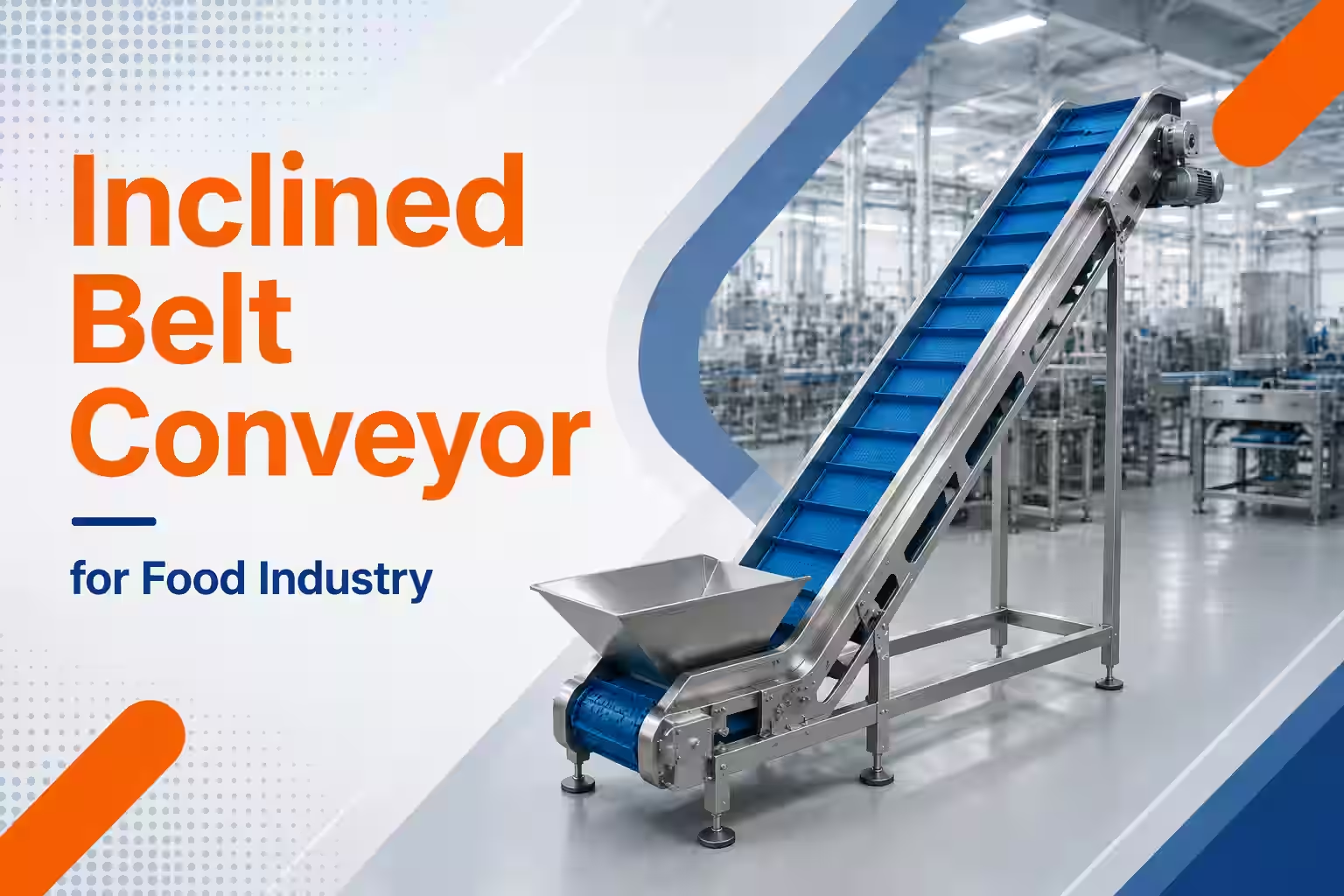
The food processing industry is rapidly moving toward automation to improve productivity, hygiene, and operational efficiency. One of the most essential systems used in modern food manufacturing plants is the Inclined Belt Conveyor.
These conveyor systems are designed to transfer products between different elevations while maintaining smooth and hygienic material handling operations.
What is an Inclined Belt Conveyor for Food Industry?
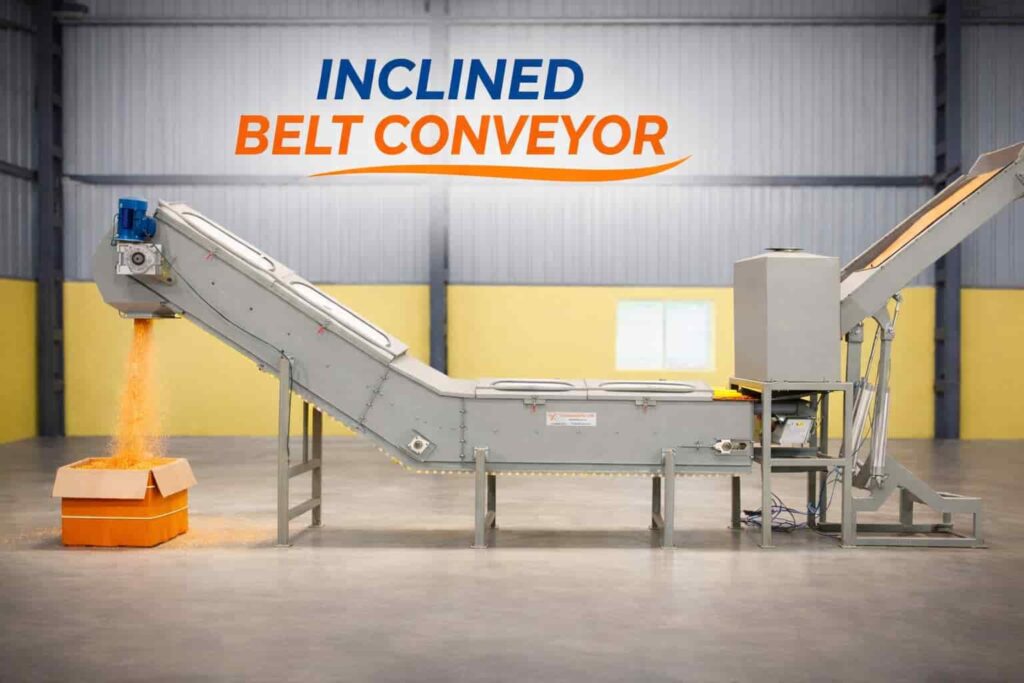
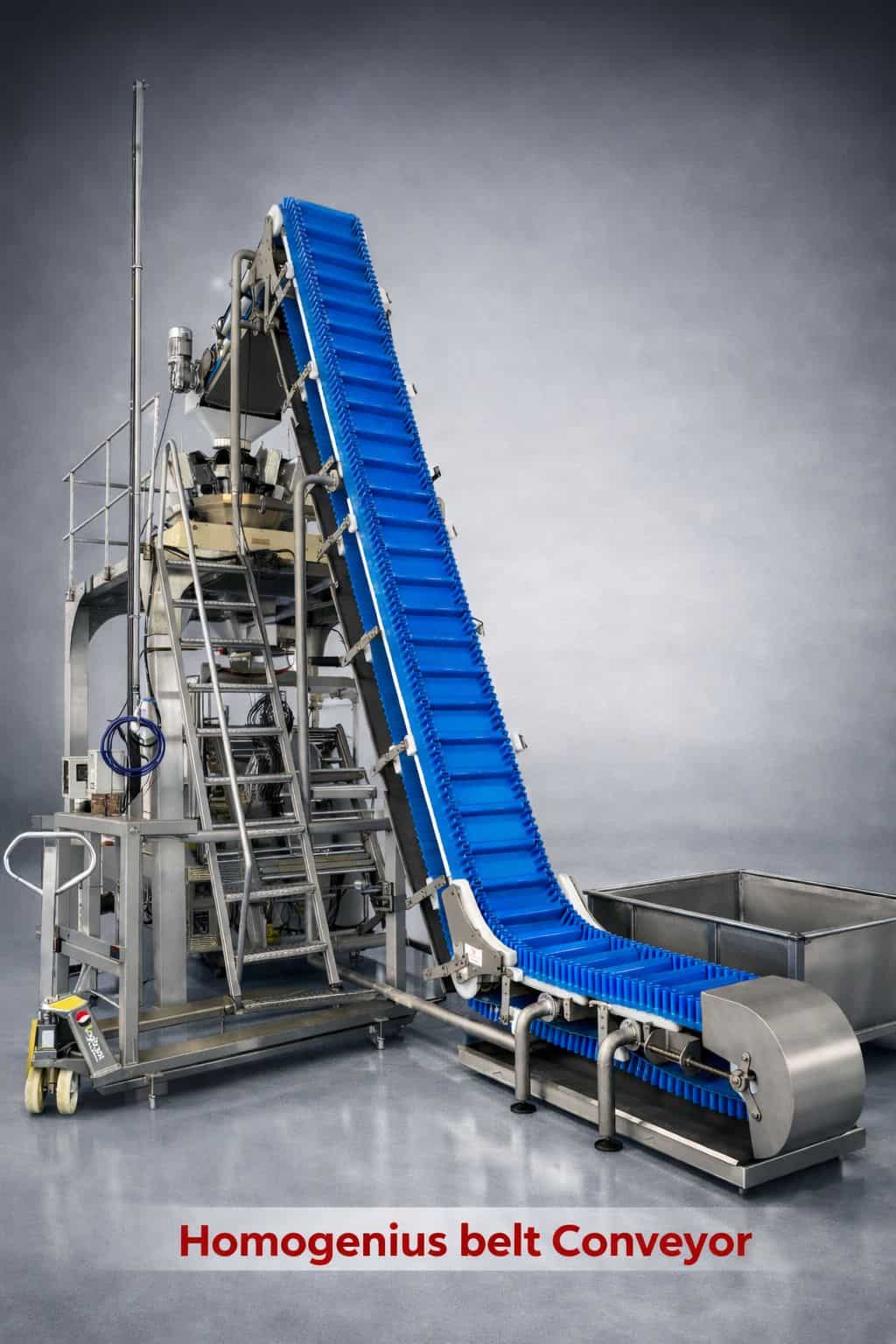
An Inclined Belt Conveyor is a specialized conveyor system designed to transport food products upward or downward at a specific angle. These conveyors are widely used in food processing plants for efficient product movement between different production stages.
Benefits of Inclined Belt Conveyor for Food Industry
- Continuous product flow
- Food-grade hygienic handling
- Reduced manual labor
- Improved productivity
- Space-saving vertical transfer
- Low maintenance operation
Why Food Industries Use Inclined Conveyor Systems
Food industries require reliable conveying systems to maintain hygiene standards and increase production speed. Modern Industrial Inclined Conveyor systems help manufacturers automate production while reducing contamination risks.
Working Principle of Inclined Belt Conveyor for Food Industry
The conveyor operates using a motor-driven belt system that moves products along an inclined frame structure. Special cleats or textured belts prevent products from sliding backward during elevation.
- Product loading
- Belt movement using geared motor
- Inclined product transfer
- Safe discharge at required height
Technical Details
| Feature | Specification |
|---|---|
| Structure Material | SS304 / SS316 Stainless Steel |
| Belt Type | PU / PVC / Modular / Cleated Belt |
| Inclination Angle | 20° to 75° |
| Drive System | Gear Motor with VFD |
| Application | Food Processing Industry |
Applications of Inclined Belt Conveyor for Food Industry
- Potato Processing Plants
- Frozen Food Manufacturing
- Snack Food Industry
- Bakery Production Lines
- Vegetable Processing Plants
- Dairy Industry
- Packaging Systems
Common Problems & Solutions
| Problem | Solution by Yuga-We100 |
|---|---|
| Product rollback | Cleated Belt Conveyor |
| Hygiene issues | Food-grade stainless steel design |
| Belt slipping | High-friction conveyor belts |
| Maintenance downtime | Easy-clean modular structure |
Buying Guide for Inclined Belt Conveyor for Food Industry
Before selecting an Inclined Belt Conveyor Manufacturer, consider the following important factors:
- Food-grade conveyor material
- Required conveyor capacity
- Belt type selection
- Automation compatibility
- Maintenance accessibility
- After-sales support
- Energy efficiency
Mistakes to Avoid
- Choosing non-food-grade belts
- Ignoring hygiene standards
- Selecting conveyors only by price
- Not considering future expansion
- Buying from inexperienced suppliers
Why Choose Yuga-We100?
Yuga-We100 is one of the trusted manufacturers and suppliers of advanced Inclined Conveyor Systems for food industries across India.
- Customized conveyor solutions
- Food-grade conveyor systems
- Industrial automation expertise
- Strong after-sales support
- Competitive pricing
- Durable stainless-steel construction
Looking for the Best Inclined Belt Conveyor Manufacturer?
Get customized food-grade conveyor systems designed for your food processing plant.
Visit Yuga-We100Food-grade conveyor systems should comply with international hygiene standards such as ISO 22000 to improve food safety and product quality.
Manufacturers should also follow OSHA workplace safety guidelines when installing industrial conveyor systems.
For food safety regulations, refer to the U.S. Food & Drug Administration (FDA).
Frequently Asked Questions About Inclined Belt Conveyor for Food Industry
1. What is an Inclined Belt Conveyor?
It is a conveyor system designed to transfer products upward or downward efficiently.
2. Why are inclined conveyors used in food industries?
They improve hygiene, reduce labor costs, and increase production efficiency.
3. What is a Cleated Belt Conveyor?
A conveyor with vertical cleats to prevent products from sliding during inclined movement.
4. Which belt is best for food industries?
PU food-grade and modular belts are commonly preferred.
5. Can inclined conveyors handle wet products?
Yes, stainless steel modular conveyors are suitable for wet applications.