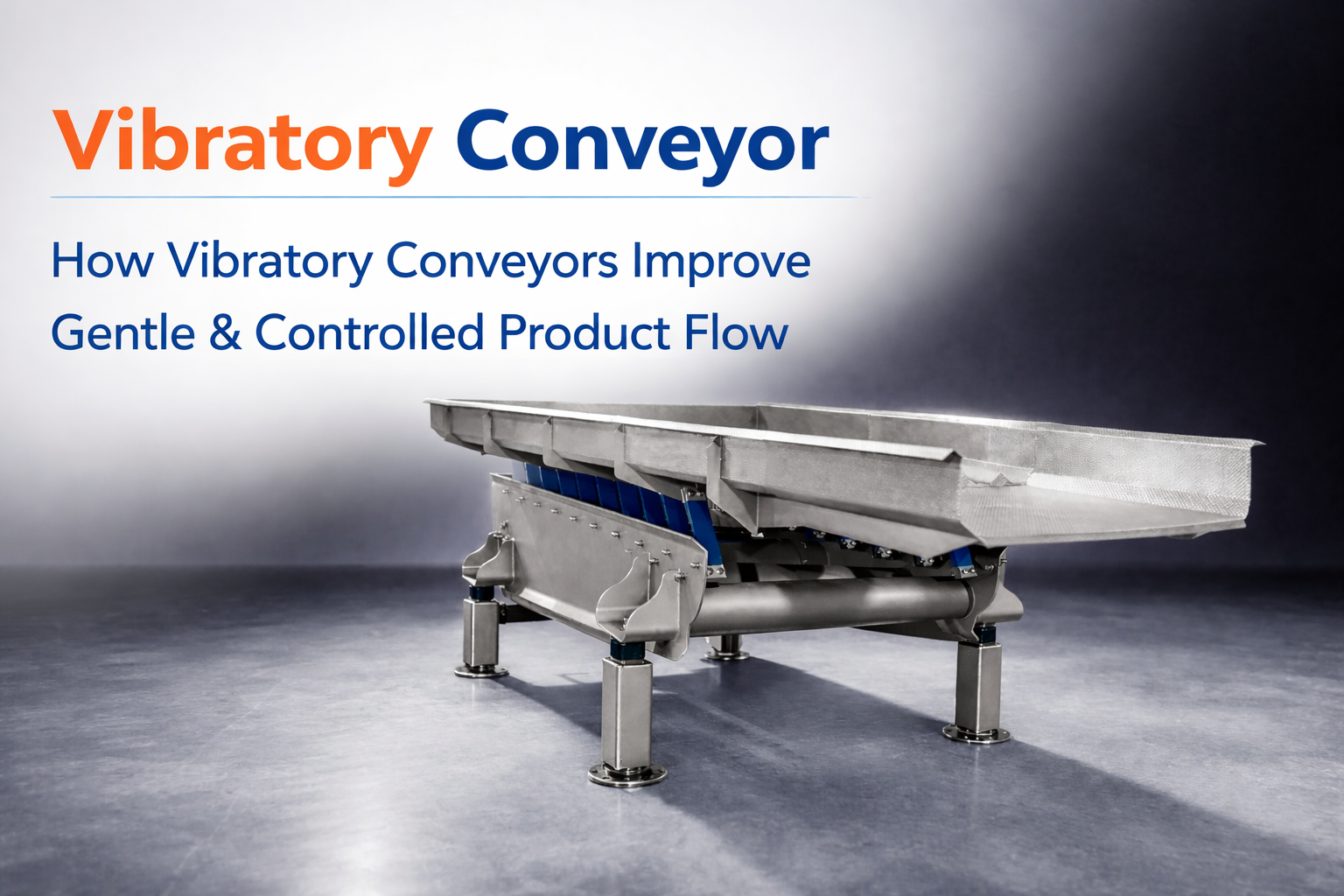
In industries where product integrity, consistency, and handling are of utmost importance, the right conveyor can make a significant difference. Be it snacks, food items, granules, or industrial products, rough handling can result in damage, wastage, and compromised quality.
This is where Vibratory Conveyors excel as the best solution.
Unlike conventional belt conveyors, vibratory conveyors make use of vibration technology to convey products efficiently with the least damage.
In the following detailed article by Yuga-We100, you will get to know about the working of vibratory conveyors, their advantages, uses, and how they are the best solution for gentle handling of products.
What is a Vibratory Conveyor?
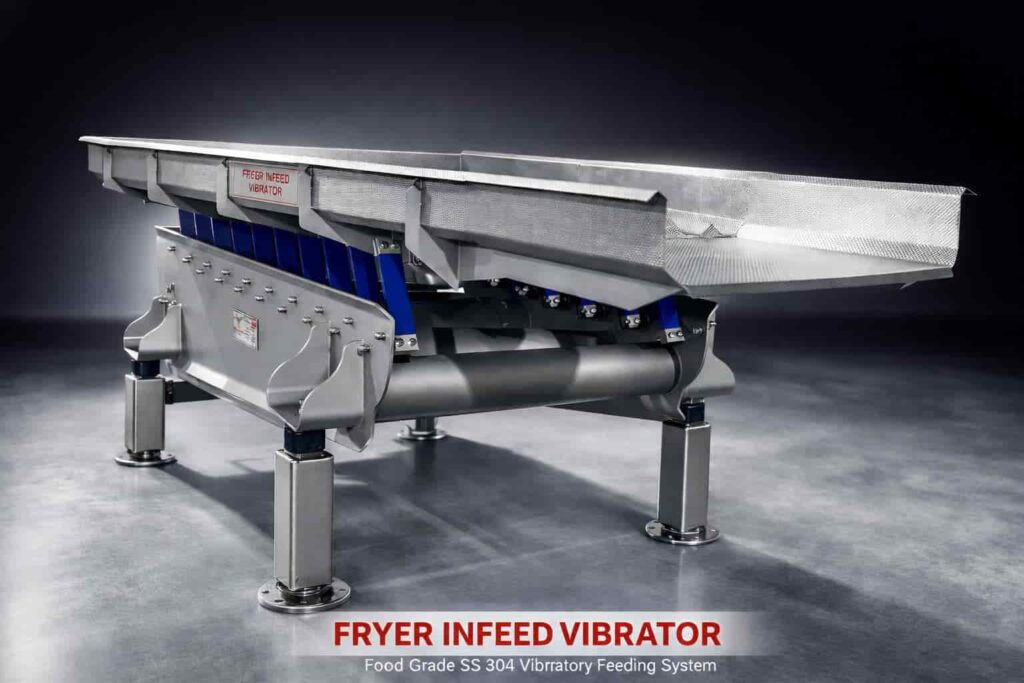
A Vibratory Conveyor is a system used for the handling of materials where the materials are moved along a surface using a vibration system.
Key Characteristics:
- Uses oscillatory motion instead of continuous belt movement
- Designed for gentle product handling
- Provides controlled material flow
- Suitable for a wide range of industries
In Simple Terms:
It moves products forward using carefully controlled vibrations, rather than dragging them with a belt.
Why Are Vibratory Conveyors Important?
In many industries, product damage during handling leads to:
- Increased wastage
- Reduced product quality
- Customer dissatisfaction
- Financial losses
Problems with Traditional Conveyors:
- Rough handling of fragile products
- Lack of flow control
- Uneven material distribution
Why Vibratory Conveyors Are Better:
- Gentle product movement
- Precise control over flow rate
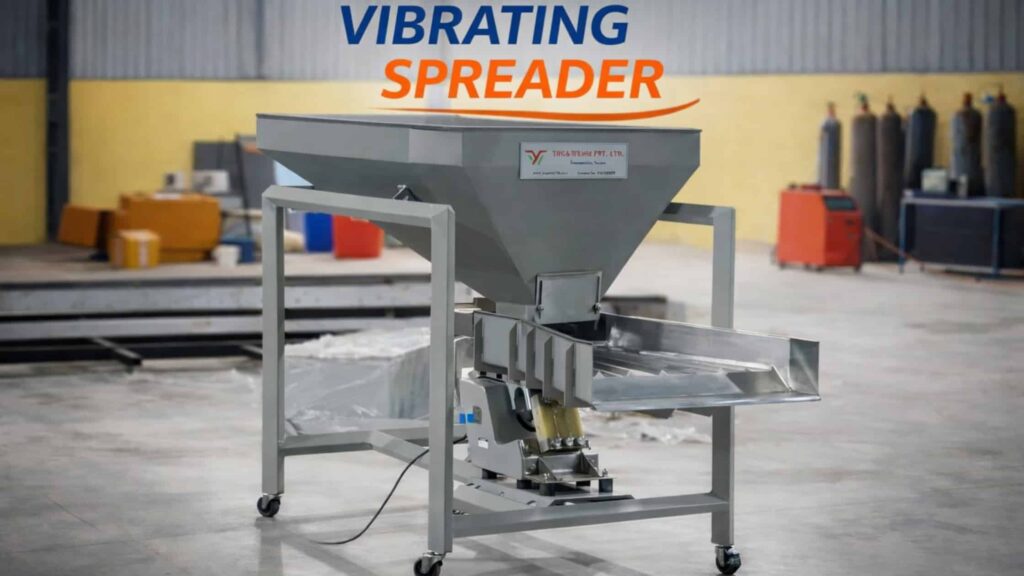
- Uniform distribution
Key Benefits of Vibratory Conveyors
1. Gentle Product Handling
Ideal for fragile products like chips, fryums, and snacks.
2. Controlled Flow
Allows accurate control of material speed and volume.
3. Reduced Product Damage
Minimizes breakage and maintains product quality.
4. Uniform Distribution
Ensures even spreading of materials.
5. Low Maintenance
Fewer moving parts compared to belt conveyors.
6. Hygienic Design
Suitable for food-grade applications.
Working Principle
Vibratory conveyors operate on the principle of controlled vibration and motion transfer.
Step-by-Step Process:
- Material is placed on the conveyor tray
- Vibratory motor generates oscillations
- These vibrations create forward movement
- Material moves in small, controlled steps
- Flow rate is adjusted by changing vibration frequency
Key Components:
- Vibratory motor
- Conveyor tray
- Springs or isolators
- Frame structure
- Control system
Technical Details (Typical Specifications)
(Customizable by Yuga-We100)
- Material: Stainless Steel (SS 304/316)
- Capacity: 50 kg/hr to 3000 kg/hr
- Drive Type: Electromagnetic or motor-driven
- Frequency Range: Adjustable
- Amplitude: Customizable
- Length: As per requirement
- Power Consumption: Low
Applications
Food Industry:
- Chips and fryums handling
- Snack processing
- Grain and pulse movement
Pharmaceutical Industry:
- Tablet and capsule handling
Chemical Industry:
- Powder and granule transfer
Agriculture:
- Seed and fertilizer handling
Industry Use Cases
1. Chips Manufacturing
Ensures gentle handling to prevent breakage.
2. Fryums Processing
Maintains uniform flow before packaging.
3. Packaging Lines
Provides consistent feeding into packing machines.
Common Problems & How Yuga-We100 Solves Them
Problem 1: Product Breakage
Solution: Gentle vibration ensures minimal damage.
Problem 2: Uneven Flow
Solution: Adjustable vibration controls material movement.
Problem 3: High Maintenance
Solution: Simple design reduces wear and tear.
Problem 4: Hygiene Issues
Solution: Food-grade stainless steel construction.
Problem 5: Inefficient Feeding
Solution: Consistent and controlled product flow.
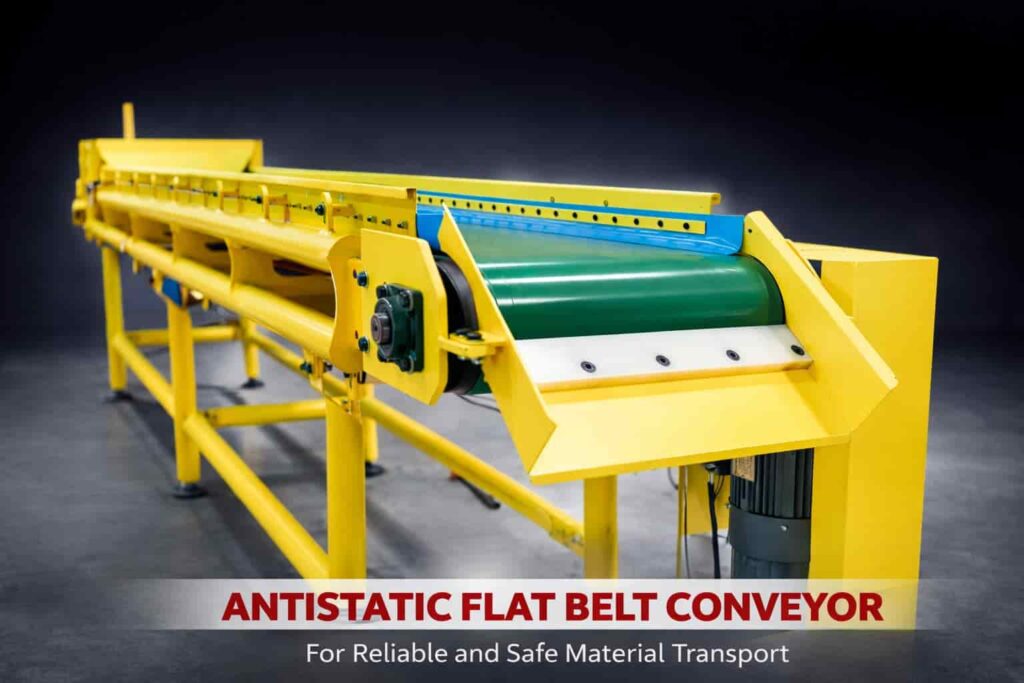
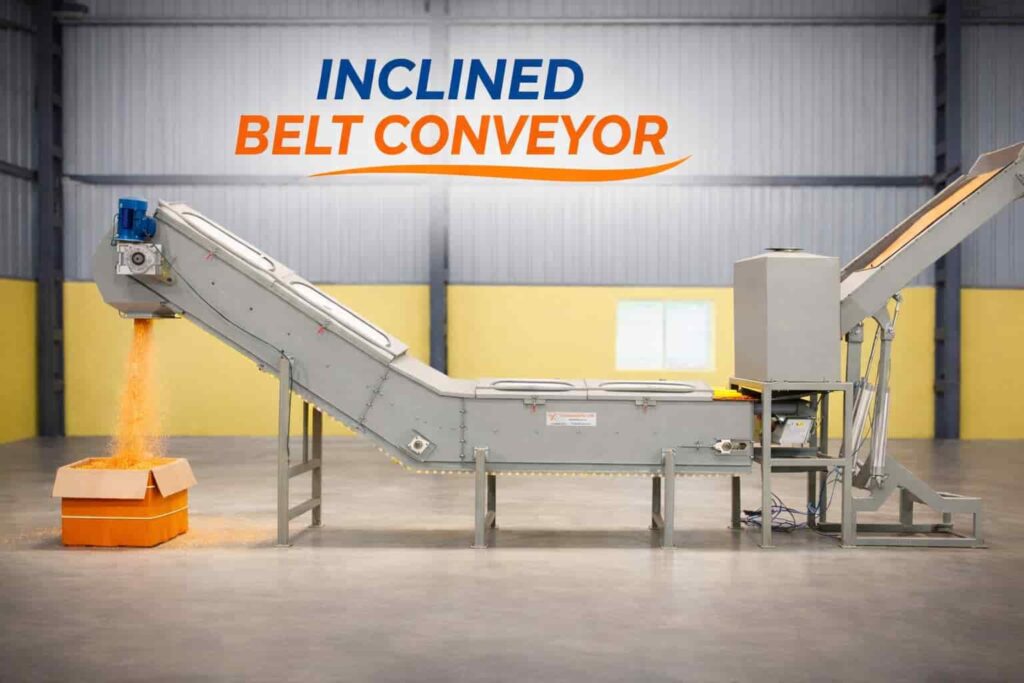
Vibratory Conveyor vs Belt Conveyor
| Feature | Vibratory Conveyor | Belt Conveyor |
|---|---|---|
| Handling | Gentle | Moderate |
| Flow Control | High | Limited |
| Maintenance | Low | Moderate |
| Product Damage | Minimal | Higher |
| Suitability | Fragile products | General use |
Pricing Factors
The cost of vibratory conveyors depends on:
- Conveyor size and length
- Capacity requirements
- Material (SS vs MS)
- Type of vibratory system
- Customization level
] Investing in vibratory conveyors improves long-term efficiency and reduces losses.
Buying Guide
1. Understand Your Product
Choose based on fragility and flow requirements.
2. Check Capacity
Ensure it matches your production needs.
3. Select Material
Food-grade SS for hygiene-sensitive applications.
4. Evaluate Control Features
Adjustable vibration is essential.
5. Choose Trusted Manufacturer
Go with reliable brands like Yuga-We100.
Mistakes to Avoid
- Using belt conveyors for fragile products
- Ignoring flow control requirements
- Choosing low-quality materials
- Not considering customization
- Overlooking maintenance needs
- → Vibratory Conveyors
- → U Trough Belt Conveyors
- → Homogeneous Inclined Belt Conveyor
- → Nubbin Grader
- → Vacuum Conveyor
Why Choose Yuga-We100?
Yuga-We100 is a leading manufacturer of advanced material handling solutions designed for efficiency, durability, and precision.
Our Advantages:
- Customized conveyor solutions
- High-quality materials
- Advanced engineering
- Competitive pricing
- Reliable after-sales support
We help businesses achieve better productivity and product quality through innovative machinery.
Vibratory conveyors are an essential solution for industries that require a gentle and controlled product flow. Their capability to minimize product damage, ensure uniform distribution, and control product flow makes them a better choice than traditional conveyors.
If your goal is to:
- Reduce product damage
- Improve efficiency
- Maintain product quality
Then investing in a vibratory conveyor is the right decision.
- Vibratory Conveyor
- Vibratory Conveyors
- Industrial Vibratory Conveyor
- Vibrating Conveyor
- Gentle material handling system
- Controlled product flow conveyor
- Vibrating feeder system
- Industrial material handling equipment
- Buy vibratory conveyor
- Vibratory conveyor manufacturer
- Vibratory conveyor price
- Conveyor supplier India
Call to Action (CTA)
Improve Your Product Flow with Yuga-We100!
Looking for a reliable Vibratory Conveyor manufacturer in India?
Contact Yuga-We100 today for customized solutions tailored to your needs.
Get expert consultation and competitive pricing now!
FAQs
1. What is a vibratory conveyor?
A conveyor that uses vibration to move materials.
2. Is it suitable for fragile products?
Yes, it is ideal for delicate items.
3. Can flow rate be controlled?
Yes, by adjusting vibration frequency.
4. What industries use it?
Food, pharma, chemical, and agriculture industries.
5. Is it easy to maintain?
Yes, it requires minimal maintenance.
6. Can it be customized?
Yes, based on application and capacity.
7. Does it reduce product damage?
Yes, significantly.
8. What materials are used?
Typically stainless steel or mild steel.