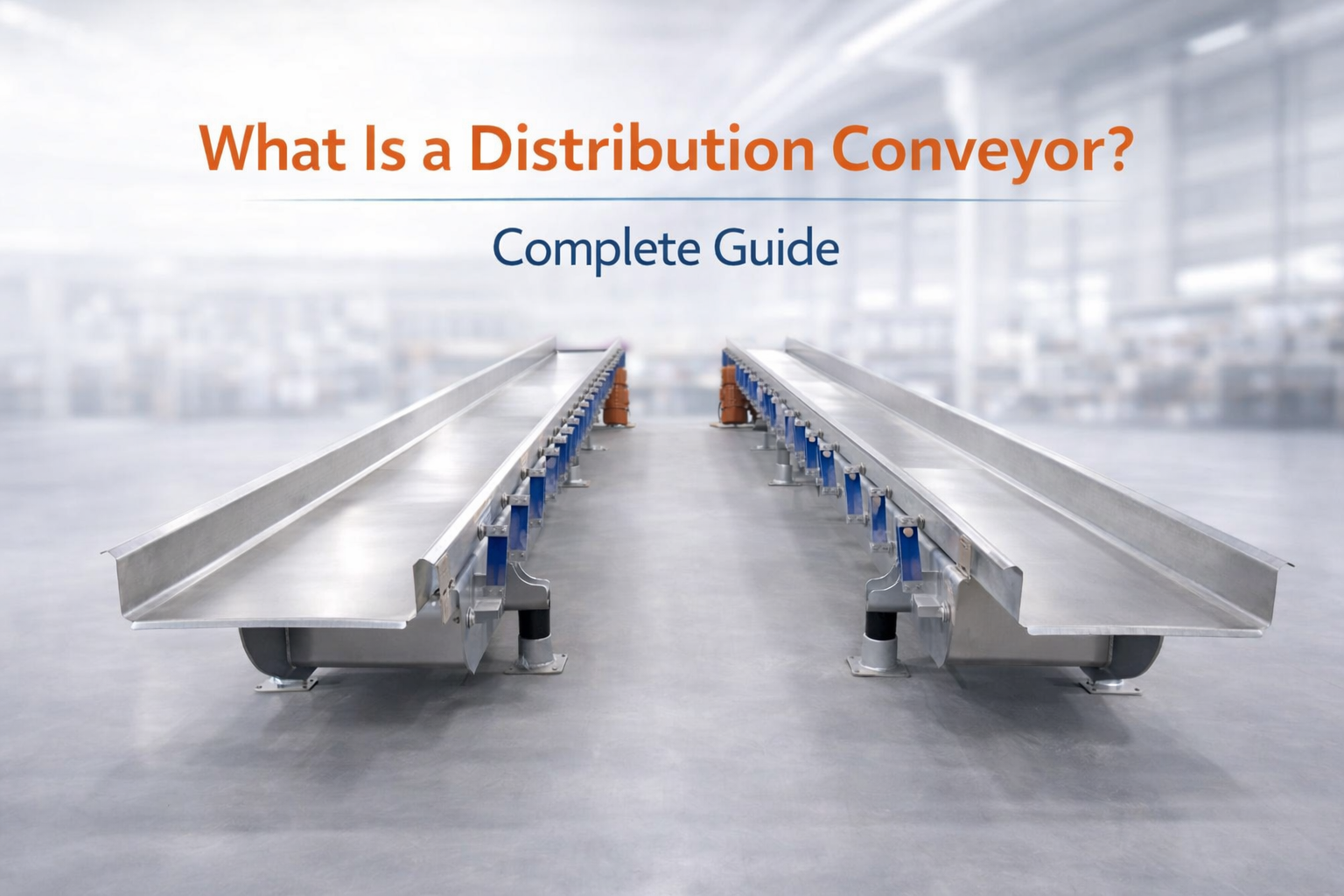
Efficient material flow is the key to productivity in today’s modern industrial processes. No matter what industry you belong to—from a food processing unit, to a packaging plant, or even to a bulk material handling system—the ability to distribute your products into various locations becomes very important.
Here comes the need for Distribution Conveyors.
Rather than depending on manual labor or ineffective methods, distribution conveyors ensure that materials are directed to different stations, machines, or places, thus helping in increasing productivity and saving a lot of time.
Through this ultimate guide on distribution conveyors from Yuga-We100, learn all about them!
What Is a Distribution Conveyor?
A Distribution Conveyor is a type of conveyor system designed to transfer and distribute materials from a single source to multiple destinations.
Key Functions:
- Diverts products to different processing lines
- Ensures controlled and accurate distribution
- Integrates with automated systems
In Simple Terms:
It’s a conveyor that directs products to the right place at the right time.
Why Are Distribution Conveyors Important?
In industrial setups, improper material distribution can lead to:
- Production bottlenecks
- Uneven workload on machines
- Increased manual intervention
- Higher operational costs
Challenges Without Distribution Systems:
- Manual sorting errors
- Delays in processing
- Inefficient workflow
With Distribution Conveyors:
- Automated product routing
- Balanced production lines
- Reduced labor dependency
- Increased operational efficiency
Key Benefits of Distribution Conveyors
1. Improved Workflow Efficiency
Ensures smooth and uninterrupted material flow.
2. Accurate Product Routing
Delivers products to the correct destination without errors.
3. Reduced Labor Costs
Minimizes manual sorting and handling.
4. Increased Productivity
Optimizes production line performance.
5. Scalability
Easily integrates with expanding production systems.
6. Flexibility
Supports multiple configurations and layouts.
Working Principle
Distribution conveyors operate using mechanical or automated diversion systems.
Step-by-Step Process:
- Material enters the conveyor system
- Sensors detect product type or destination
- Control system processes routing instructions
- Diverters or gates redirect the product
- Material moves to the designated line or station
Types of Distribution Mechanisms:
- Pushers
- Diverter arms
- Pop-up rollers
- Swing gates
Technical Details (Typical Specifications)
(Customizable by Yuga-We100)
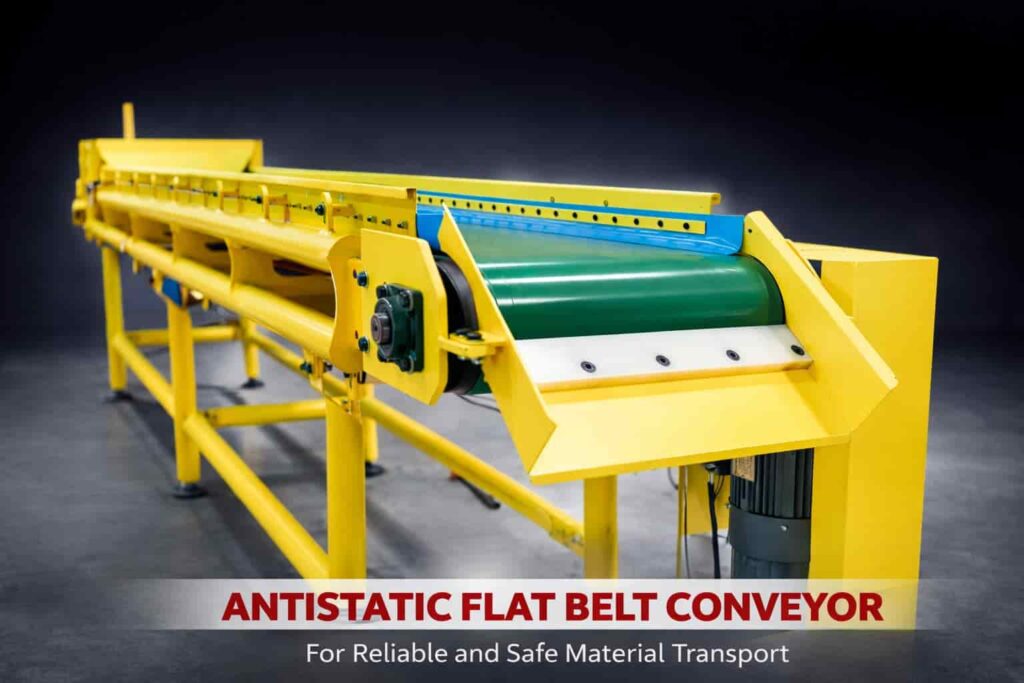
- Belt Type: PVC / PU / Rubber
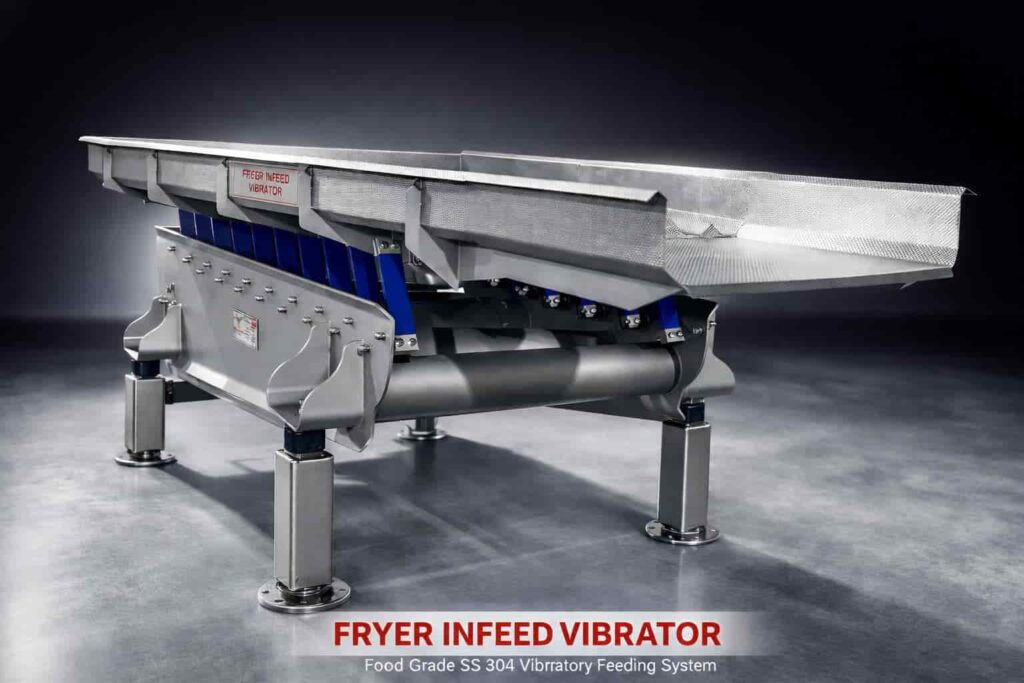
- Frame Material: Stainless Steel (SS 304/316) or Mild Steel
- Capacity: 100 kg/hr to 5000 kg/hr
- Speed: Variable (VFD controlled)
- Control System: PLC-based automation
- Sensors: Photoelectric / proximity sensors
- Diverter Type: Mechanical / pneumatic
Applications
Food Industry:
- Sorting and distributing snacks
- Packaging line integration
Logistics & Warehousing:
- Parcel sorting systems
- Distribution centers
Manufacturing:
- Assembly line distribution
- Component routing
Agriculture:
- Grain and seed distribution
Industry Use Cases
1. Snack Processing Plant
Distributes chips or fryums to multiple packaging lines.
2. Packaging Units
Routes products to different packing machines.
3. Warehouse Operations
Sorts parcels efficiently for delivery.
Common Problems & How Yuga-We100 Solves Them
Problem 1: Uneven Material Distribution
Solution: Precision-controlled diverters ensure balanced flow.
Problem 2: Manual Sorting Errors
Solution: Automated routing eliminates human error.
Problem 3: Production Bottlenecks
Solution: High-speed conveyors maintain continuous flow.
Problem 4: High Labor Costs
Solution: Automation reduces manpower requirements.
Problem 5: Integration Issues
Solution: Custom-designed systems fit seamlessly into existing setups.
Distribution Conveyor vs Standard Conveyor
| Feature | Distribution Conveyor | Standard Conveyor |
|---|---|---|
| Function | Routing & distribution | Simple transport |
| Automation | High | Low |
| Efficiency | High | Moderate |
| Flexibility | High | Limited |
| Application | Complex systems | Basic transport |
Pricing Factors
The cost of a distribution conveyor depends on:
- Conveyor size and length
- Number of distribution points
- Automation level (PLC, sensors)
- Material (SS vs MS)
- Customization requirements
Investing in a distribution conveyor improves long-term efficiency and ROI.
Buying Guide
1. Define Distribution Needs
Number of output points and routing complexity.
2. Choose Right Conveyor Type
Based on product type and flow requirements.
3. Check Automation Level
PLC-based systems offer better control.
4. Evaluate Material Quality
Use SS for food-grade applications.
5. Select Trusted Manufacturer
Choose reliable brands like Yuga-We100.
- Distribution Conveyor
- Distribution Conveyor System
- Industrial Distribution Conveyor
- Conveyor Distribution System
- Material distribution system
- Conveyor with diverter
- Automated conveyor system
- Industrial material handling
- Distribution conveyor manufacturer
- Conveyor supplier India
Mistakes to Avoid
- Ignoring system integration needs
- Choosing low-quality components
- Underestimating capacity requirements
- Not planning for future expansion
- Overlooking automation features
- → Distribution Conveyor
- → U Trough Belt Conveyors
- → Vibratory Conveyors
- → Homogeneous Inclined Belt Conveyor
- → Vacuum Conveyor
Why Choose Yuga-We100?
Yuga-We100 is a trusted manufacturer of advanced conveyor systems designed for efficiency, durability, and precision.
Our Strengths:
- Customized conveyor solutions
- High-quality materials
- Advanced automation systems
- Competitive pricing
- Strong after-sales support
We provide solutions that optimize your workflow and improve productivity.
Distribution conveyors are vital in industries that demand effective and precise material handling processes. They play an important role in making work easier and ensuring high levels of productivity.
Are you looking to:
- Avoid sorting manually
- Make your processes more efficient
- Expand production capacity
A distribution conveyor is a perfect choice for you.
Optimize Your Material Flow with Yuga-We100!
Looking for a reliable Distribution Conveyor manufacturer in India?
Contact Yuga-We100 today for customized solutions tailored to your needs.
Get expert consultation and competitive pricing now!
FAQs
1. What is a distribution conveyor?
A conveyor system that distributes materials to multiple destinations.
2. Where is it used?
Food processing, logistics, manufacturing, and agriculture.
3. Can it be automated?
Yes, with PLC and sensors.
4. What types of diverters are used?
Pushers, gates, and pop-up rollers.
5. Is it customizable?
Yes, based on application and capacity.
6. Does it reduce labor costs?
Yes, significantly.
7. What materials are used?
Stainless steel or mild steel.
8. Can it integrate with existing systems?
Yes, easily.