Table of Contents
Modern food manufacturing plants depend on an efficient food conveyor system to move raw materials, semi-finished products, and finished goods safely between production stages. Choosing the right conveyor directly impacts productivity, hygiene, product quality, and operational costs.
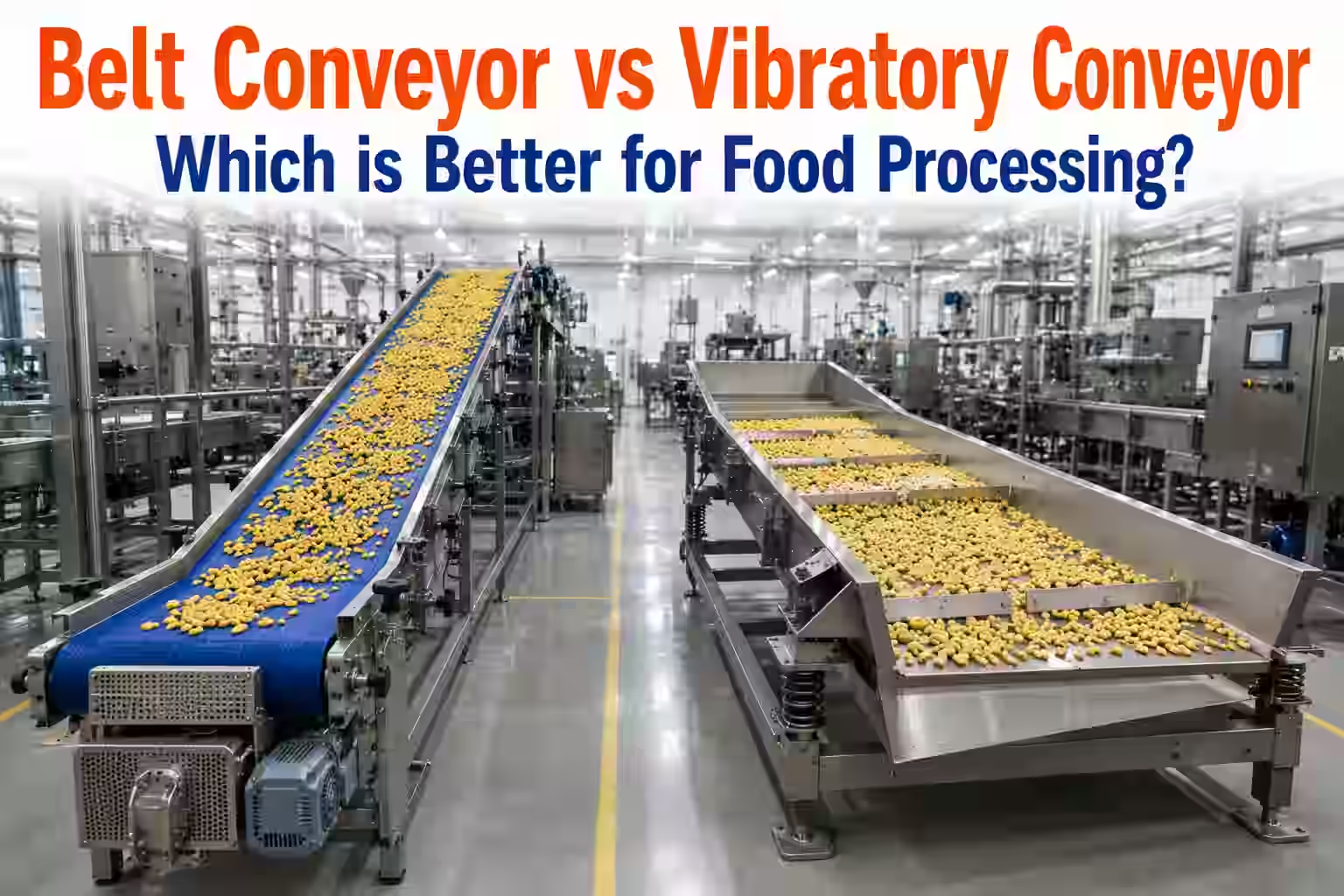
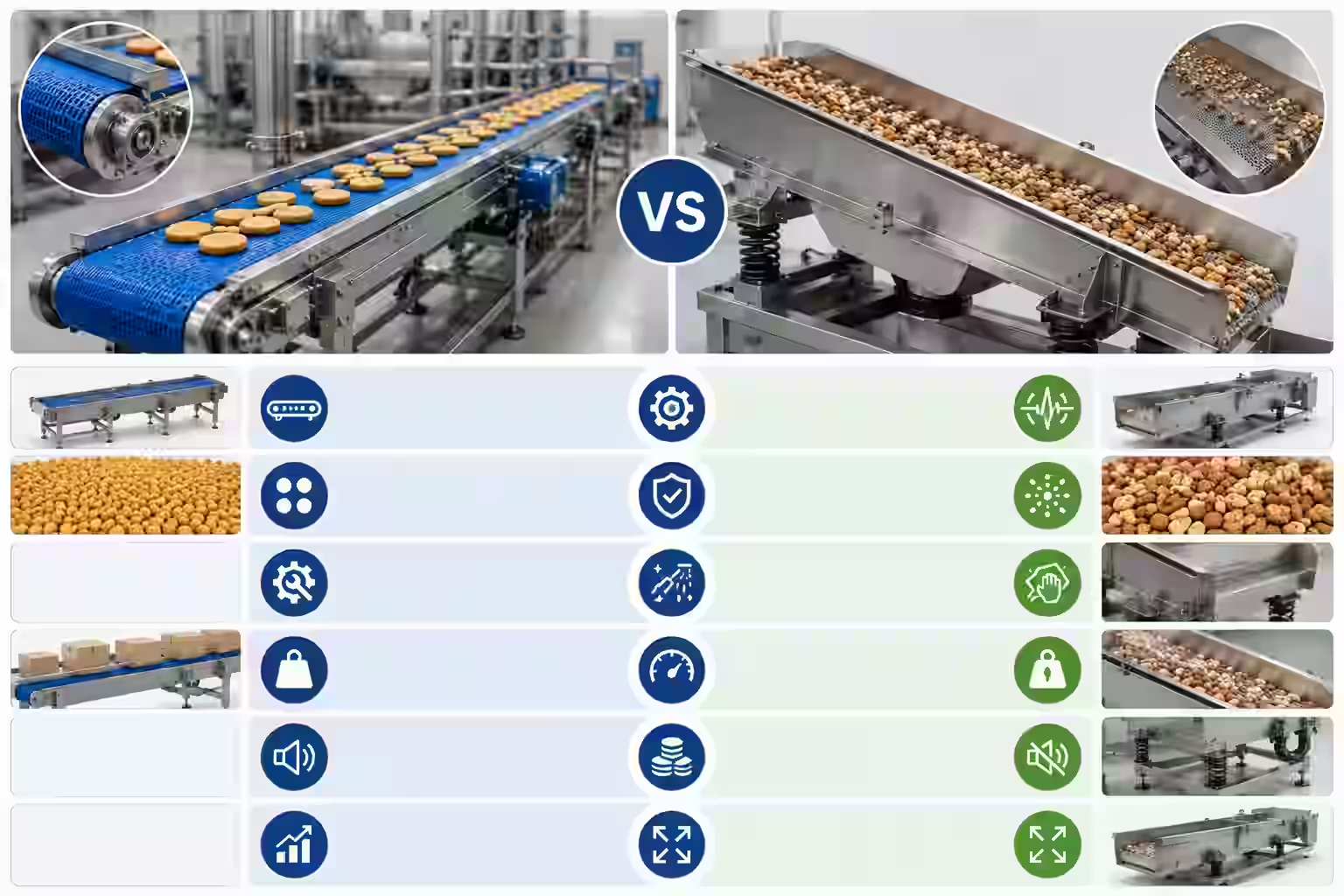
Understanding Belt Conveyor vs Vibratory Conveyor is essential for food manufacturers looking to improve material handling efficiency, maintain hygiene, and optimize production costs.
Two of the most widely used conveying technologies are the belt conveyor for food industry and the vibratory conveyor. While both systems are designed to transport products efficiently, they differ significantly in their operating principles, applications, maintenance requirements, and suitability for different food products.
This comprehensive guide compares both conveyor systems to help food manufacturers select the ideal solution for snacks, bakery products, frozen foods, grains, spices, dairy products, ready-to-eat meals, and other food processing applications.
What is a Vibratory Conveyor?
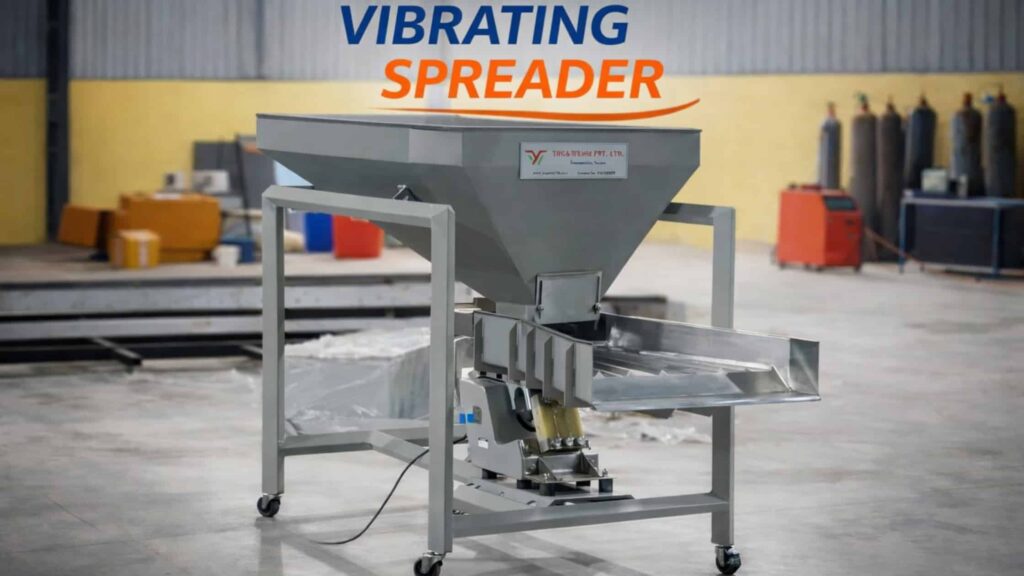
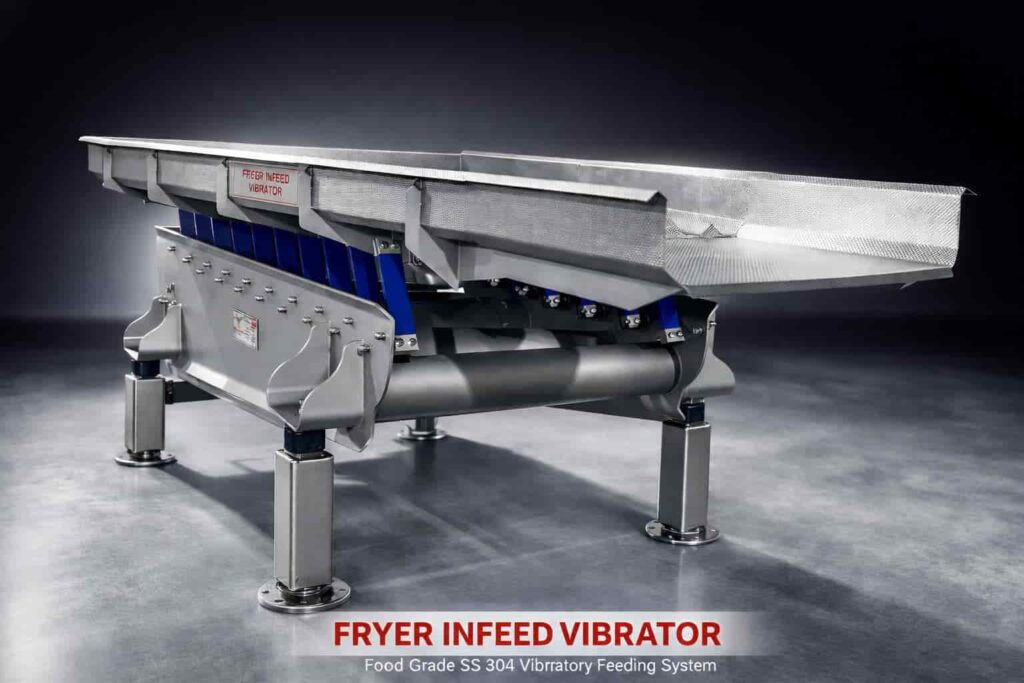
A vibratory conveyor transports products using controlled vibration instead of a moving belt. The vibration gently moves products forward along a specially designed tray, making this system ideal for fragile, hot, sticky, or irregularly shaped food products.
Unlike traditional belt conveyors, vibratory conveyors have fewer moving parts in direct contact with the product. This design improves sanitation and makes cleaning easier, especially in food processing environments where hygiene is critical.
Main Features of Belt Conveyor
- Continuous product movement
- Suitable for long conveying distances
- Food-grade belt materials
- Easy integration with automation systems
- Low product damage
- Available in horizontal and inclined designs
- High production capacity
- Simple maintenance
What is a Vibratory Conveyor?
A vibratory conveyor transports products using controlled vibration instead of a moving belt. The vibration gently moves products forward along a specially designed tray, making this system ideal for fragile, hot, sticky, or irregularly shaped food products.
Unlike traditional belt conveyors, vibratory conveyors have fewer moving parts in direct contact with the product. This design improves sanitation and makes cleaning easier, especially in food processing environments where hygiene is critical.
Main Features of Vibratory Conveyor
- Gentle product handling
- Excellent hygiene
- Minimal moving parts
- Suitable for fragile food products
- Easy cleaning and maintenance
- Handles hot or freshly cooked products
- Uniform product distribution
- Low contamination risk
Belt Conveyor vs Vibratory Conveyor
Both conveyor technologies play an important role in modern food processing plants. However, selecting the right food conveyor system depends on the type of product, production capacity, hygiene requirements, and factory layout.
| Feature | Belt Conveyor | Vibratory Conveyor |
|---|---|---|
| Product Movement | Continuous Belt | Controlled Vibration |
| Suitable Products | Packaged & Bulk Foods | Fragile & Hot Products |
| Food Hygiene | Excellent | Excellent |
| Cleaning | Easy | Very Easy |
| Maintenance | Low | Very Low |
| Long Distance Conveying | Excellent | Limited |
| Inclined Transfer | Excellent | Not Recommended |
| Automation Integration | Excellent | Good |
Working Principle of Both Conveyor Systems
Understanding how each food conveyor system works helps manufacturers choose the most suitable solution for their production line. Although both conveyors transport products efficiently, their operating mechanisms are completely different.
When evaluating Belt Conveyor vs Vibratory Conveyor, it is important to understand how each system transports food products while maintaining product quality and minimizing wastage.
Belt Conveyor Working Principle
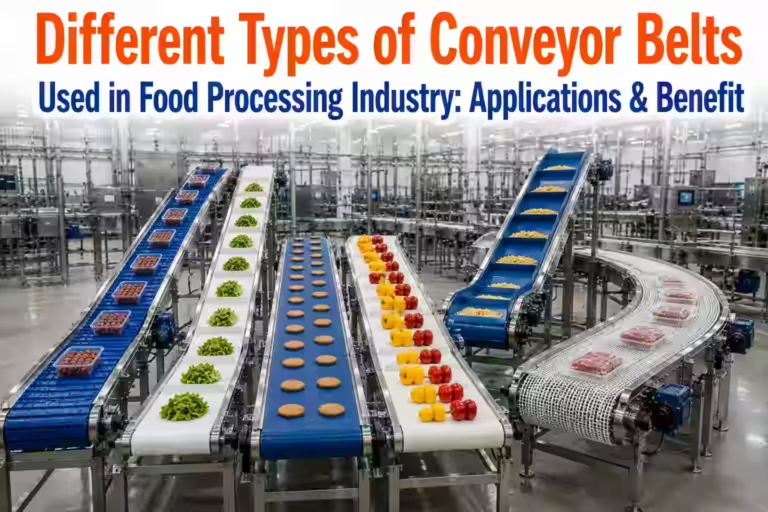
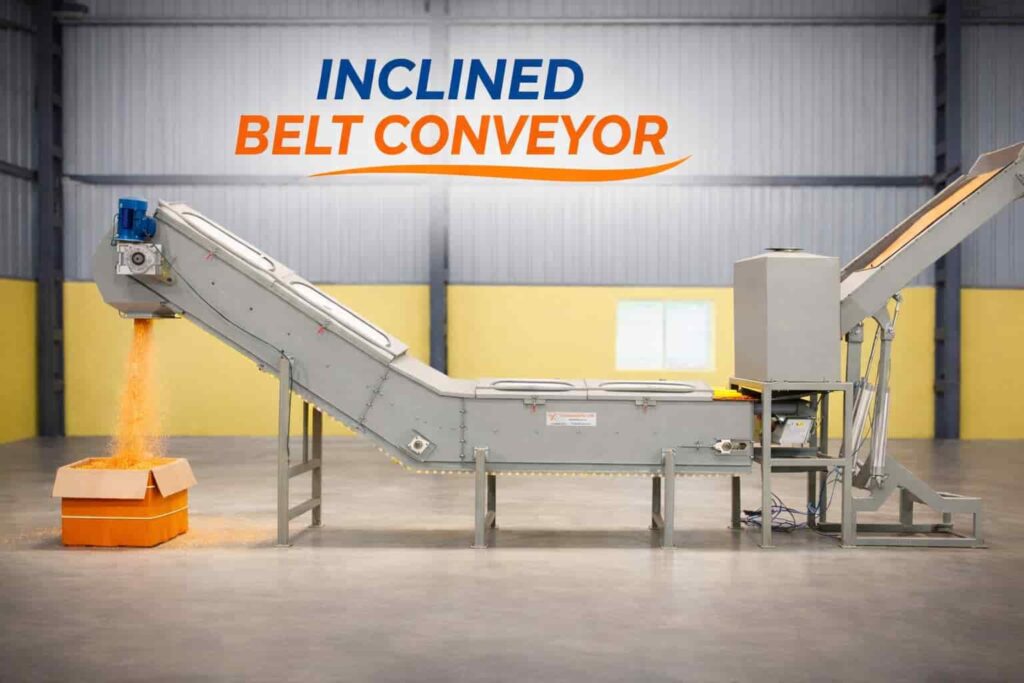
A belt conveyor for food industry uses an endless food-grade belt supported by rollers or slider beds. The belt is driven by an electric motor connected to a gearbox, allowing products to move continuously from one processing station to another.
- Products are loaded onto the conveyor belt.
- The drive motor rotates the belt continuously.
- The conveyor transfers products smoothly.
- Products are discharged at the next processing stage.
Vibratory Conveyor Working Principle
A vibratory conveyor operates using an electromagnetic or mechanical vibration system. Instead of using a belt, controlled vibrations move products along a stainless-steel tray while maintaining product orientation and minimizing breakage.
- Products enter the vibrating tray.
- Controlled vibration moves products forward.
- Products travel evenly across the tray.
- Material exits at the discharge point.
Advantages of Belt Conveyor for Food Industry
A belt conveyor for food industry remains the most popular conveying solution because it offers flexibility, high throughput, and compatibility with modern automation systems.
Benefits of Belt Conveyor
- High production capacity
- Suitable for continuous operation
- Gentle handling of packaged foods
- Supports horizontal and inclined conveying
- Easy integration with automated production lines
- Food-grade PU, PVC, and modular belt options
- Low maintenance requirements
- Energy-efficient operation
- Long service life
- Ideal for automated packaging systems
The decision between Belt Conveyor vs Vibratory Conveyor directly affects productivity, maintenance costs, food safety, and long-term operational efficiency.
Advantages of Vibratory Conveyor
A vibratory conveyor is widely used where delicate handling, hygiene, and accurate product distribution are essential.
Benefits of Vibratory Conveyor
- Excellent hygiene standards
- Minimal product breakage
- Handles hot food products safely
- Uniform product feeding
- Very easy to clean
- Few moving components
- Low operating costs
- Reduced contamination risk
- Suitable for sticky or irregular products
- Quiet and reliable operation
Limitations of Both Conveyor Systems
| Conveyor Type | Limitations |
|---|---|
| Belt Conveyor | Requires periodic belt replacement and alignment maintenance. |
| Vibratory Conveyor | Limited conveying distance and not suitable for steep inclines. |
| Belt Conveyor | Higher cleaning time compared to open vibratory trays. |
| Vibratory Conveyor | Generally lower conveying speed for long-distance transport. |
Applications in Food Processing Industry
Both systems are widely used in modern food factories. Selecting the right food conveyor system depends on the product type and production process.
Choosing between Belt Conveyor vs Vibratory Conveyor depends on whether your production line handles snacks, grains, frozen foods, bakery items, spices, or delicate food products.
| Industry | Recommended Conveyor |
|---|---|
| Potato Chips Manufacturing | Belt Conveyor |
| Namkeen Processing | Belt Conveyor |
| Frozen Food Plants | Belt Conveyor |
| Bakery Products | Belt Conveyor |
| Freshly Fried Snacks | Vibratory Conveyor |
| Dry Fruits | Vibratory Conveyor |
| Spices and Seasoning | Vibratory Conveyor |
| Vegetable Processing | Belt Conveyor |
| Ready-to-Eat Foods | Both (Depending on Process) |
How to Choose the Right Conveyor System
Selecting the right belt conveyor for food industry or vibratory conveyor depends on several operational factors. Every food processing plant has different production capacities, hygiene requirements, product characteristics, and factory layouts. Evaluating these factors helps manufacturers invest in the most efficient food conveyor system.
| Selection Factor | Recommendation |
|---|---|
| Product Type | Choose conveyors based on product size, weight, and fragility. |
| Production Capacity | Select a conveyor that matches hourly production output. |
| Factory Layout | Ensure the conveyor fits available installation space. |
| Hygiene Standards | Use SS304 or SS316 food-grade construction. |
| Automation Integration | Choose PLC-compatible conveyor systems. |
| Maintenance | Prefer conveyors with easy cleaning and servicing. |
| Future Expansion | Select scalable conveyor solutions. |
Buying Guide
Investing in the correct food conveyor system improves operational efficiency and reduces long-term production costs. Before purchasing a conveyor, manufacturers should evaluate the following points.
Before investing in equipment, compare Belt Conveyor vs Vibratory Conveyor based on production capacity, hygiene standards, energy efficiency, and future automation requirements.
- Select a trusted industrial conveyor manufacturer.
- Choose food-grade stainless steel construction.
- Verify machine capacity and conveying speed.
- Check energy consumption.
- Evaluate spare parts availability.
- Confirm after-sales service support.
- Ensure compliance with HACCP and GMP standards.
- Consider future production expansion.
- Compare automation compatibility.
- Request a customized factory conveyor system design.
Why Choose Yuga-We100?
Yuga-We100 is a leading industrial conveyor manufacturer specializing in customized belt conveyor for food industry solutions. Our engineering team designs hygienic, reliable, and automation-ready conveyor systems for food manufacturers across India.
Our engineering experts help customers evaluate Belt Conveyor vs Vibratory Conveyor and recommend the most suitable conveyor solution for their food processing plant.
- Customized conveyor system design
- Food-grade SS304 & SS316 fabrication
- Complete automation integration
- Energy-efficient conveyor solutions
- Low maintenance machines
- Competitive pricing
- Pan-India installation support
- Experienced engineering team
- Fast after-sales service
- Reliable long-term performance
Related Solutions
Food Grade Conveyor SystemInclined Belt ConveyorZ Type Bucket ElevatorPackaging Line AutomationFood Processing Automation SystemSeasoning SystemIndustrial Conveyor ManufacturerStainless Steel Conveyor SystemLooking for the Best Food Conveyor System?
Yuga-We100 designs customized belt conveyor for food industry solutions and advanced food conveyor system equipment that improve productivity, hygiene, and automation for modern food processing plants.
Get Free ConsultationChoosing between a belt conveyor for food industry and a vibratory conveyor depends on your product characteristics, production capacity, hygiene requirements, and automation goals. Belt conveyors are ideal for continuous, high-volume production and long-distance transportation, while vibratory conveyors excel at handling delicate or freshly cooked products with minimal damage. Selecting the right food conveyor system improves operational efficiency, reduces downtime, and supports long-term business growth.
Useful External Resources
Frequently Asked Questions
1. Which conveyor is better for food processing?
It depends on the application. Belt conveyors are ideal for continuous production, while vibratory conveyors are best for delicate or freshly cooked products.
2. What is a belt conveyor for food industry?
A food-grade belt conveyor transports products smoothly using a continuous belt made from hygienic materials such as PU, PVC, or modular belts.
3. What products are suitable for vibratory conveyors?
Vibratory conveyors are commonly used for snacks, dry fruits, frozen foods, spices, and other fragile food products.
4. Which conveyor requires less maintenance?
Both systems require minimal maintenance when properly maintained, although vibratory conveyors generally have fewer moving parts.
5. Can both conveyors be integrated with automation?
Yes. Both conveyor systems can be integrated with PLC controls, packaging lines, weighing systems, and inspection equipment.
6. Why choose Yuga-We100?
Yuga-We100 provides customized, food-grade conveyor systems with advanced automation, durable construction, and dependable after-sales support.
7.Which is better: Belt Conveyor vs Vibratory Conveyor?
The answer depends on your application. The Belt Conveyor vs Vibratory Conveyor comparison shows that belt conveyors are ideal for continuous transport, while vibratory conveyors are better for gentle handling of fragile food products.