Table of Contents
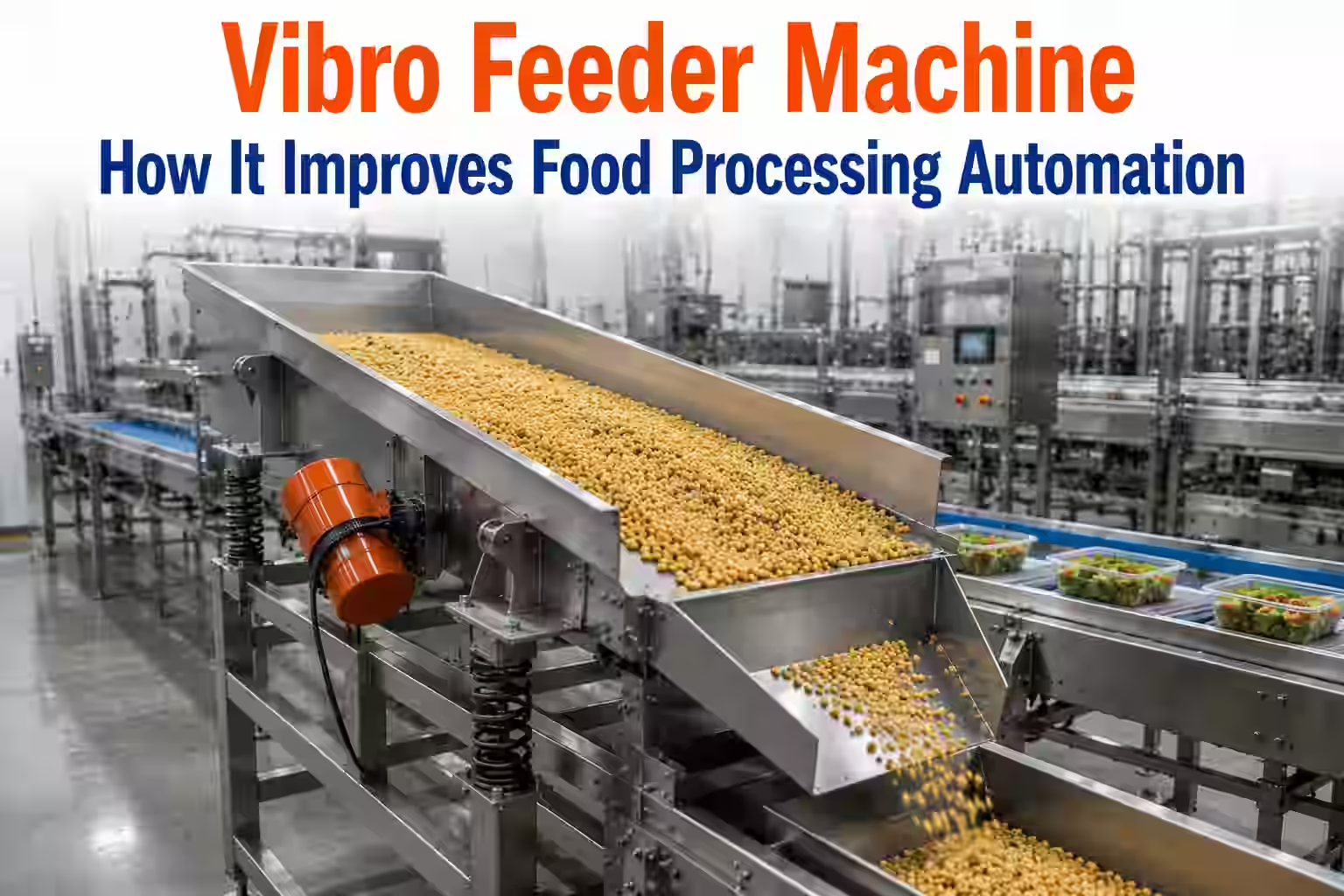
Modern food processing plants require highly efficient material handling equipment to maintain continuous production while ensuring hygiene, accuracy, and product quality. One of the most important machines used in automated production lines is the vibrating feeder machine. It provides controlled and consistent feeding of raw materials and finished products to different processing and packaging machines.
Choosing an experienced vibro feeder manufacturer ensures reliable machine performance, reduced downtime, lower maintenance costs, and seamless integration with modern automation systems. Across the vibratory feeder food industry, these machines improve productivity by delivering products at a uniform flow rate without damaging delicate food items.
Whether processing potato chips, namkeen, grains, spices, frozen foods, bakery products, dry fruits, pulses, or snack foods, a professionally designed vibrating feeder machine improves production efficiency while supporting complete food processing automation.
What is a Vibro Feeder Machine?
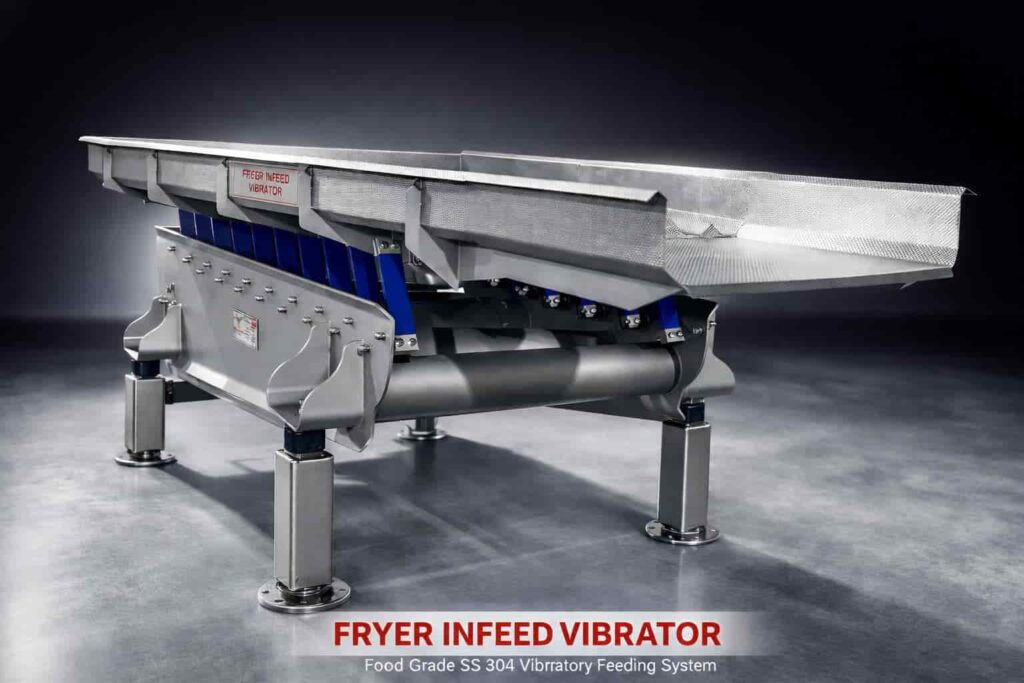
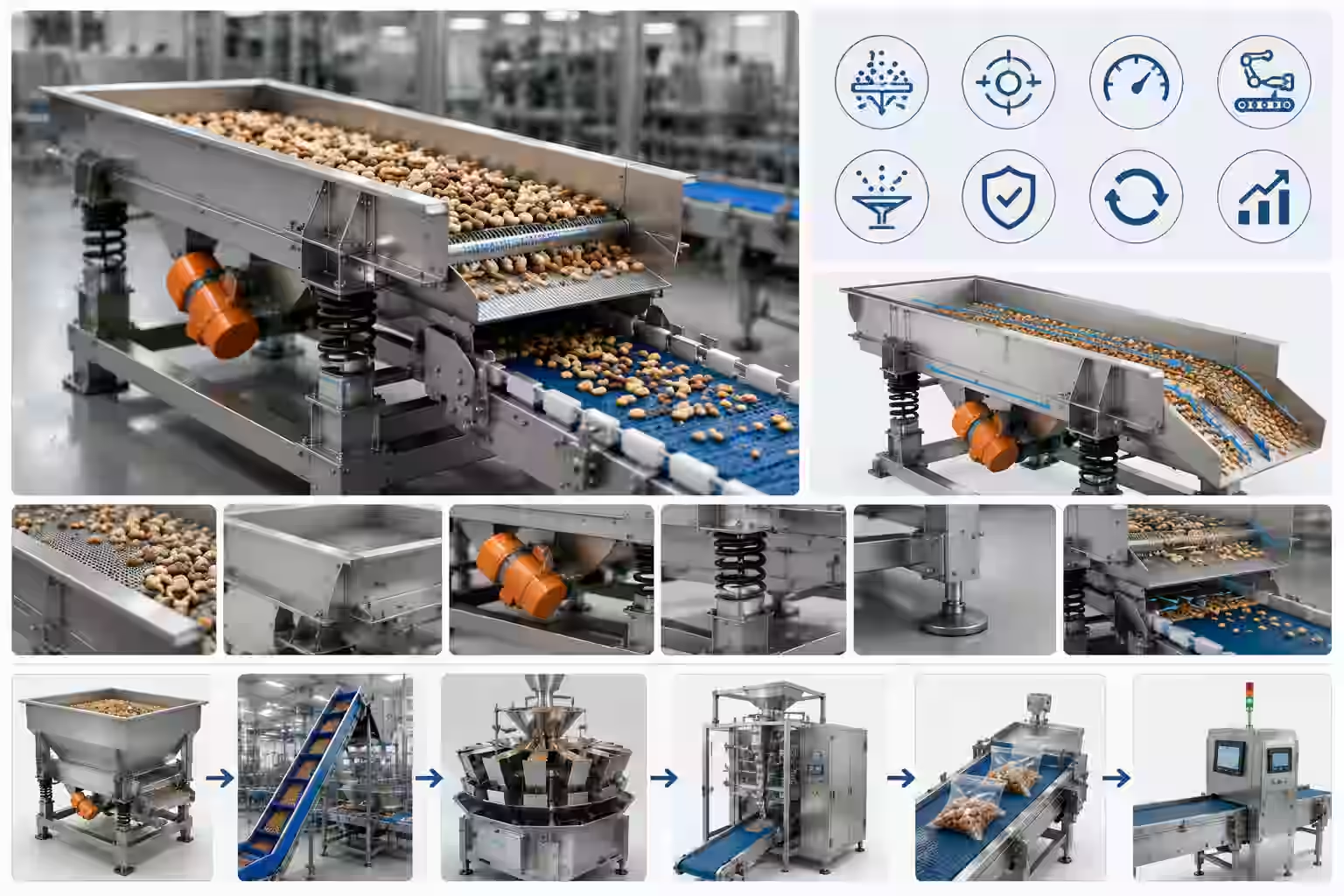
A vibrating feeder machine is an industrial material handling system that uses controlled vibration to transport products from one processing stage to another. Instead of relying on belts or manual handling, the machine uses vibration generated by specially designed motors to move products smoothly and consistently.
A trusted vibro feeder manufacturer designs these machines to handle delicate food products without breakage while maintaining accurate feeding rates. This makes vibro feeders an essential part of the vibratory feeder food industry, where hygiene, precision, and continuous operation are critical.
Main Functions of a Vibro Feeder Machine
- Uniform product feeding
- Continuous material flow
- Controlled product discharge
- Gentle handling of fragile food products
- Reduced product wastage
- Improved production efficiency
- Accurate feeding to packaging machines
- Support for automated production lines
- Reduced manual labor
- Better product quality
Importance in Food Processing Automation
The modern vibratory feeder food industry depends on automated material handling systems to achieve higher production speeds while maintaining strict hygiene standards. Manual feeding often results in inconsistent product flow, increased labor costs, and unnecessary product damage. A high-quality vibrating feeder machine eliminates these challenges through controlled and continuous product movement.
An experienced vibro feeder manufacturer develops customized feeding systems that integrate easily with conveyors, seasoning systems, grading equipment, weighing machines, packaging machines, and robotic automation. This ensures uninterrupted production and higher operational efficiency throughout the food manufacturing process.
| Manual Feeding | Vibrating Feeder Machine |
|---|---|
| Inconsistent product flow | Uniform feeding rate |
| Higher labor requirement | Fully automated feeding |
| Greater product damage | Gentle product handling |
| Lower productivity | Continuous high-speed operation |
| Frequent production stoppages | Stable and reliable production |
| Higher operating costs | Reduced production cost |
How a Vibrating Feeder Machine Works
A vibrating feeder machine operates by generating controlled vibration through specially designed vibration motors fitted with adjustable eccentric weights. The vibration causes products to move smoothly along the feeder tray while maintaining a consistent feeding rate. This gentle conveying method minimizes product damage and ensures uninterrupted production.
A reliable vibro feeder manufacturer carefully engineers vibration frequency, amplitude, tray dimensions, and motor capacity according to the product characteristics and production requirements. These machines are widely used throughout the vibratory feeder food industry because they provide accurate product feeding while maintaining food hygiene.
Modern food processing plants integrate the vibrating feeder machine with PLC controls, Variable Frequency Drives (VFD), sensors, weighing machines, packaging equipment, and conveyor systems to achieve complete production automation.
Types of Vibro Feeders Used in Food Processing
A professional vibro feeder manufacturer offers various feeder models depending on product type, production capacity, and processing requirements. Selecting the correct feeder improves feeding accuracy, operational efficiency, and product quality.
| Feeder Type | Typical Application |
|---|---|
| Electromagnetic Vibro Feeder | Lightweight food products |
| Motorized Vibro Feeder | Heavy-duty continuous feeding |
| Linear Vibratory Feeder | Accurate product feeding |
| Tubular Vibro Feeder | Powders and granules |
| Open Tray Vibro Feeder | Snacks, chips and namkeen |
| Heavy Duty Vibratory Feeder | Bulk material handling |
| Customized Vibro Feeder | Special food processing applications |
Major Components of a Vibro Feeder Machine
Every vibrating feeder machine consists of precision-engineered components designed for reliable operation in demanding food manufacturing environments.
- Food-grade stainless steel tray (SS304 / SS316)
- Heavy-duty vibration motors
- Adjustable eccentric weights
- Spring mounting system
- Anti-vibration base frame
- Variable Frequency Drive (VFD)
- PLC control panel
- Touchscreen HMI
- Product level sensors
- Safety guarding
- Easy-clean hygienic construction
- Heavy-duty support structure
Technical Design Considerations
An experienced vibro feeder manufacturer considers several engineering factors before designing equipment for the vibratory feeder food industry. Proper machine selection ensures reliable feeding, longer equipment life, and lower maintenance costs.
| Design Parameter | Importance |
|---|---|
| Product Type | Determines vibration intensity |
| Feed Rate | Selects motor size |
| Production Capacity | Determines feeder dimensions |
| Machine Material | Food-grade stainless steel construction |
| Automation Level | Supports PLC integration |
| Cleaning Requirements | Easy sanitation and maintenance |
| Power Consumption | Energy-efficient operation |
| Future Expansion | Supports production growth |
Automation Features
Today’s vibratory feeder food industry increasingly relies on intelligent automation. Modern vibrating feeder machine solutions integrate seamlessly with conveyors, seasoning systems, packaging machines, metal detectors, check weighers, and robotic palletizers to create fully automated production lines.
- PLC-controlled operation
- Touchscreen HMI interface
- Automatic feed rate adjustment
- VFD speed control
- Photoelectric sensors
- Remote monitoring capability
- Industry 4.0 compatibility
- Automatic fault detection
- Energy-saving operation
- Easy integration with complete food processing automation systems
By integrating advanced automation with precision engineering, a trusted vibro feeder manufacturer delivers highly efficient feeding solutions that improve production speed, maintain hygiene, and ensure consistent product quality across modern food processing plants.
Benefits of Vibro Feeder Machines
A modern vibrating feeder machine plays a vital role in improving food processing automation by ensuring smooth, accurate, and continuous material feeding. A trusted vibro feeder manufacturer designs these machines to maximize productivity while maintaining hygiene and reducing manual handling. Across the vibratory feeder food industry, vibro feeders have become essential equipment for achieving consistent production quality.
- Uniform and continuous product feeding
- Improves overall production efficiency
- Reduces manual labor requirements
- Gentle handling of fragile food products
- Minimizes product breakage and wastage
- Supports fully automated production lines
- Low maintenance requirements
- Energy-efficient operation
- Easy cleaning and hygienic construction
- Long service life with reliable performance
- Easy integration with conveyors and packaging systems
- Lower operating costs
Applications in the Food Industry
A professional vibro feeder manufacturer supplies customized feeding systems for various food processing applications. The vibratory feeder food industry uses these machines to transport products efficiently while maintaining consistent flow rates and preventing contamination.
| Industry | Application |
|---|---|
| Potato Chips Plants | Feeding chips to seasoning and packaging lines |
| Namkeen Manufacturing | Controlled feeding of fried snacks |
| Bakery Industry | Feeding biscuits and cookies |
| Frozen Food Processing | Uniform feeding after freezing |
| Rice & Grain Processing | Feeding grading and cleaning machines |
| Spice Processing | Controlled powder feeding |
| Dry Fruits | Sorting and packaging lines |
| Pet Food Industry | Automated product feeding |
| Dairy Products | Packaging line feeding |
| Ready-to-Eat Foods | Automated production systems |
Production Process Using a Vibrating Feeder Machine
A vibrating feeder machine forms an important part of an automated food processing line. It ensures continuous product flow between different processing stages without manual intervention.
| Production Stage | Machine Function |
|---|---|
| Raw Material Feeding | Controlled product feeding |
| Cleaning | Uniform feeding to cleaning equipment |
| Grading | Consistent material distribution |
| Seasoning | Smooth feeding into seasoning drum |
| Inspection | Controlled product movement |
| Packaging | Accurate feeding into packaging machines |
| Case Packing | Continuous product supply |
Buying Guide for Vibro Feeder Machines
Selecting the right vibrating feeder machine requires careful evaluation of production capacity, product type, automation requirements, and hygiene standards. A trusted vibro feeder manufacturer will recommend the ideal feeder based on your factory requirements.
| Selection Factor | Recommendation |
|---|---|
| Production Capacity | Select according to hourly output |
| Product Type | Choose suitable vibration intensity |
| Machine Material | SS304 / SS316 Stainless Steel |
| Automation | PLC & VFD Controlled System |
| Maintenance | Easy cleaning and servicing |
| Energy Efficiency | Low power consumption motors |
| Future Expansion | Scalable machine design |
| After Sales Support | Choose an experienced manufacturer |
Maintenance Tips
Proper maintenance improves the lifespan and efficiency of every vibrating feeder machine. Preventive servicing also minimizes production downtime.
- Clean the feeder tray after every production shift.
- Inspect vibration motors regularly.
- Check springs and anti-vibration mounts.
- Lubricate moving parts as recommended.
- Inspect electrical wiring and PLC connections.
- Calibrate vibration settings periodically.
- Tighten all mounting bolts.
- Replace worn components immediately.
- Maintain preventive maintenance schedules.
- Train operators on proper machine handling.
Why Choose Yuga-We100?
Yuga-We100 is a leading vibro feeder manufacturer offering advanced feeding solutions for the vibratory feeder food industry. Our customized vibrating feeder machine solutions are designed for maximum efficiency, hygiene, automation, and long-term reliability.
- Customized feeder solutions
- Food-grade stainless steel construction
- Advanced PLC automation
- Energy-efficient design
- Low maintenance equipment
- High production capacity
- Complete turnkey food processing solutions
- Expert installation and commissioning
- Reliable after-sales support
- Pan-India service network
Related Products
Vibratory ConveyorVibratory GraderDewatering ShakerDe-oiling VibratorFood Grade Conveyor SystemFood Processing Automation SystemPackaging Line AutomationCustom Conveyor System DesignAutomate Your Food Processing Line with Vibro Feeders
Looking for a trusted vibro feeder manufacturer? Yuga-We100 designs high-performance vibrating feeder machines for the vibratory feeder food industry, helping manufacturers improve productivity, hygiene, and automation.
Get Free ConsultationConclusion
As food manufacturers continue to embrace Industry 4.0 and intelligent automation, the demand for efficient feeding equipment continues to grow. A high-quality vibrating feeder machine ensures smooth product flow, accurate feeding, reduced manual handling, and improved production efficiency throughout the manufacturing process. Investing in equipment from a trusted vibro feeder manufacturer helps food processing plants increase productivity while maintaining the highest hygiene standards.
The modern vibratory feeder food industry relies on precision-engineered feeding systems that integrate seamlessly with conveyors, grading machines, seasoning systems, packaging equipment, and robotic automation. Whether processing potato chips, namkeen, bakery products, cereals, spices, frozen foods, or ready-to-eat meals, a customized vibrating feeder machine significantly improves operational performance and product quality.
Yuga-We100 delivers innovative vibro feeder solutions designed specifically for food processing plants. From engineering and manufacturing to installation, commissioning, and after-sales support, our machines provide long-term reliability, energy efficiency, and exceptional return on investment.
Frequently Asked Questions
1. What is a vibrating feeder machine?
A vibrating feeder machine is an automated material handling system that uses controlled vibration to feed products uniformly into processing, grading, seasoning, or packaging equipment.
2. Why should I choose a professional vibro feeder manufacturer?
A reliable vibro feeder manufacturer provides customized, food-grade machines that improve feeding accuracy, production efficiency, hygiene, and long-term reliability.
3. Which industries use vibratory feeder machines?
The vibratory feeder food industry includes potato chips plants, namkeen production, bakery manufacturing, frozen food processing, spice industries, grain processing, dairy plants, dry fruit processing, and snack food manufacturing.
4. What material is used to manufacture vibro feeders?
Most food-grade vibro feeders are manufactured using SS304 or SS316 stainless steel to ensure hygiene, corrosion resistance, and compliance with food safety standards.
5. Can a vibrating feeder machine be integrated into an automated production line?
Yes. Modern vibrating feeder machines integrate easily with conveyors, weighing systems, seasoning units, packaging machines, check weighers, and PLC-controlled automation systems.
6. What are the advantages of a vibrating feeder machine?
Key benefits include continuous product feeding, reduced labor costs, improved hygiene, accurate material flow, low maintenance, energy efficiency, and higher production capacity.
7. How often should a vibro feeder be maintained?
Regular cleaning, vibration motor inspection, lubrication, spring inspection, and preventive maintenance should be carried out according to the manufacturer’s maintenance schedule.
8. Why choose Yuga-We100 for vibro feeder machines?
Yuga-We100 is a trusted vibro feeder manufacturer delivering customized vibrating feeder machine solutions for the vibratory feeder food industry, backed by engineering expertise, turnkey project execution, and dependable after-sales support.