
Table of Contents
- Introduction
- What is a Food Processing Automation System?
- Why Food Factories Need Automation
- Components of an Automated Food Processing System
- How Food Factory Automation Solutions Work
- Benefits of Food Processing Automation System
- Types of Food Processing Automation
- Applications
- Technical Specifications
- Automation vs Manual Processing
- Buying Guide
- FAQs
Introduction: Why Food Processing Automation Matters
The food industry is rapidly embracing digital transformation to improve efficiency, maintain hygiene, and increase production capacity. A modern food processing automation system enables manufacturers to automate production processes, reduce manual labor, and maintain consistent product quality throughout the manufacturing cycle.
Growing demand for packaged foods, ready-to-eat products, frozen foods, snacks, bakery items, and beverages has encouraged manufacturers to invest in food factory automation solutions that deliver faster production, lower operating costs, and enhanced food safety.
Whether you’re producing potato chips, namkeen, spices, rice flakes, bakery products, dairy products, or packaged foods, an automated food processing system can significantly improve operational performance while supporting Industry 4.0 manufacturing standards.
In This Guide You’ll Learn
- What a food processing automation system is
- How automated food processing systems work
- Benefits of food factory automation solutions
- Industrial applications
- Technical considerations before installation
- How to choose the right automation partner
What is a Food Processing Automation System?
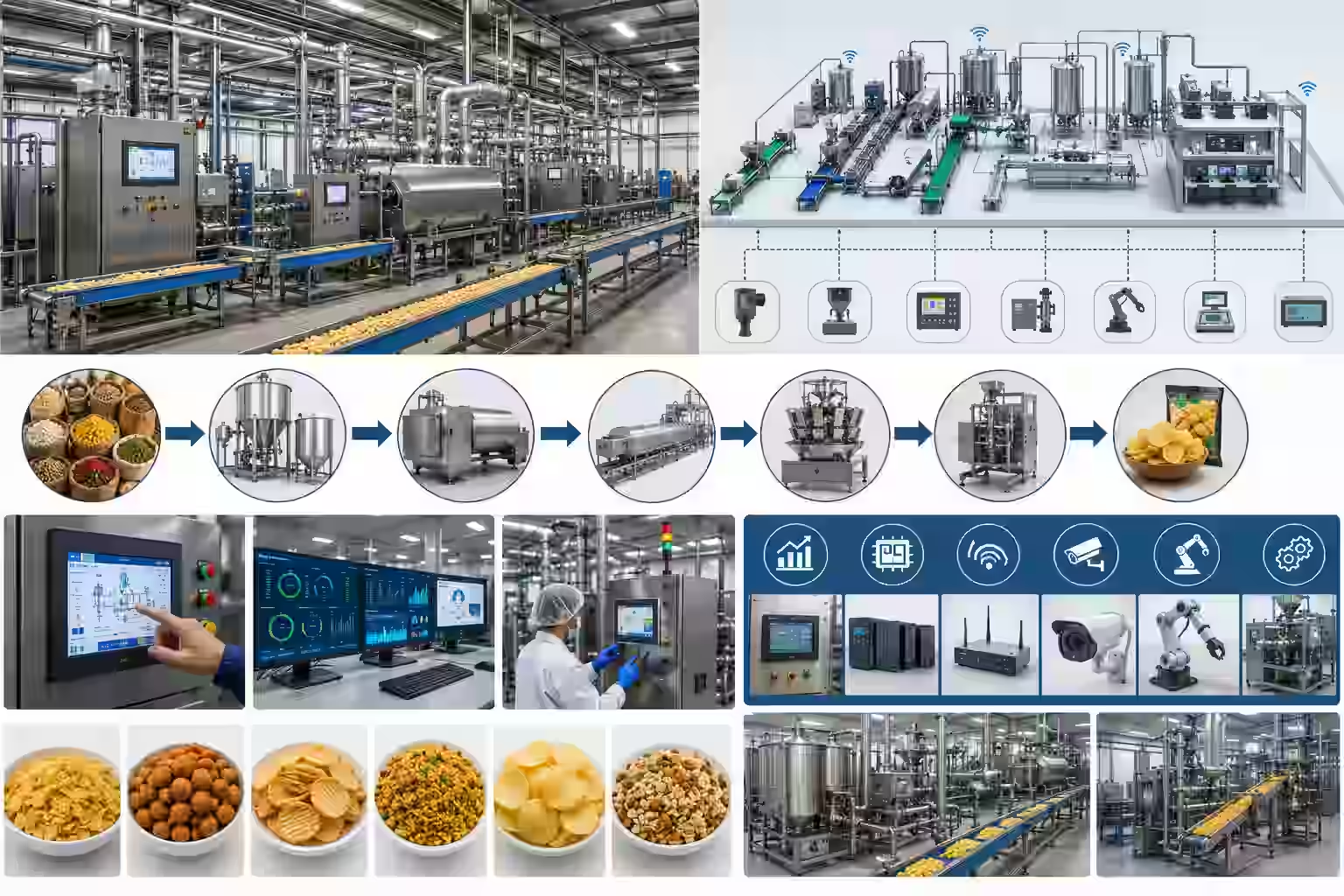
A food processing automation system is an integrated manufacturing solution that automates food production using intelligent machinery, conveyors, sensors, PLC control panels, robotics, weighing systems, packaging equipment, and monitoring software.
Instead of relying on manual handling, an automated food processing system manages the complete production workflow—from raw material feeding to final packaging—with minimal human intervention.
Typical Automated Operations Include:
- Raw material feeding
- Cleaning and washing
- Sorting and grading
- Cutting and slicing
- Mixing and blending
- Cooking, frying, or baking
- Seasoning
- Cooling
- Conveying
- Packaging and labeling
- Quality inspection
Why Food Factories Need Automation
Modern food manufacturers operate in a highly competitive market where production speed, hygiene, traceability, and product consistency are essential. Implementing reliable food factory automation solutions helps manufacturers overcome labor shortages, reduce waste, improve food safety, and increase profitability.
Major Reasons to Automate Food Manufacturing
- Higher production efficiency
- Reduced labor dependency
- Improved product consistency
- Better food safety compliance
- Reduced production waste
- Lower operating costs
- Real-time production monitoring
- Energy-efficient manufacturing
- Faster packaging operations
- Easy integration with Industry 4.0 systems
Components of an Automated Food Processing System
A modern food processing automation system consists of several interconnected machines designed to automate production from raw material handling to final packaging. Every component works together to ensure smooth production flow, consistent quality, and maximum operational efficiency.
1. Raw Material Feeding System
Automated feeding equipment transfers raw materials to the production line while reducing manual handling and maintaining hygiene standards.
2. Conveyor Systems
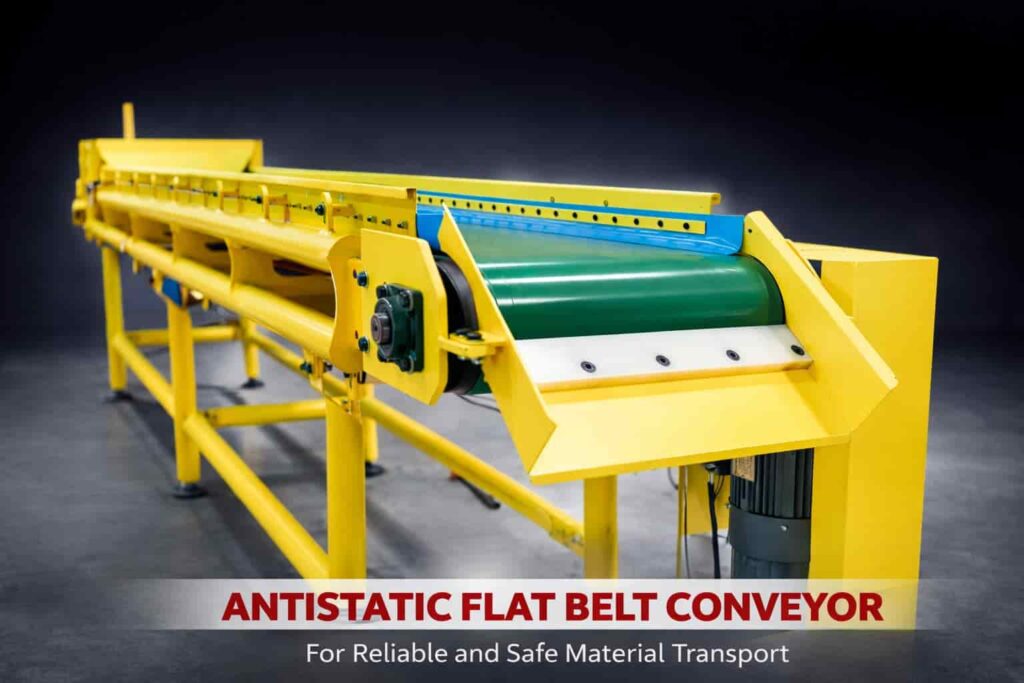
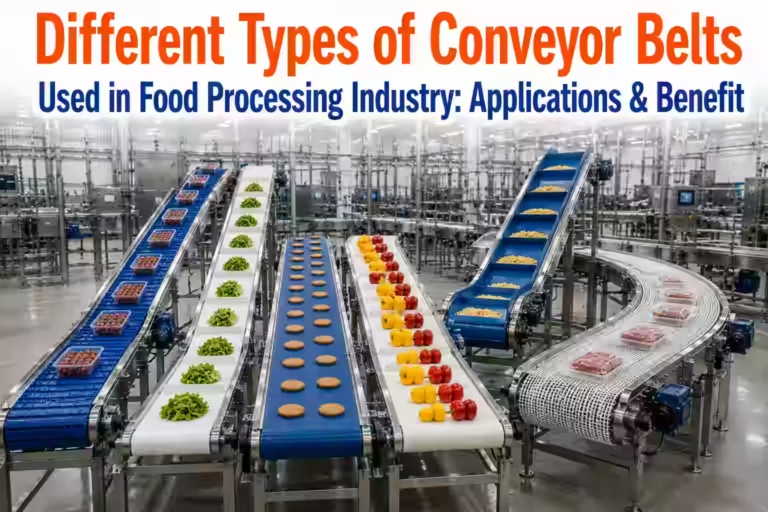
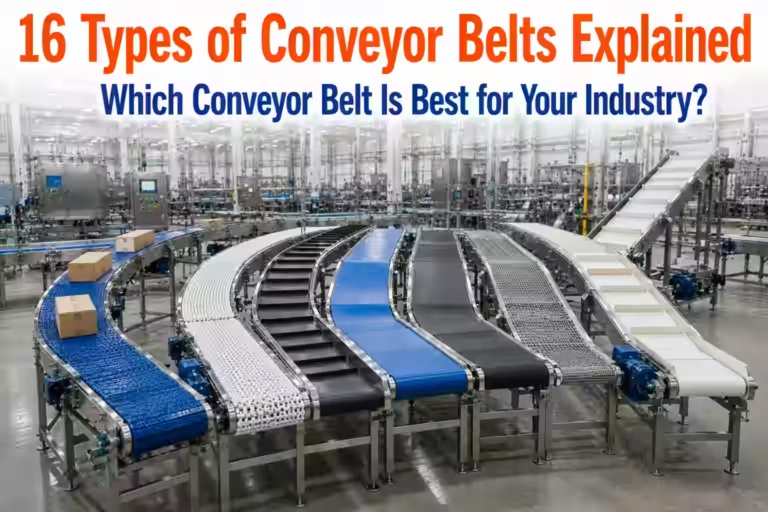
Food-grade belt conveyors, Z Type Bucket Elevators, distribution conveyors, and flat belt conveyors ensure continuous product movement between different production stages.
3. Processing Equipment
Processing machines perform operations such as washing, peeling, slicing, mixing, cooking, frying, seasoning, cooling, drying, and coating depending on the product.
4. PLC Control Panel
The PLC-based control system monitors machine speed, production capacity, sensors, alarms, and automation parameters through a centralized interface.
5. Packaging Automation
Automatic weighing, filling, sealing, labeling, and packing systems complete the manufacturing process while maintaining speed and accuracy.
Main Components Include
- Raw Material Handling Equipment
- Food Grade Conveyors
- Processing Machines
- PLC Control Panels
- Industrial Sensors
- Packaging Machines
- Inspection Systems
- Industrial Automation Software
How Food Factory Automation Solutions Work
A food factory automation solution integrates intelligent machines into a synchronized production line. Each machine communicates with the PLC controller to automate operations and reduce manual intervention.
Typical Production Flow
- Raw Material Feeding
- Cleaning & Washing
- Sorting & Inspection
- Cutting / Slicing
- Mixing or Processing
- Cooking / Frying / Baking
- Cooling System
- Conveyor Transfer
- Automatic Packaging
- Quality Inspection
- Finished Goods Dispatch
By implementing an automated food processing system, manufacturers can monitor production in real time, optimize machine performance, reduce downtime, and improve overall equipment effectiveness (OEE).
Benefits of Food Processing Automation System
Investing in a food processing automation system provides long-term operational and financial advantages for food manufacturers.
| Benefit | Business Impact |
|---|---|
| Higher Productivity | Faster production with minimal manual intervention |
| Improved Food Safety | Reduced contamination risks through automated handling |
| Lower Labor Costs | Reduced dependency on manual operators |
| Consistent Product Quality | Uniform processing and packaging |
| Reduced Material Waste | Optimized production efficiency |
| Energy Savings | Efficient machine operation and lower power consumption |
| Real-Time Monitoring | Better production control using PLC & HMI |
| Higher ROI | Lower operational costs with increased profitability |
Types of Food Processing Automation
Different manufacturing industries require different levels of automation depending on production volume, product type, and investment budget.
Common Automation Types
- Semi-Automatic Food Processing Systems
- Fully Automatic Production Lines
- PLC Controlled Processing Systems
- Robotic Packaging Automation
- Smart Conveyor Automation
- Industry 4.0 Enabled Food Manufacturing Systems
Applications of Automated Food Processing Systems
A modern automated food processing system is suitable for a wide range of food manufacturing industries where hygiene, productivity, and consistency are essential.
- Potato Chips Manufacturing Plants
- Namkeen Processing Plants
- Rice Flakes (Poha) Processing Units
- Bakery Production Lines
- Snack Food Manufacturing
- Frozen Food Processing Plants
- Dairy Processing Units
- Spice Processing Plants
- Ready-to-Eat Food Manufacturing
- Food Packaging Industries
Applications of Food Processing Automation Systems
A food processing automation system is suitable for almost every segment of the food manufacturing industry. From raw material handling to packaging, automation improves efficiency, hygiene, and product consistency.
- Snack Manufacturing Plants
- Potato Chips Processing Lines
- Namkeen Production Plants
- Rice Flakes (Poha) Processing
- Bakery & Biscuit Manufacturing
- Frozen Food Processing Units
- Ready-to-Eat Food Production
- Spice Processing Plants
- Dairy Processing Industries
- Packaging & Inspection Lines
Industry Insight
Modern food factory automation solutions allow manufacturers to increase production while reducing contamination risks, ensuring compliance with global food safety standards.
Technical Specifications
| Feature | Specification |
|---|---|
| Automation Type | Semi & Fully Automatic |
| Control System | PLC + HMI Touch Screen |
| Machine Material | SS304 / SS316 Food Grade Stainless Steel |
| Drive System | Variable Frequency Drive (VFD) |
| Production Capacity | Customized as per Plant Requirement |
| Automation Level | Industry 4.0 Ready |
| Monitoring | Real-Time Digital Monitoring |
| Safety | Emergency Stop & Sensor Protection |
Major Benefits of an Automated Food Processing System
1. Higher Production Capacity
Automation enables continuous production with minimal interruptions, increasing plant throughput significantly.
2. Better Product Quality
Every batch is processed under controlled conditions, ensuring consistent taste, texture, and appearance.
3. Improved Food Safety
Reduced human contact minimizes contamination and supports food safety compliance.
4. Lower Operating Costs
Automation reduces labor requirements, minimizes product wastage, and lowers maintenance expenses.
5. Real-Time Production Monitoring
Advanced control systems provide instant performance data for better operational decisions.
6. Energy Efficiency
Smart motors and optimized control systems reduce electricity consumption.
7. Easy Plant Expansion
Modern automation systems can be upgraded as production requirements increase.
Common Food Manufacturing Challenges & Automation Solutions
| Challenge | Automation Solution |
|---|---|
| Manual Product Handling | Automatic Conveyor Systems |
| Production Delays | Continuous Automated Workflow |
| Inconsistent Product Quality | PLC Controlled Processing |
| High Labor Cost | Automated Material Handling |
| Food Contamination Risk | Food Grade Stainless Steel Equipment |
| Packaging Errors | Automatic Weighing & Packaging Systems |
Food Processing Automation System vs Manual Processing
Many manufacturers still rely on manual production methods, but investing in a food processing automation system offers significant advantages in terms of efficiency, product quality, and long-term operational costs.
| Feature | Automated Food Processing System | Manual Processing |
|---|---|---|
| Production Speed | High | Limited |
| Product Consistency | Excellent | Variable |
| Labor Requirement | Low | High |
| Food Safety | Excellent | Moderate |
| Operational Cost | Lower (Long Term) | Higher |
| Product Waste | Minimal | More |
| Automation Integration | Fully Compatible | Not Possible |
| Production Monitoring | Real-Time | Manual |
Buying Guide – How to Choose the Right Food Processing Automation System
Selecting the right food processing automation system requires careful evaluation of your production goals, available space, and future expansion plans. Before investing, consider the following factors:
Choose Food-Grade Equipment
Ensure all machines are manufactured using SS304 or SS316 stainless steel for hygienic food production.
Evaluate Production Capacity
Select machinery capable of handling your present production while allowing room for future expansion.
Check Automation Features
Choose PLC-controlled systems with HMI interfaces, sensors, and VFD controls for maximum efficiency.
Look for Customization
Every production line is different. A reliable food processing equipment manufacturer should provide customized automation solutions.
Verify After-Sales Support
Installation, operator training, spare parts availability, and technical support are essential for long-term performance.
Mistakes to Avoid While Installing Food Factory Automation Solutions
- Choosing equipment only based on price.
- Ignoring future production expansion.
- Using non-food-grade machinery.
- Not integrating conveyors with production lines.
- Skipping preventive maintenance planning.
- Ignoring operator training.
- Purchasing from inexperienced suppliers.
Why Choose Yuga-We100?
Yuga-We100 is a trusted food processing equipment manufacturer delivering complete automation solutions for food industries across India. We design customized production lines that improve productivity, product quality, and operational efficiency.
Why Industries Trust Yuga-We100
- Complete food processing automation solutions
- Customized plant layouts and machine design
- Food-grade stainless steel construction
- Advanced PLC & Industry 4.0 automation
- Energy-efficient machinery
- Professional installation & commissioning
- Reliable after-sales service and technical support
- Competitive pricing with high ROI
Explore More Food Processing Solutions
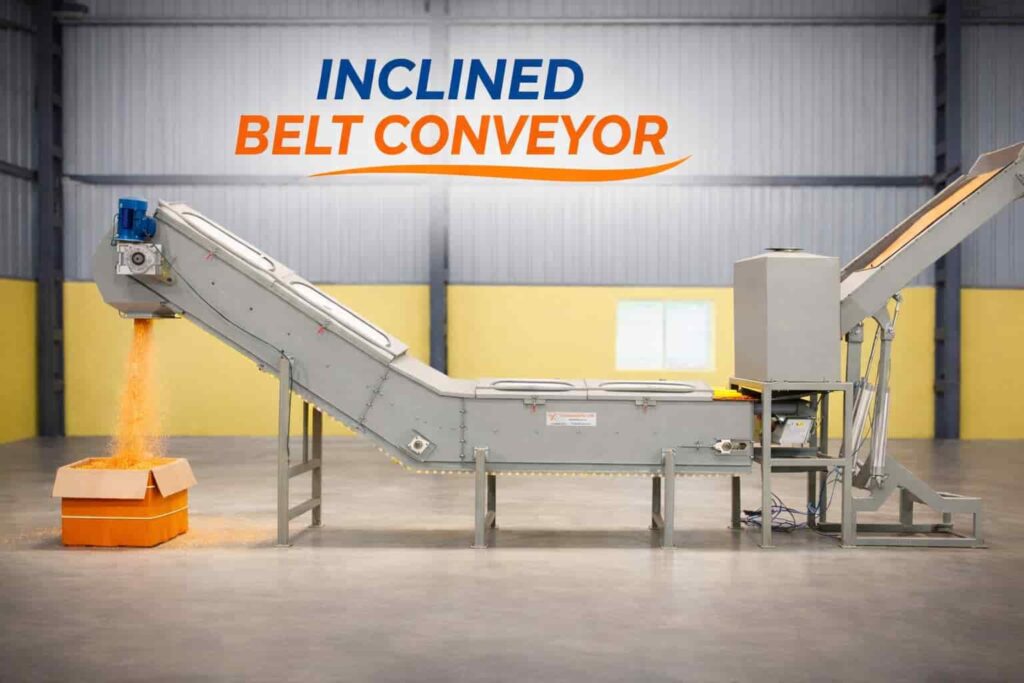
Food Manufacturing Plant Machinery DesignPotato Chips Production LineNamkeen Manufacturing PlantRice Flakes (Poha) Processing PlantZ Type Bucket ElevatorInclined Belt ConveyorVibratory ConveyorPackaging Line AutomationUpgrade Your Food Manufacturing Plant with Smart Automation
Looking for a reliable food processing equipment manufacturer to automate your production line? Yuga-We100 offers customized, hygienic, and energy-efficient automation systems designed for modern food manufacturing plants.
Request a Free ConsultationIndustry Standards & Useful Resources
To learn more about food safety, automation standards, and best practices in food manufacturing, refer to these trusted industry resources:
- Food Safety and Standards Authority of India (FSSAI)
- Ministry of Food Processing Industries (MoFPI)
- ISO – International Organization for Standardization
- Codex Alimentarius International Food Standards
- OSHA Machine Safety Guidelines
Frequently Asked Questions (FAQs)
1. What is a food processing automation system?
It is an integrated production system that automates food processing, material handling, quality inspection, and packaging.
2. Which industries benefit from food factory automation solutions?
Snack, bakery, dairy, frozen food, spice, beverage, ready-to-eat, and packaged food manufacturers.
3. Can an automated food processing system reduce labor costs?
Yes. Automation minimizes manual handling, improves efficiency, and significantly reduces labor expenses.
4. Are automation systems customizable?
Yes. Every production line can be customized according to capacity, layout, and product requirements.
5. Which material is best for food processing machinery?
SS304 and SS316 stainless steel are widely preferred because they are hygienic, corrosion-resistant, and easy to clean.
6. Does Yuga-We100 provide complete automation solutions?
Yes. Yuga-We100 designs, manufactures, installs, and supports complete food processing automation systems.

Yugawe100
Articles: 79



Get in Touch
Fill out the form below and we’ll get back to you shortly!