Table of Contents
Modern industries rely heavily on efficient material handling systems to improve productivity, reduce labor costs, and ensure continuous production. Understanding the different types of conveyor belts helps manufacturers select the right equipment for transporting products safely and efficiently. From food processing plants to pharmaceutical factories, warehouses, mining operations, and packaging lines, conveyor systems play a critical role in modern manufacturing.
There are numerous conveyor belt types available, each designed for specific applications, load capacities, environmental conditions, and product characteristics. Whether you require industrial conveyor belts for heavy-duty operations or a hygienic food grade conveyor belt for food manufacturing, selecting the correct belt improves productivity, product quality, and operational efficiency.
This comprehensive guide explains the most common types of conveyor belts, the materials used in their construction, major conveyor system applications, and practical tips to help you choose the right conveyor solution for your business.
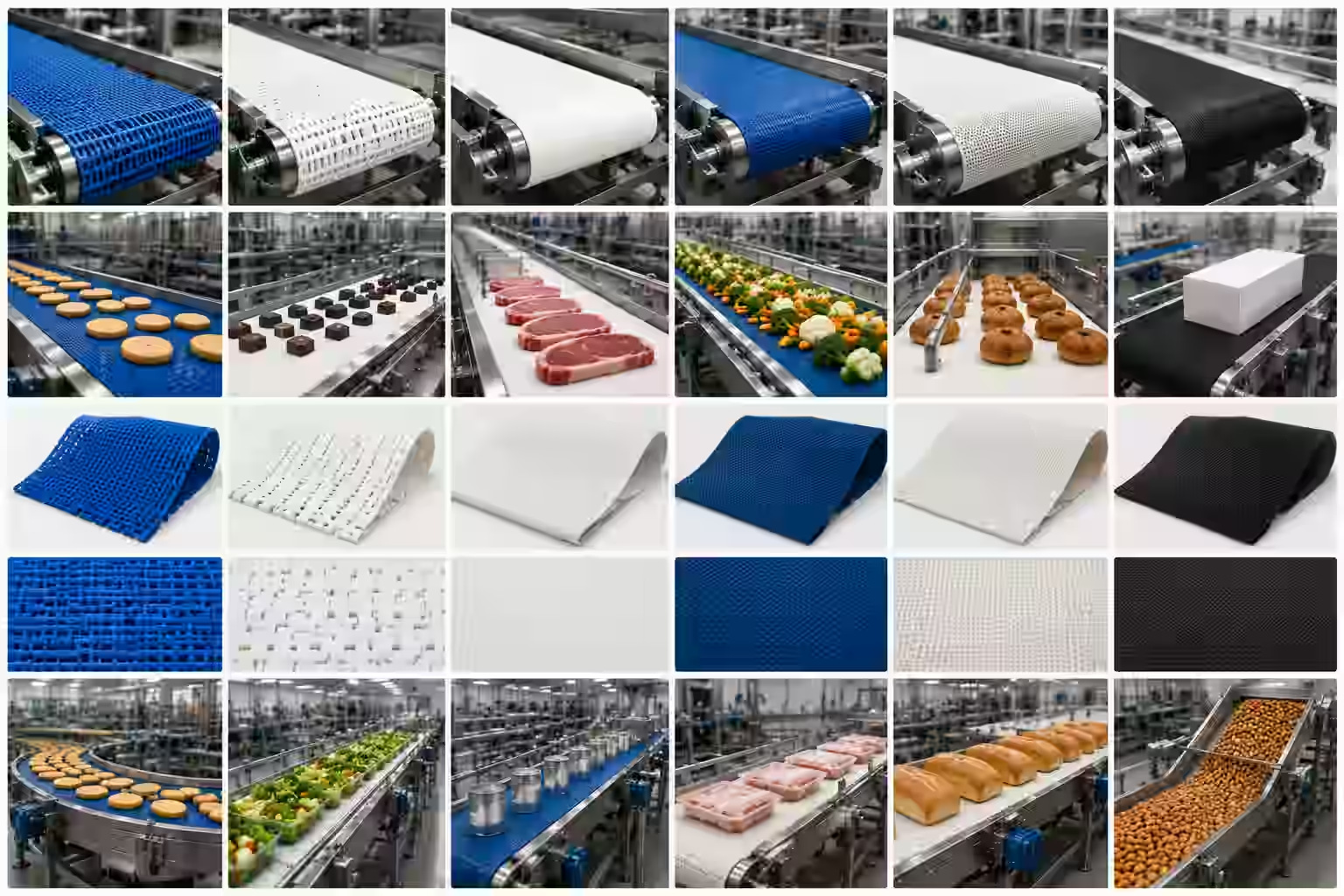
What are Conveyor Belts?
Conveyor belts are continuous moving systems used to transport raw materials, finished products, and packaged goods from one point to another. They consist of a durable belt mounted on rollers or pulleys and powered by electric motors. Depending on production requirements, different conveyor belt types are designed to handle lightweight food products, heavy industrial materials, powders, cartons, bulk solids, or fragile items.
Modern industrial conveyor belts improve production efficiency by automating material movement while reducing manual handling. In food processing plants, a food grade conveyor belt is manufactured using hygienic materials that comply with food safety standards and prevent contamination during production.
Today’s conveyor systems are integrated with sensors, PLC controls, robotics, inspection systems, and packaging equipment, making them a key component of intelligent factory automation and modern conveyor system applications.
Main Functions of Conveyor Belts
- Transport raw materials efficiently
- Move finished products automatically
- Reduce manual handling
- Improve production speed
- Increase workplace safety
- Maintain product hygiene
- Support continuous manufacturing
- Integrate with automated production lines
- Reduce operating costs
- Improve overall production efficiency
Importance of Conveyor Systems
Choosing the correct types of conveyor belts directly impacts production efficiency, maintenance costs, product quality, and long-term operational performance. A well-designed conveyor system minimizes downtime while ensuring smooth material flow throughout the manufacturing process.
Different conveyor belt types are available for specific industries. Heavy-duty industrial conveyor belts transport bulk materials in manufacturing plants, while a food grade conveyor belt is specifically designed for hygienic food handling, easy cleaning, and compliance with food safety regulations.
| Manual Material Handling | Automated Conveyor System |
|---|---|
| Higher labor costs | Reduced manpower requirements |
| Slower production | Continuous automated operation |
| Higher product damage | Safe product transportation |
| Inconsistent workflow | Smooth material flow |
| Greater workplace risk | Improved operator safety |
| Limited production capacity | Higher production efficiency |
Major Types of Conveyor Belts
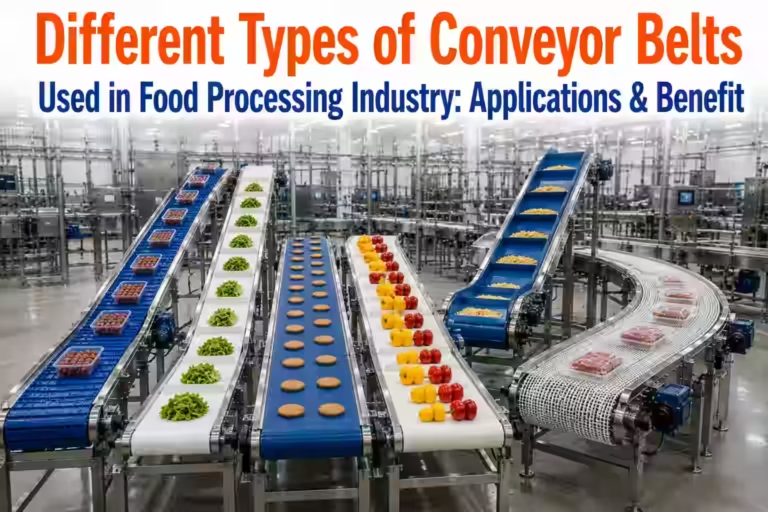
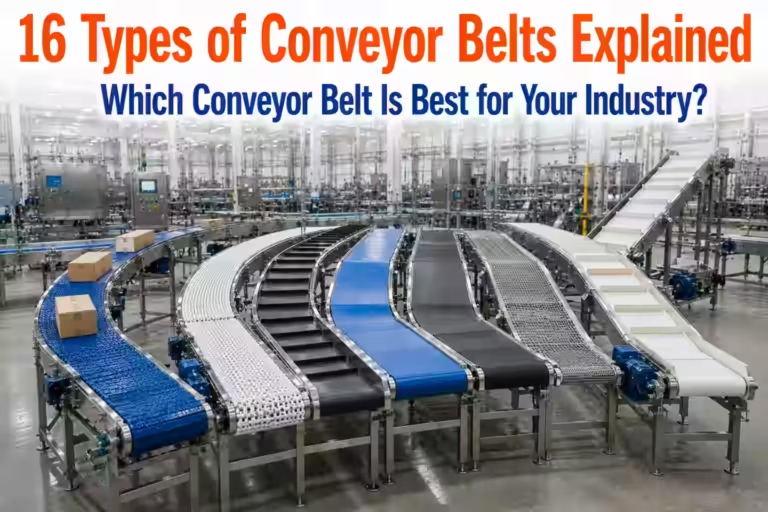
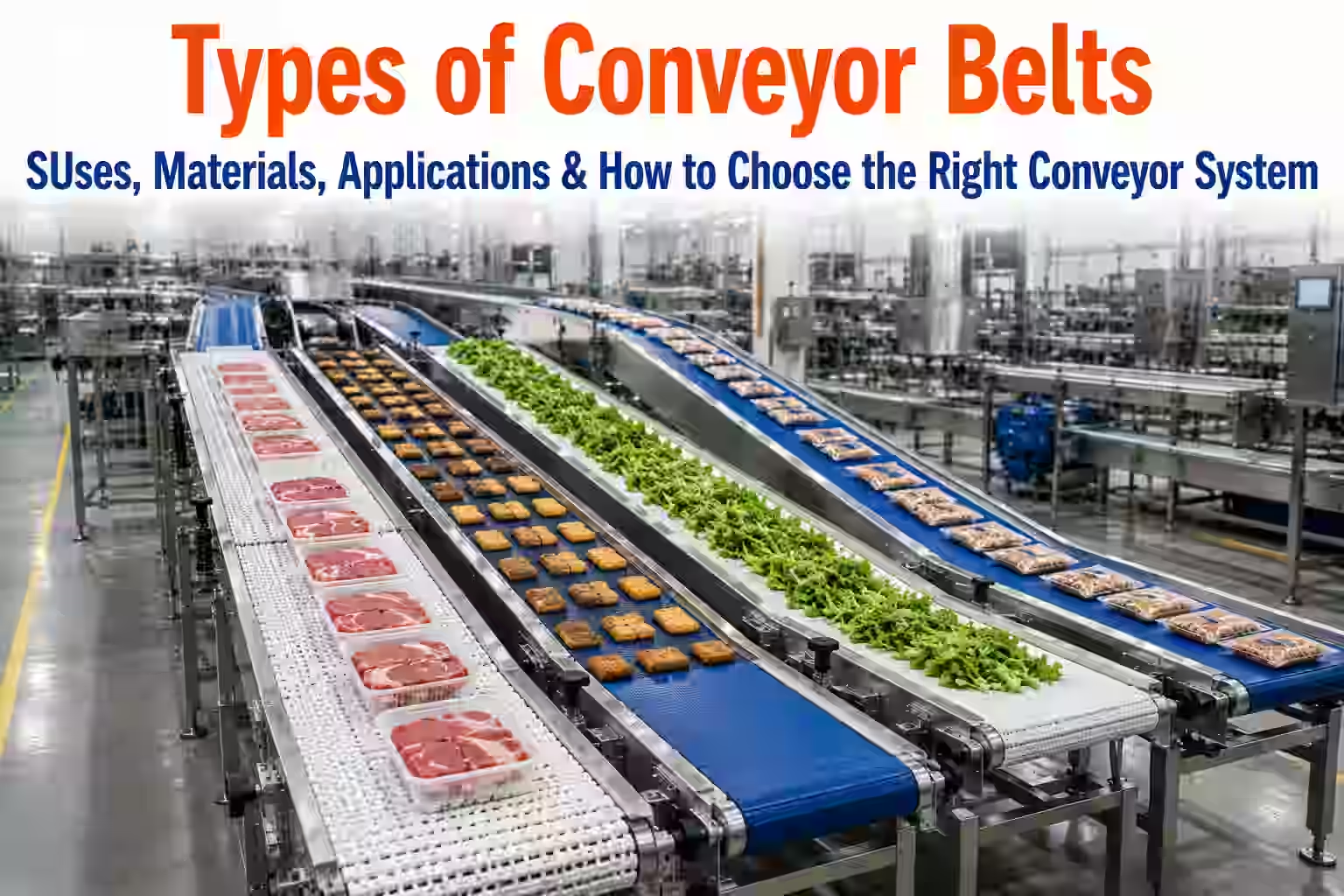
Understanding the different types of conveyor belts is essential when selecting the right material handling solution. Each conveyor is designed for specific products, production environments, and load capacities. Modern industrial conveyor belts improve efficiency while reducing labor and product damage. For hygienic industries, a food grade conveyor belt ensures safe product handling and compliance with food safety standards.
| Conveyor Belt Type | Best Applications |
|---|---|
| Flat Belt Conveyor | General product transportation |
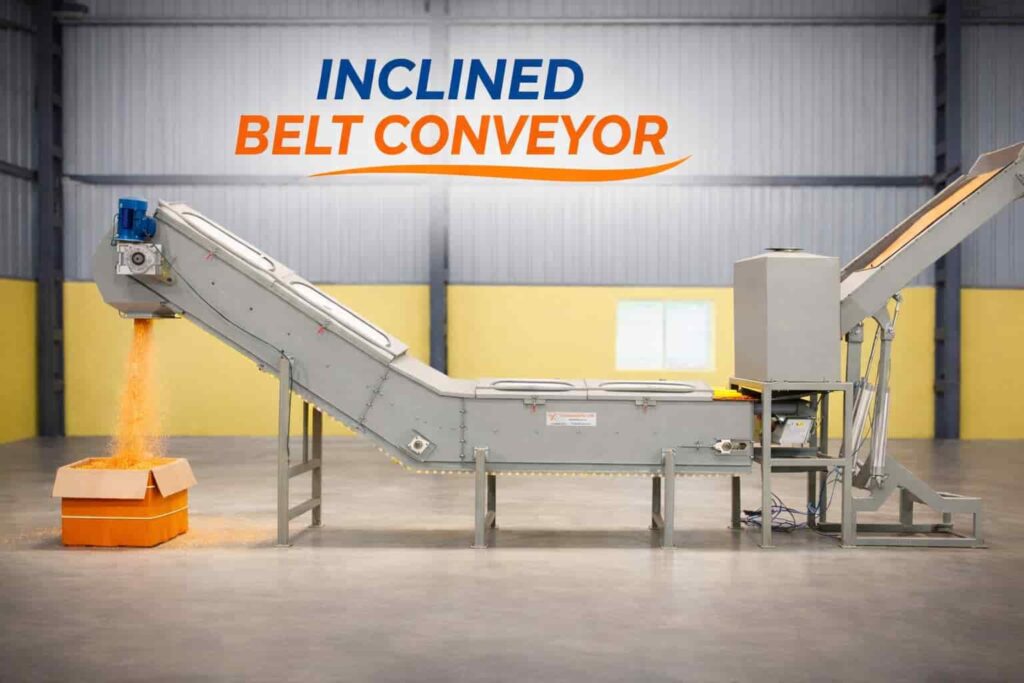
| Inclined Belt Conveyor | Moving products between different heights |
| Food Grade Belt Conveyor | Food processing and packaging plants |
| Modular Plastic Belt Conveyor | Wet food processing applications |
| PVC Conveyor Belt | Light-duty industrial applications |
| PU Conveyor Belt | Bakery, dairy, meat and snacks |
| Wire Mesh Conveyor | Cooling, drying and baking lines |
| Cleated Belt Conveyor | Steep angle material handling |
| Sidewall Belt Conveyor | Bulk material transportation |
| Roller Bed Conveyor | Heavy cartons and packages |
| Magnetic Conveyor | Metal component handling |
| Vacuum Belt Conveyor | Lightweight product transfer |
Common Conveyor Belt Materials
The performance of different conveyor belt types depends largely on the material used in belt construction. Selecting the right belt material improves durability, hygiene, wear resistance, and operating efficiency.
| Material | Features | Typical Industry |
|---|---|---|
| PVC | Economical and durable | Packaging & Warehousing |
| PU (Polyurethane) | Food-safe and oil resistant | Food Processing |
| Rubber | Heavy-duty applications | Mining & Cement |
| Modular Plastic | Easy cleaning | Food & Beverage |
| Stainless Steel Mesh | Heat resistant | Bakery & Drying Systems |
| Teflon | Non-stick surface | Baking Industry |
What is a Food Grade Conveyor Belt?
A food grade conveyor belt is specially manufactured using FDA-approved or food-safe materials that prevent contamination during food handling. These belts are designed for hygienic environments where cleanliness, easy sanitation, and corrosion resistance are essential.
Unlike conventional industrial conveyor belts, food-grade belts feature smooth surfaces, non-toxic materials, excellent resistance to oils and chemicals, and easy wash-down capability. They are widely used in potato chips plants, namkeen manufacturing, bakery production, dairy processing, frozen food factories, fruit and vegetable processing, and packaging lines.
Advantages of Food Grade Conveyor Belts
- FDA and food safety compliant
- Easy to clean and sanitize
- Oil and grease resistant
- Excellent corrosion resistance
- Suitable for wet processing areas
- Supports HACCP and GMP standards
- Long service life
- Low maintenance requirements
- High product hygiene
- Ideal for automated food production
How Conveyor Systems Work
Modern conveyor system applications use electric motors, drive pulleys, rollers, sensors, and intelligent PLC controls to transport products continuously throughout the production line. Depending on the selected types of conveyor belts, products can move horizontally, vertically, or on inclined paths without manual intervention.
Advanced industrial conveyor belts can also be integrated with weighing systems, metal detectors, vision inspection systems, robotic pick-and-place units, packaging machines, and palletizers to create a fully automated production environment.
Technical Features of Modern Conveyor Systems
- PLC-based intelligent controls
- Variable Frequency Drive (VFD)
- Food-grade stainless steel construction
- Energy-efficient drive motors
- Heavy-duty frame construction
- Adjustable conveyor speed
- Easy maintenance design
- Quick belt replacement system
- Low noise operation
- Industry 4.0 compatible automation
- Continuous 24/7 operation
- Easy integration with production equipment
Choosing the correct types of conveyor belts and matching them with the right production requirements ensures maximum productivity, lower operating costs, improved product handling, and long-term reliability across various conveyor system applications.
Conveyor System Applications Across Industries
Modern conveyor system applications are used across almost every manufacturing sector to improve material handling efficiency, reduce labor costs, and automate production processes. Different types of conveyor belts are designed to handle specific materials, operating environments, and production capacities. Whether transporting lightweight food products or heavy industrial materials, selecting the appropriate conveyor belt types ensures smooth and reliable operations.
Today, industrial conveyor belts are widely integrated with robotic systems, packaging machines, grading equipment, inspection systems, and warehouse automation to create smart manufacturing facilities.
| Industry | Conveyor System Applications |
|---|---|
| Food Processing | Sorting, grading, processing and packaging |
| Potato Chips Plants | Raw potato to finished product handling |
| Namkeen Manufacturing | Frying, seasoning and packaging lines |
| Bakery Industry | Dough handling and cooling conveyors |
| Dairy Industry | Packaging and product transfer |
| Frozen Foods | Freezing and packaging operations |
| Warehouse Automation | Carton transportation |
| Pharmaceutical Industry | Medicine packaging lines |
| Automobile Industry | Assembly line automation |
| Mining Industry | Bulk material transportation |
Benefits of Different Types of Conveyor Belts
Installing the correct types of conveyor belts significantly improves manufacturing efficiency and reduces operational costs. High-quality industrial conveyor belts provide long service life, low maintenance, and reliable material handling across multiple industries.
- Continuous material transportation
- Higher production efficiency
- Reduced labor costs
- Lower product damage
- Improved workplace safety
- Better production flow
- Easy automation integration
- Reduced downtime
- Low maintenance requirements
- Long operating life
- Energy-efficient performance
- Higher return on investment
How to Choose the Right Conveyor System
Selecting the correct types of conveyor belts depends on product characteristics, production capacity, environmental conditions, and future expansion requirements. Choosing the wrong conveyor can reduce efficiency and increase maintenance costs.
| Selection Criteria | Recommendation |
|---|---|
| Product Type | Select suitable conveyor belt material |
| Load Capacity | Choose proper belt strength |
| Operating Environment | Wet, dry, hot or cold conditions |
| Food Processing | Use food grade conveyor belt |
| Automation Level | PLC-controlled conveyor system |
| Maintenance | Easy belt replacement design |
| Future Expansion | Scalable conveyor system |
| Budget | Balance investment with production needs |
Maintenance Tips for Conveyor Belts
Proper maintenance extends the life of industrial conveyor belts and ensures uninterrupted production. Regular inspections help prevent unexpected breakdowns and improve overall conveyor performance.
- Inspect conveyor belts daily for wear.
- Maintain proper belt tension.
- Clean the belt after each production shift.
- Lubricate bearings and rollers.
- Inspect motors and gearboxes.
- Replace damaged rollers immediately.
- Check belt alignment regularly.
- Monitor conveyor speed.
- Inspect electrical controls.
- Follow preventive maintenance schedules.
Why Choose Yuga-We100?
Yuga-We100 designs and manufactures premium-quality industrial conveyor belts and customized conveyor solutions for modern manufacturing industries. Our expertise in various types of conveyor belts enables us to deliver reliable systems for food processing, packaging, pharmaceuticals, warehouses, and industrial automation.
- Customized conveyor solutions
- Food-grade conveyor systems
- Heavy-duty industrial conveyors
- Complete turnkey automation projects
- Energy-efficient designs
- Advanced PLC automation
- Easy maintenance systems
- Expert installation support
- Reliable after-sales service
- Trusted by industries across India
Related Products
Horizontal Flat Belt ConveyorInclined Belt ConveyorHomogeneous Inclined Belt ConveyorDistribution ConveyorScrew ConveyorVacuum ConveyorVibratory ConveyorFood Processing Automation SystemLooking for the Right Conveyor System?
Yuga-We100 offers customized types of conveyor belts for every industry, including food grade conveyor belt solutions, heavy-duty industrial conveyor belts, and advanced automation systems designed to maximize productivity and efficiency.
Get Free ConsultationSelecting the correct types of conveyor belts is one of the most important decisions when designing an efficient material handling system. Every industry has unique production requirements, which is why different conveyor belt types are engineered to transport products safely, improve workflow, and reduce manual handling. Whether you require lightweight transportation for packaged goods or heavy-duty industrial conveyor belts for continuous manufacturing, the right conveyor system improves productivity while lowering operating costs.
For food manufacturers, choosing a certified food grade conveyor belt ensures hygienic product handling, compliance with food safety regulations, and easy cleaning. Modern conveyor system applications integrate conveyors with grading machines, inspection systems, robotic automation, packaging equipment, and PLC controls to create fully automated production lines that deliver higher efficiency and consistent product quality.
Yuga-We100 specializes in designing customized conveyor solutions for food processing, industrial manufacturing, packaging, warehouses, pharmaceuticals, and material handling industries. Our engineering expertise ensures every conveyor system delivers long-term reliability, energy efficiency, and maximum return on investment.
Frequently Asked Questions
1. What are the different types of conveyor belts?
The most common types of conveyor belts include flat belt conveyors, inclined belt conveyors, modular plastic conveyors, roller conveyors, cleated conveyors, wire mesh conveyors, PVC belts, PU belts, vacuum conveyors, and heavy-duty industrial conveyor belts.
Useful Industry Resources
2. Which conveyor belt is best for food processing?
A food grade conveyor belt made from PU or FDA-approved materials is ideal for food processing because it is hygienic, easy to clean, corrosion-resistant, and suitable for direct food contact.
3. Where are industrial conveyor belts used?
Industrial conveyor belts are widely used in food processing, mining, packaging, warehousing, pharmaceuticals, automotive manufacturing, logistics, agriculture, and material handling industries.
4. How do I choose the right conveyor belt?
Selecting the correct conveyor depends on product type, production capacity, operating environment, load weight, belt material, hygiene requirements, and the intended conveyor system applications.
5. What materials are used to manufacture conveyor belts?
Conveyor belts are commonly manufactured using PVC, PU, rubber, modular plastic, stainless steel mesh, and Teflon depending on the industry and application.
6. What are the benefits of conveyor automation?
Automation improves production speed, reduces labor costs, minimizes product damage, increases workplace safety, supports continuous manufacturing, and integrates easily with packaging and robotic systems.
7. How long do conveyor belts last?
The service life depends on operating conditions, belt material, maintenance practices, and production environment. Regular preventive maintenance significantly extends belt life.
8. Why choose Yuga-We100 for conveyor systems?
Yuga-We100 provides customized types of conveyor belts, premium industrial conveyor belts, hygienic food grade conveyor belt solutions, and complete conveyor automation systems backed by expert engineering and after-sales support.