Table of Contents
Investing in a fully automated Boondi and Nylon Sev Production Line allows manufacturers to increase production capacity while maintaining food safety standards.
The latest Boondi and Nylon Sev Production Line integrates mixing, frying, oil filtration, seasoning, and packaging systems into a single efficient setup.
Choosing the right Boondi and Nylon Sev Production Line depends on production requirements, available floor space, and future expansion plans.
A high-capacity Boondi and Nylon Sev Production Line can significantly reduce operational costs and improve overall manufacturing efficiency.
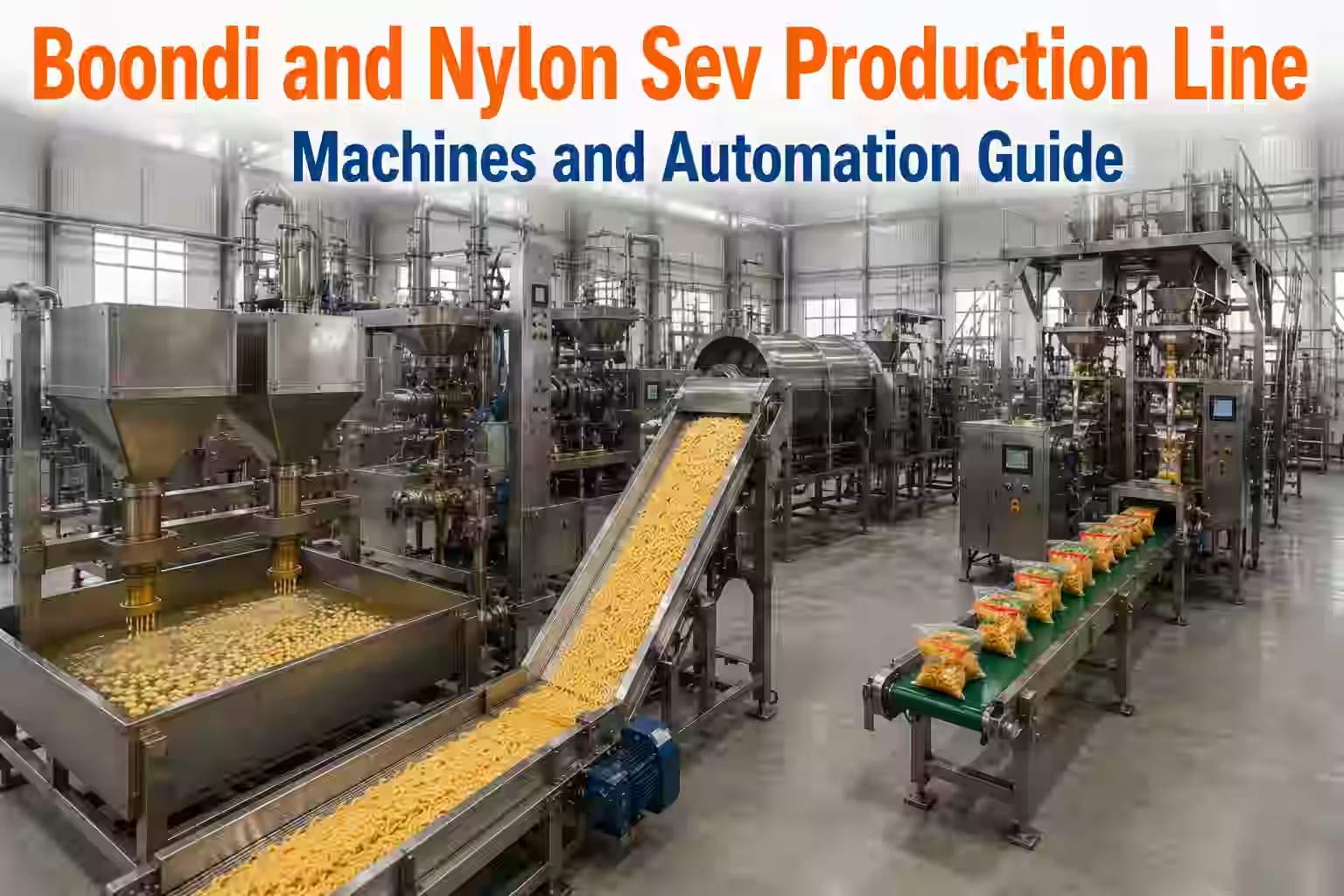
The demand for boondi and nylon sev products continues to grow in the snack food industry. A modern production line equipped with advanced automation helps manufacturers achieve consistent quality, higher production capacity, and reduced labor costs.
What is a Boondi & Nylon Sev Production Line?
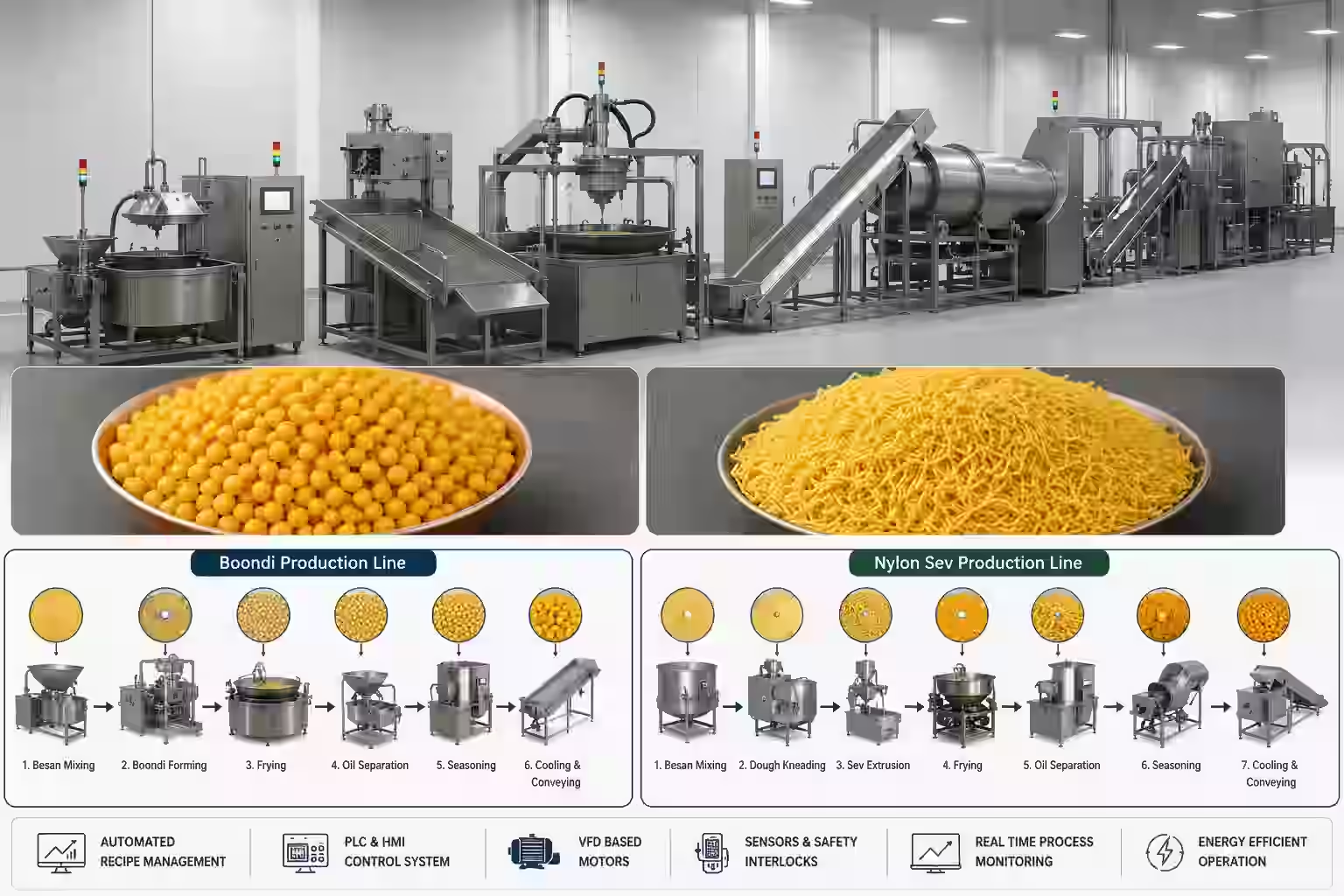
A Boondi and Nylon Sev Production Line is a complete processing system designed to automate mixing, extrusion, frying, de-oiling, seasoning, conveying, and packaging operations.
Modern lines integrate advanced Boondi Making Machine technology and precision Nylon Sev Line systems to improve efficiency and product consistency.
An automated Boondi Making Machine can be integrated with fryers, conveyors, seasoning systems, and packaging machines for a complete production solution.
Food safety and hygiene are critical in snack manufacturing. Manufacturers should follow guidelines published by the U.S. Food & Drug Administration (FDA) to maintain product quality and regulatory compliance.Machines Required
| Machine | Function |
|---|---|
| Dough Mixer | Ingredient Mixing |
| Boondi Making Machine | Boondi Forming |
| Nylon Sev Extruder | Sev Production |
| Automatic Fryer | Continuous Frying |
| De-Oiling System | Oil Removal |
| Seasoning Drum | Flavor Mixing |
| Packaging Machine | Final Packing |
Benefits of a Boondi and Nylon Sev Production Line
Production Process
- Raw Material Preparation
- Dough Mixing
- Boondi Forming
- Nylon Sev Extrusion
- Frying Process
- De-Oiling
- Seasoning
- Packaging
Benefits of Automation
- Higher Production Capacity
- Consistent Product Quality
- Reduced Labor Costs
- Improved Hygiene Standards
- Better Oil Management
- Lower Product Waste
- Real-Time Process Monitoring
Technical Specifications
| Parameter | Typical Range |
|---|---|
| Capacity | 100 – 1500 Kg/Hr |
| Material | SS304 / SS316 |
| Automation | Semi / Fully Automatic |
| Control System | PLC Based |
| Frying Type | Batch / Continuous |
Applications
- Boondi Manufacturing
- Nylon Sev Production
- Namkeen Processing Plants
- Snack Food Manufacturing
- Food Processing Industry
- Contract Manufacturing Units
Benefits of a Boondi and Nylon Sev Production Line
Common Challenges
Inconsistent Product Size
Improper boondi attachments can affect product uniformity.
High Oil Consumption
Poor frying control increases production costs.
Manual Handling Issues
Lack of automation reduces efficiency and increases labor dependency.
Buying Guide
- Select required production capacity.
- Choose food-grade stainless steel construction.
- Evaluate automation level requirements.
- Check availability of boondi attachments.
- Partner with an experienced manufacturer.
A modern Boondi Making Machine helps manufacturers achieve uniform product size, higher productivity, and consistent frying quality throughout the production process.
Choosing the right Boondi Making Machine is essential for improving production efficiency and reducing manual labor in snack manufacturing plants.
A modern Boondi and Nylon Sev Production Line helps snack manufacturers achieve higher productivity, better product consistency, and reduced labor costs through advanced automation.
Yuga-We100 offers customized Boondi and Nylon Sev Production Line solutions designed for small, medium, and large-scale namkeen manufacturers.
Related Solutions
Distribution ConveyorU Trough ConveyorZ Bucket ElevatorPotato Processing LineFrozen Food Processing LineWhy Choose Yuga-We100?
- Customized Snack Processing Solutions
- Advanced Automation Systems
- Food Grade Manufacturing Standards
- Competitive Pricing
- Reliable Technical Support
- Industry Experience
Need a Complete Boondi & Nylon Sev Production Line?
Contact Yuga-We100 for customized snack processing solutions designed for your production requirements.
Get Free ConsultationFrequently Asked Questions
Frequently Asked Questions
1. What capacity Boondi and Nylon Sev production lines are available?
Production lines are available from 100 kg/hr to more than 1500 kg/hr depending on automation level and production requirements.
2. Can one production line manufacture both boondi and nylon sev?
Yes, with the appropriate boondi attachments and extrusion systems, a single line can be configured to produce both products efficiently.
3. What type of oil is commonly used in boondi and sev frying systems?
Most manufacturers use refined vegetable oils with automatic temperature control systems to maintain product quality and consistency.
4. How does automation improve snack production efficiency?
Automation reduces manual handling, improves batch consistency, increases throughput, and minimizes production downtime.
5. Are food-grade materials used in the production line?
Yes, modern systems are manufactured using SS304 or SS316 stainless steel to meet food safety and hygiene standards.
6. What maintenance is required for a nylon sev production line?
Regular cleaning, lubrication of moving components, fryer inspection, and checking extrusion dies help ensure smooth operation.
7. What factors should be considered before purchasing a boondi making machine?
Key factors include production capacity, automation level, energy efficiency, machine material, available floor space, and after-sales support.
8. What is a Boondi Making Machine?
A machine designed to produce uniform boondi for namkeen and snack products.
9. What is a Nylon Sev Line?
A production system used to manufacture nylon sev continuously and efficiently.
10. What are boondi attachments?
Special attachments used to control boondi size and shape during production.
11. Can the line be fully automated?
Yes, modern systems support complete automation.
12. What capacities are available?
Production lines are available from small-scale to industrial capacities.