Complete Banana Chips Processing Line: Machines, Process Flow & Industrial Setup Guide
Discover how a modern banana chips manufacturing line works, from raw banana handling and slicing to frying, oil removal, seasoning, conveying and final packaging.
Banana chips are a popular snack made by processing bananas into thin slices, frying or otherwise cooking them, and preparing them for distribution. As demand grows across retail, food service and packaged snack markets, manufacturers need production systems that support consistent product quality, efficient material handling and reliable packaging operations.
A complete banana chips processing line combines the appropriate preparation, cutting, cooking, oil-removal, seasoning, conveying and packaging equipment into a coordinated workflow. The exact machinery depends on whether the plant produces traditional fried banana chips, salted chips, flavoured varieties or other banana-based snacks.
Yuga-We100 specialises in industrial conveying systems, vibratory equipment, screening solutions, elevating systems and material-handling integration. These systems can help connect processing stages and move products efficiently throughout a snack manufacturing facility.
1. What Is a Banana Chips Processing Line?
A banana chips processing line is a series of interconnected machines designed to transform fresh bananas into finished snack products. Depending on the production method, it may include fruit inspection, washing, peeling, slicing, frying, deoiling, seasoning, cooling, weighing and packaging equipment.
Instead of moving products manually between every operation, an integrated line uses suitable conveyors, elevators and vibratory handling equipment to maintain a more organised material flow.
Consistent Processing
Suitable slicing and controlled cooking equipment help manufacturers work towards consistent thickness, colour, texture and finished-product quality.
Efficient Material Handling
Conveyors and elevators help transfer products between machines, reduce unnecessary manual movement and support a more organised factory layout.
Scalable Production
Equipment selection can be matched to the intended throughput, operating schedule, available floor space and future production requirements.
Improved Process Control
Coordinated machinery, suitable controls and defined operating procedures help operators monitor production and identify process variations.
2. Complete Banana Chips Production Process
The following is a typical production sequence for fried banana chips. Actual machine arrangements and processing conditions should be finalised according to the banana variety, recipe, product specifications and required output.
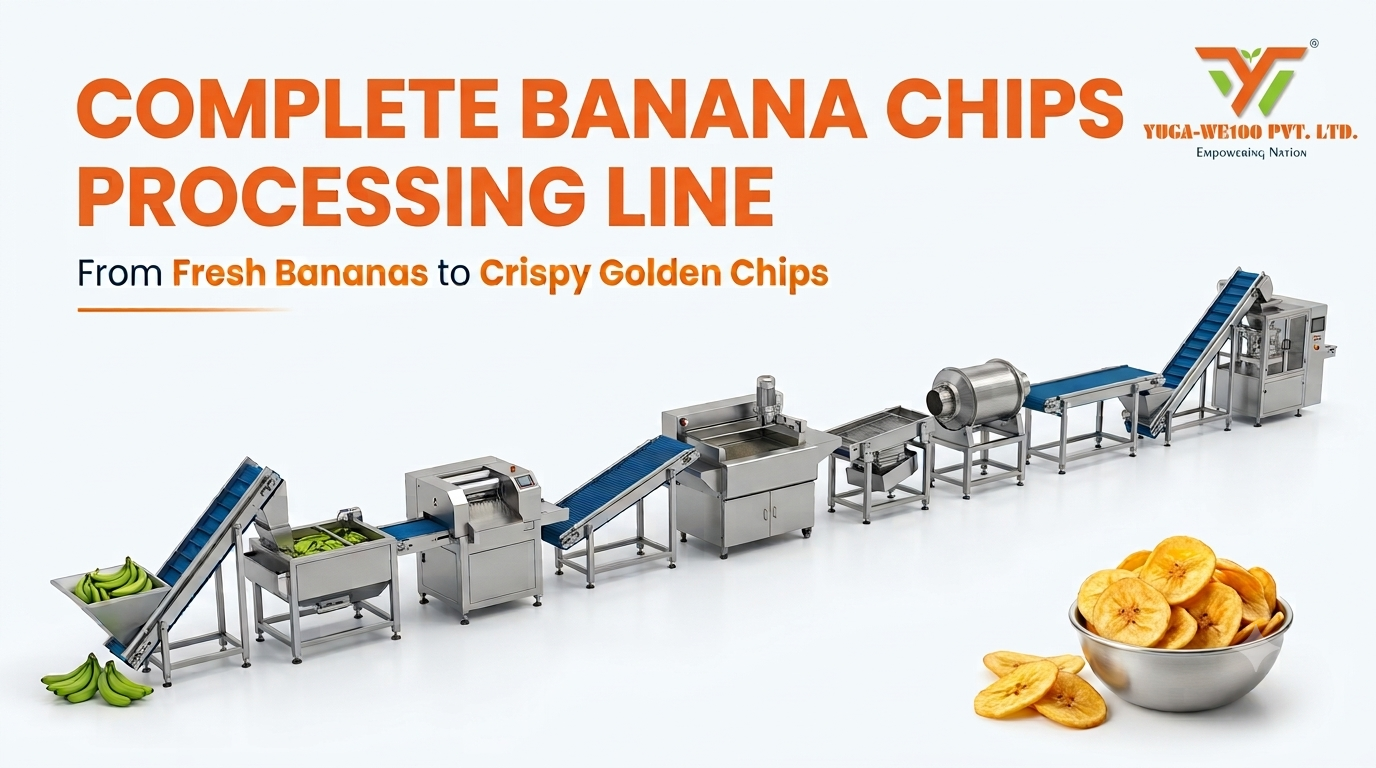
Banana Chips Manufacturing Process Flow
- Raw Banana Receiving
- Inspection and Sorting
- Washing and Cleaning
- Peeling
- Uniform Banana Slicing
- Optional Rinsing or Pretreatment
- Water Removal
- Controlled Frying
- Oil Removal and Recovery
- Seasoning and Flavouring
- Cooling and Product Inspection
- Weighing and Packaging
Note: Pretreatment, drying, cooling and oil-management arrangements vary with the product recipe and plant design. This is a general process reference, not a fixed machine specification.
Raw Banana Receiving and Inspection
Production begins with receiving bananas suitable for the selected chip recipe. Operators inspect incoming fruit for maturity, damage, contamination and general quality. Sorting at this stage helps prevent unsuitable raw material from entering the processing line.
Banana Washing and Cleaning
A suitable washing system removes surface dirt and other removable contaminants before peeling. Water quality, cleaning procedures and drainage arrangements should be considered during plant design.
Banana Peeling
The peel is removed manually or using suitable peeling equipment, depending on the banana variety, production capacity and degree of automation required. The peeled fruit is then transferred for slicing.
Uniform Banana Slicing
A banana slicer cuts the fruit into slices of the required thickness and shape. Consistent slicing is important because slice dimensions influence cooking behaviour, texture, product yield and the finished appearance.
Optional Rinsing, Pretreatment and Water Removal
Depending on the recipe, sliced bananas may undergo a suitable rinsing or pretreatment step. Excess surface water can then be removed using an appropriate draining or dewatering arrangement. These steps should be validated for the intended product rather than applied universally.
Frying and Cooking
The slices are cooked in a suitable fryer using a controlled combination of temperature, time and loading. These parameters depend on the recipe, slice thickness and target texture. Fryer selection and process validation are important for repeatable product quality.
Deoiling and Oil Management
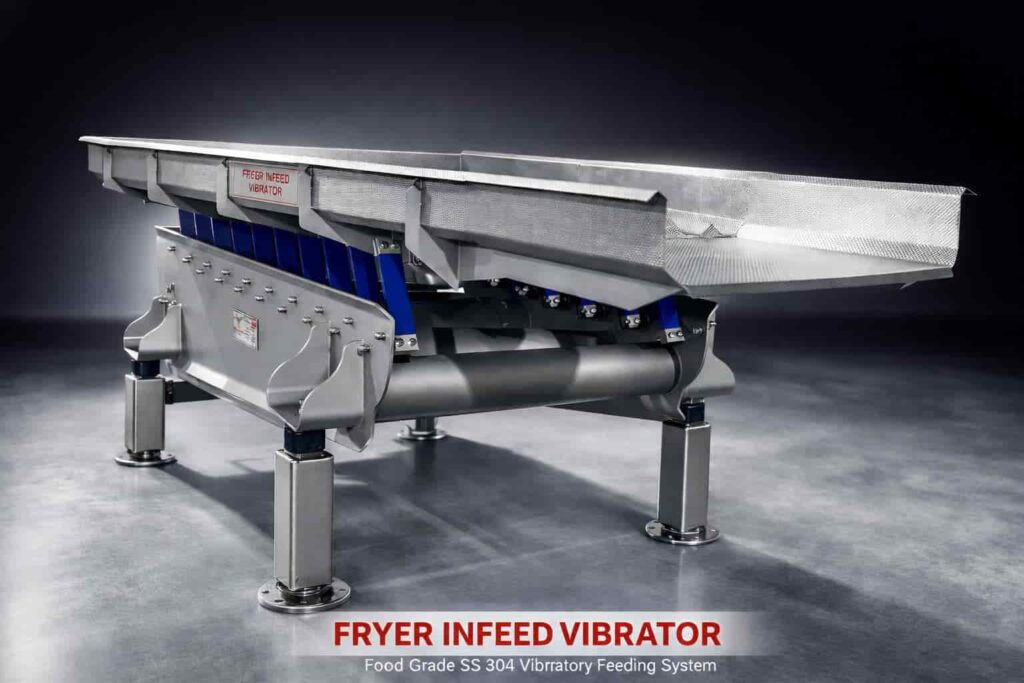
After frying, suitable oil-removal equipment helps reduce surface oil on the chips. Vibratory deoiling systems can assist with product movement and drainage when designed for the product and operating conditions. Oil filtration or recovery may also be integrated where appropriate.
Seasoning and Flavour Application
Depending on the product range, chips may be coated with salt, spices or other approved flavouring ingredients. A suitable seasoning system supports more uniform distribution and helps manufacturers develop different product varieties.
Cooling and Final Inspection
Chips are brought to a suitable temperature before packaging. Product inspection helps identify broken, discoloured or otherwise nonconforming pieces. Cooling and transfer arrangements should minimise moisture exposure and product damage.
Weighing and Packaging
The finished chips are transferred to weighing and packaging equipment. Appropriate packaging helps protect the product from moisture and oxygen exposure, preserving crispness and shelf life when the packaging material and sealing conditions are correctly selected.
3. Machines Required for Banana Chips Manufacturing
Selecting machinery is one of the most important parts of planning a banana chips production facility. Each machine must match the product, processing stage and intended line capacity. A practical equipment list may include the following systems.
| Machine or System | Primary Function | Selection Consideration |
|---|---|---|
| Raw Material Feeding System | Feeds bananas into the processing workflow. | Product handling, loading method and throughput. |
| Inspection Conveyor | Supports visual sorting and quality checks. | Inspection space, belt design and cleaning access. |
| Banana Washing System | Removes surface dirt before peeling. | Water management and cleaning requirements. |
| Peeling Equipment | Removes the banana peel. | Banana variety, labour model and output target. |
| Banana Slicing Machine | Produces slices of the required dimensions. | Slice thickness, cutting quality and capacity. |
| Dewatering System | Removes excess surface water where required. | Product sensitivity and moisture-removal needs. |
| Frying System | Cooks the banana slices. | Recipe, temperature control and oil management. |
| Deoiling Vibrator or Shaker | Assists surface oil removal and product transfer. | Oil drainage, product handling and sanitation. |
| Oil Filtration or Recovery System | Supports suitable frying-oil management. | Oil quality, filtration needs and fryer integration. |
| Seasoning System | Applies salt or selected flavouring. | Recipe, coating uniformity and dosing control. |
| Cooling and Transfer Conveyors | Move chips between finishing operations. | Layout, product fragility and required flow. |
| Weighing and Packaging Equipment | Measures and packs the finished product. | Pack size, speed and packaging material. |
Important equipment-selection note: Not every banana chips plant requires every machine listed above. Peeling, slicing, washing, frying and packaging equipment must be selected or integrated according to the plant specification. Yuga-We100’s role can focus on suitable conveying, vibratory equipment, elevators, oil-handling support and material-flow integration, subject to the agreed project scope.
4. Role of Conveyors and Vibratory Equipment in Banana Chips Production
A food processing plant needs more than individual machines. The connections between machines are equally important. Poorly planned transfers can create bottlenecks, unnecessary handling, product breakage and inconsistent feeding.
Yuga-We100 develops conveying and vibratory solutions for industrial material handling. Suitable equipment can be selected to connect compatible processing stages in a banana chips manufacturing plant.
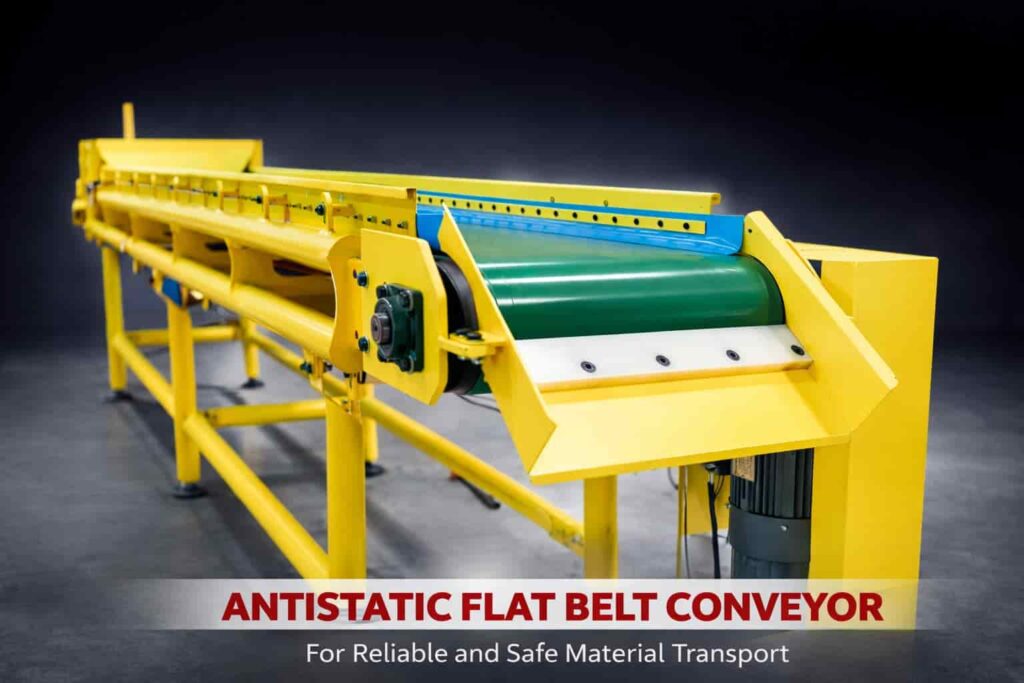
Food-Handling Belt Conveyors
Suitable belt conveyors transport products between workstations and machines. Belt material, frame design, cleanability and food-contact suitability should be specified for the actual application.
Inspection Conveyors
Inspection conveyors provide an organised surface for checking incoming or intermediate products. Their dimensions and operating speed should allow effective inspection without creating a production bottleneck.
Vibratory Conveyors and Shakers
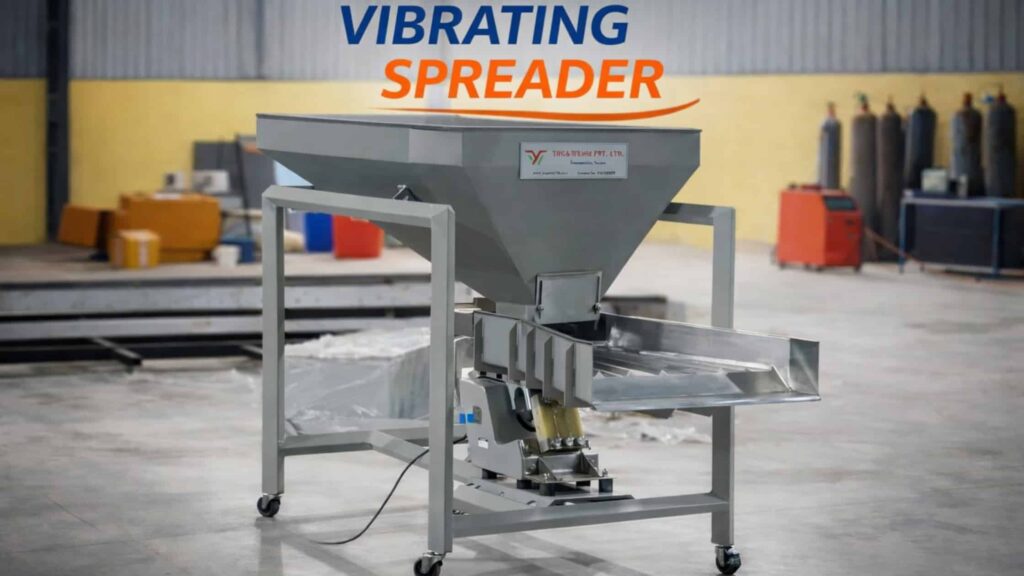
Vibratory equipment can help move, spread, drain or separate products, depending on its design. Suitable configurations may support controlled feeding, dewatering or deoiling applications.
Inclined Conveyors and Elevators
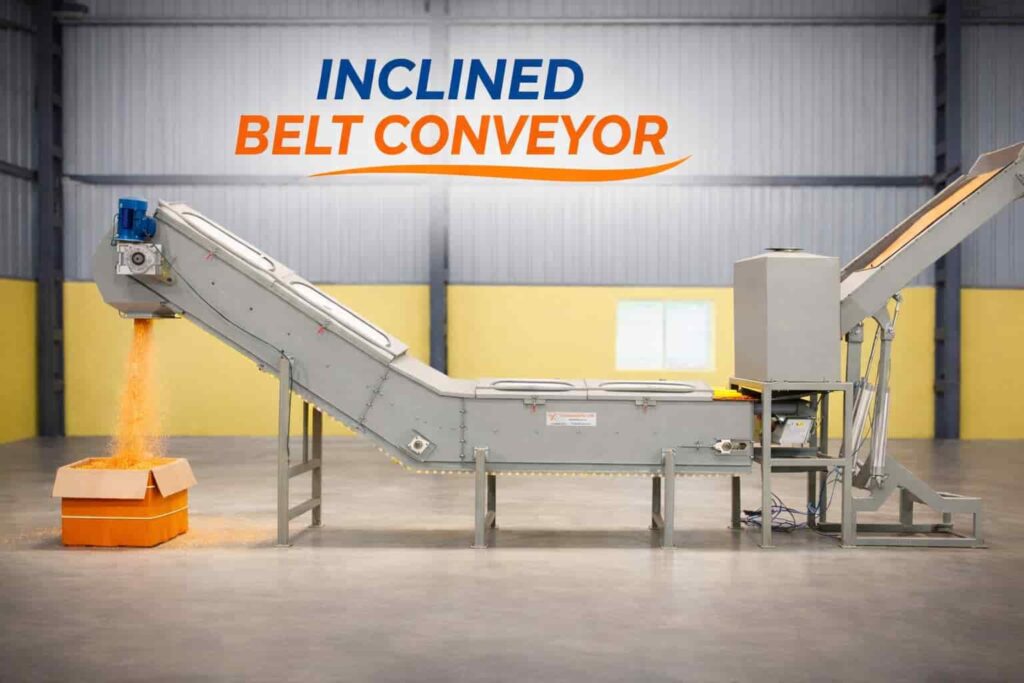
Elevating equipment transfers products between different machine heights. The correct design helps maintain production flow while considering the fragility of finished chips.
Distribution Systems
Distribution equipment helps direct product towards multiple downstream destinations. Appropriate design can support balanced feeding to packaging stations.
Integrated Material Handling
Coordinated conveyors and transfer equipment can reduce unnecessary movement and help the entire processing line operate as a connected system.
The choice of equipment should consider whether the product is raw, wet, hot, oily or fully cooked. Finished banana chips are fragile, so transfer height, belt speed, vibration, drop points and distribution methods require particular attention.
Explore related solutions: food processing industry solutions and elevating systems .
5. Benefits of an Integrated Banana Chips Processing Line
An integrated processing line helps manufacturers coordinate production stages rather than treating every machine as an isolated operation. The actual benefits depend on equipment selection, maintenance, operator training and production conditions.
- Reduced manual transfers: Appropriate conveyors can reduce repeated handling between compatible operations.
- More consistent material flow: Coordinated feeding and conveying can help avoid uneven loading of downstream equipment.
- Better production planning: A defined process sequence makes it easier to identify bottlenecks and balance machine capacities.
- Improved product handling: Correct transfer design helps reduce unnecessary drops and mechanical damage, particularly after frying.
- Potential labour savings: Suitable automation can reduce repetitive handling tasks and improve operator productivity.
- Room for future expansion: A well-planned layout can accommodate additional processing or packaging capacity when required.
Remember: Automation alone does not guarantee higher output or lower operating costs. Results depend on the complete line design, machine utilisation, energy consumption, maintenance and product specifications.
6. How to Plan a Banana Chips Manufacturing Plant
Before purchasing equipment, manufacturers should define the intended product and production requirements. These details help determine which machines are needed, how equipment should be connected and what level of automation is appropriate.
Define the Product Range
Decide whether the plant will produce salted banana chips, spiced chips, flavoured products or other varieties. Different recipes may require different processing and seasoning arrangements.
Establish the Required Capacity
Specify the required raw-material input per hour, operating hours, expected yield and finished-product output. Confirm whether each supplier quotes capacity based on raw input or finished product.
Prepare the Factory Layout
Plan space for raw-material receiving, washing, preparation, frying, finishing, packaging, utilities, cleaning and storage. Separate raw and finished-product flows appropriately to support hygiene.
Match the Capacity of Connected Machines
The slicer, fryer, deoiling system, seasoning equipment and packaging line should work at compatible rates. Conveyors must be sized to avoid accumulation or starvation between operations.
Confirm Utilities and Safety Requirements
Review electrical supply, water availability, drainage, heating or frying energy, ventilation, fire protection and cleaning provisions with the relevant equipment suppliers and qualified professionals.
Plan Installation and Commissioning
Confirm equipment interfaces, transfer heights, operating procedures, acceptance criteria, operator training, maintenance access and commissioning responsibilities before production begins.
Factors That Influence Plant Cost
There is no single price for every banana chips manufacturing line. The investment depends on the selected machines, production capacity, level of automation and project scope. Important cost factors include:
- Required raw-material and finished-product capacity.
- Manual, semi-automatic or automatic processing arrangements.
- Type and specification of peeling, slicing and frying equipment.
- Conveyor lengths, transfer points and factory layout.
- Seasoning, oil-management and packaging requirements.
- Electrical, utility, installation and commissioning work.
- Spare parts, training, maintenance and service requirements.
Request a project-specific quotation after preparing the product specification, capacity target and layout details. This makes supplier proposals easier to compare.
7. Quality, Hygiene and Food Safety Considerations
Food-processing equipment must be selected and operated with appropriate hygiene and safety controls. For a banana chips production line, consider the following:
- Food-contact materials: Specify suitable materials and surface finishes for each product-contact application.
- Cleanability: Provide practical access for inspection, cleaning and maintenance, including suitable drainage where needed.
- Raw and finished product separation: Design material flows to reduce cross-contamination risks.
- Frying-oil control: Establish appropriate monitoring, filtration and replacement procedures based on the process and applicable food-safety requirements.
- Operator safety: Provide suitable guarding, emergency stops, electrical protection and controls for hot oil and moving machinery.
- Packaging protection: Select packaging and sealing conditions appropriate for the intended shelf life and storage environment.
- Documented procedures: Maintain cleaning schedules, inspection records, maintenance logs and operating instructions.
Applicable Indian food-safety requirements and relevant standards should be reviewed with qualified professionals when designing and commissioning the plant.
8. Why Consider Yuga-We100 for Material Handling Integration?
A well-designed banana chips plant requires equipment that works together as a coordinated production system. Yuga-We100 manufactures and supplies industrial conveying systems, vibratory equipment, screening and grading solutions, elevating systems and related material-handling equipment.
For projects requiring these capabilities, the engineering team can discuss the intended product, throughput, machine arrangement, transfer heights and downstream requirements to help define a suitable material-handling solution.
- Conveying and material-transfer solutions.
- Vibratory conveying and product-handling equipment.
- Inspection, screening and grading applications.
- Elevating systems for suitable products and layouts.
- Custom engineering based on project requirements.
The supply scope for a complete banana chips plant should be confirmed individually. Peeling, slicing, frying, seasoning and packaging machinery may require separate specialist suppliers or an agreed integrated supply arrangement.
Learn more about Yuga-We100 food processing solutions or explore the food processing machinery blog .
Planning a Banana Chips Production Line?
Discuss your production requirements, conveying needs, material-handling challenges and plant layout with Yuga-We100. Our team can help identify suitable industrial handling solutions for your project.
Discuss Your ProjectCall: +91 88881 83311 | Email: in**@*******00.com
9. Frequently Asked Questions
What machines are required for a banana chips processing line?
A typical line may include raw banana feeding, inspection, washing, peeling, slicing, optional pretreatment, dewatering, frying, deoiling, seasoning, cooling, weighing and packaging equipment. The exact configuration depends on the product and required capacity.
What is the banana chips manufacturing process?
The general process involves receiving and inspecting bananas, washing, peeling, slicing, optional rinsing or pretreatment, cooking, removing excess oil, seasoning, cooling, inspecting and packaging the finished chips. Process details vary by recipe.
Can a banana chips production line be automated?
Yes. Suitable stages can be automated using feeding systems, conveyors, controlled processing equipment, seasoning systems and automatic weighing and packaging machines. The appropriate automation level depends on throughput, budget and operating requirements.
How do conveyors help in banana chips manufacturing?
Conveyors transfer products between compatible processing stages, help organise production flow and reduce unnecessary manual handling. Their design should account for product fragility, temperature, moisture, oil exposure and cleaning requirements.
How much does a banana chips manufacturing plant cost?
The investment depends on production capacity, equipment specifications, automation, factory layout, utilities, installation and packaging requirements. A project-specific quotation is needed for a meaningful estimate.
Does Yuga-We100 manufacture banana chips processing equipment?
Yuga-We100’s established product range includes conveying systems, vibratory equipment, screening and grading machines, elevating systems and related material-handling solutions. Confirm the availability and scope of each machine required for a banana chips project directly with the company.
How can I choose the right machinery capacity?
Start by specifying raw banana input per hour, expected finished-product output, operating hours, recipe, packaging speed and future expansion plans. Then check that each processing machine and transfer system can support the required production rate.
Explore More Food Processing Resources
Learn more about industrial conveying, processing equipment and production-line design.
Published by Yuga-We100 Private Limited. Equipment configurations and process recommendations must be verified against the requirements of each individual project.