Table of Contents
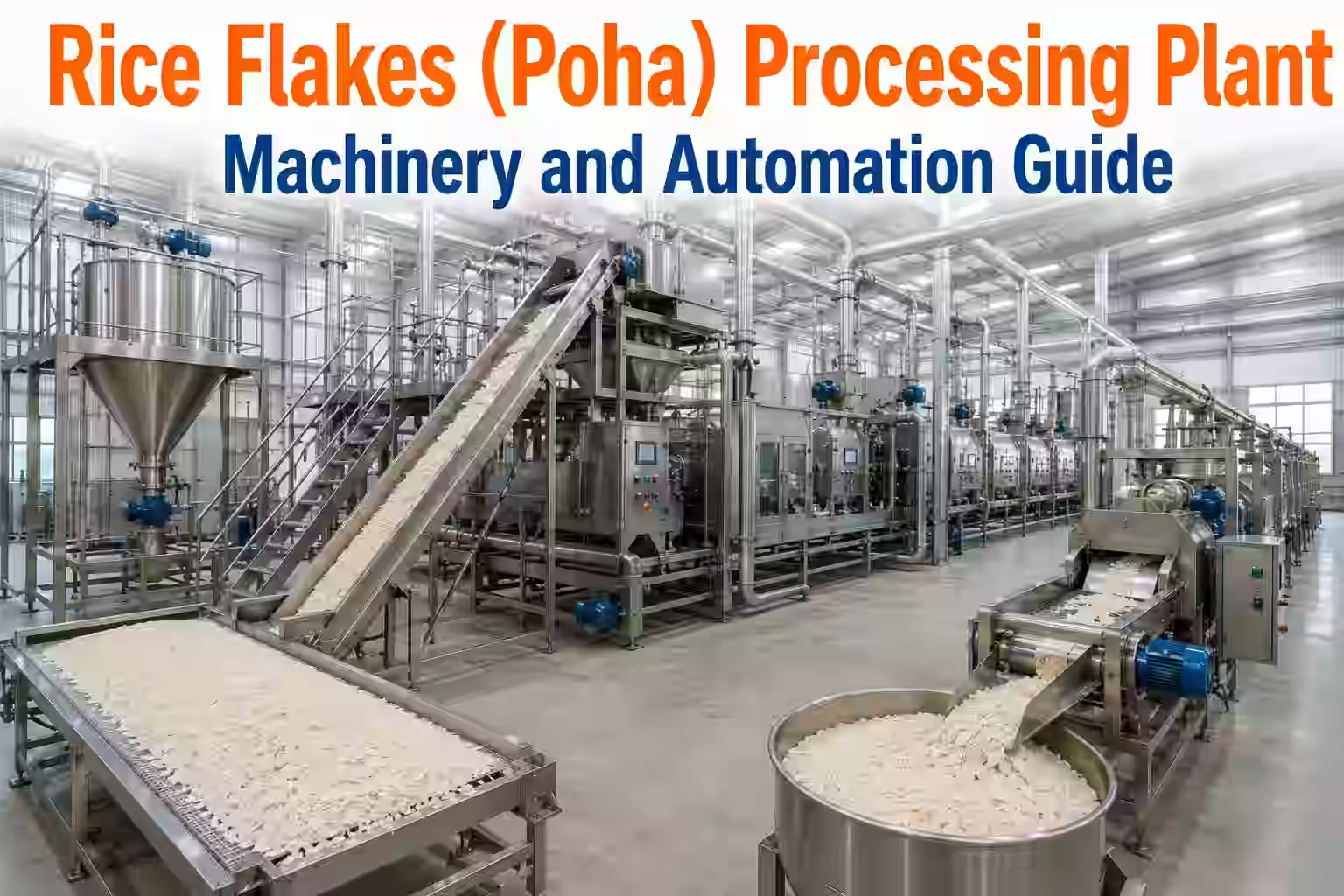
The demand for processed rice products continues to grow across domestic and international markets. A modern Rice Flakes Production Line enables manufacturers to produce high-quality poha efficiently while reducing labor requirements and improving product consistency.
What is a Rice Flakes (Poha) Processing Plant?
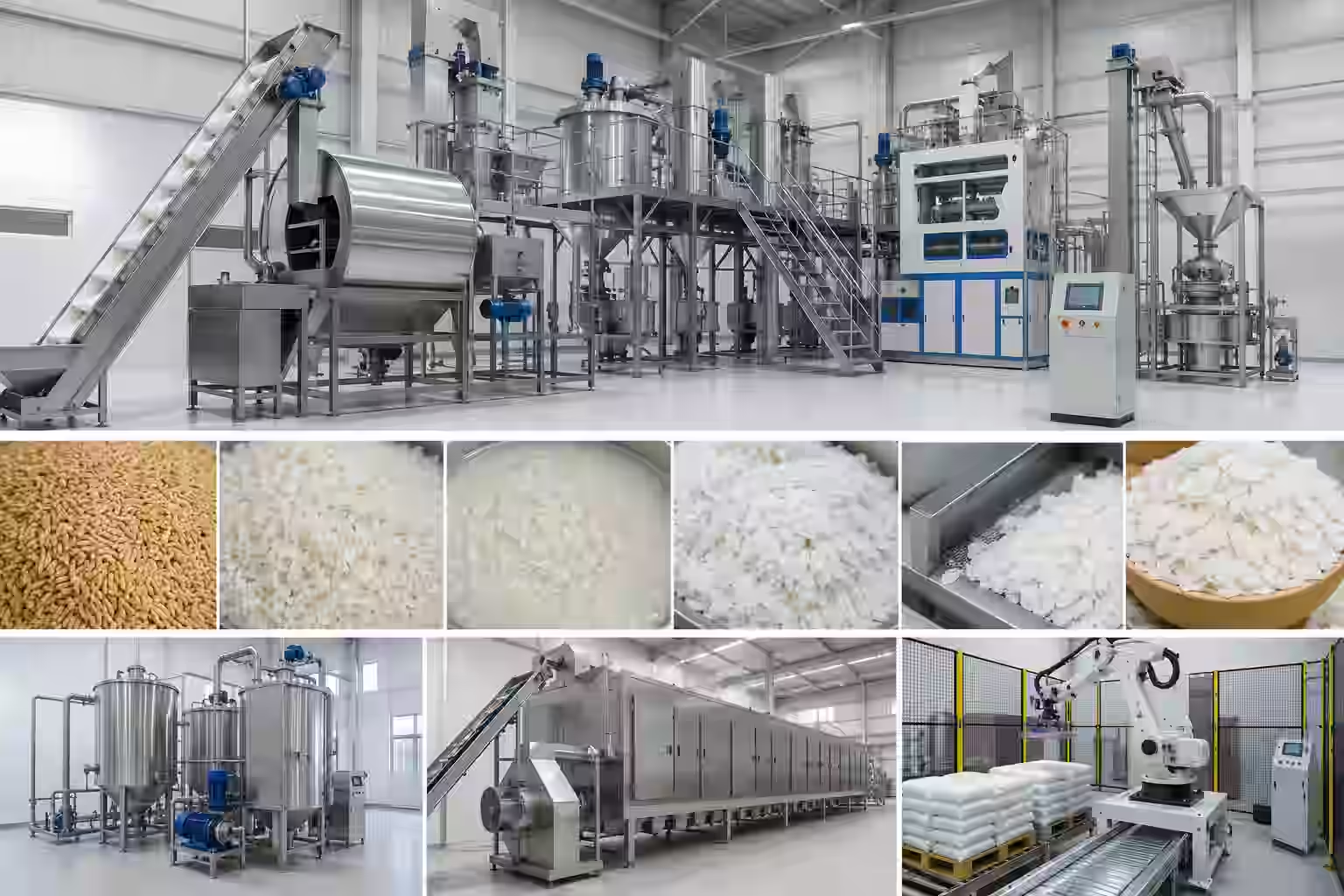
A Rice Flakes Production Line is a complete processing system used to manufacture flattened rice, commonly known as poha. The line consists of soaking, roasting, flaking, drying, grading, and packaging equipment.
A modern Poha Manufacturing Plant incorporates automation technologies to increase efficiency and ensure uniform product quality.
Rice Flakes (Poha) Processing Plant Manufacturing Process
- Raw Rice Cleaning
- Soaking Process
- Roasting / Conditioning
- Flaking Operation
- Drying Process
- Grading & Separation
- Packaging
Machines Used in a Rice Flakes (Poha) Processing Plant
| Machine | Function |
|---|---|
| Rice Cleaner | Removes impurities |
| Soaking Tank | Rice conditioning |
| Roaster | Pre-heating rice |
| Poha Flaker Machine | Flattening rice grains |
| Dryer | Moisture reduction |
| Grading Machine | Product separation |
| Packaging Machine | Final packing |
Benefits of Rice Flakes (Poha) Processing Plant Automation
- Higher production efficiency
- Reduced manpower requirements
- Consistent product quality
- Improved hygiene standards
- Lower production costs
- Reduced material wastage
Rice Flakes (Poha) Processing Plant Production Capacity
| Plant Type | Capacity |
|---|---|
| Small Scale | 100–250 Kg/Hr |
| Medium Scale | 500–1000 Kg/Hr |
| Large Scale | 2000–5000 Kg/Hr |
Rice Flakes (Poha) Processing Plant Applications
- Poha Manufacturing Units
- Breakfast Food Processing Plants
- Ready-to-Cook Food Industry
- Export-Oriented Food Production
- Snack Food Manufacturing
Common Challenges
Uneven Flaking
Improper conditioning can result in inconsistent poha thickness.
Moisture Variations
Incorrect drying affects shelf life and product quality.
Production Losses
Poor machine settings may increase breakage and wastage.
Buying Guide for a Rice Flakes (Poha) Processing Plant
- Determine production capacity requirements
- Select food-grade machinery
- Evaluate automation level
- Consider future expansion plans
- Choose a reliable manufacturer
Why Choose Yuga-We100 for Rice Flakes (Poha) Processing Plant Solutions?
Yuga-We100 provides customized Rice Flakes Production Line solutions designed for modern food processing industries. Our systems deliver high productivity, reliable performance, and advanced automation.
- Food Grade Equipment
- Customized Plant Design
- Automation Integration
- Energy Efficient Systems
- After-Sales Support
Industry Resources
Food and Agriculture Organization (FAO) U.S. Food & Drug Administration (FDA) PMMI – Packaging & Processing TechnologiesNeed a Complete Poha Manufacturing Plant?
Contact Yuga-We100 for customized Rice Flakes Production Line solutions tailored to your production requirements.
Get Free ConsultationFrequently Asked Questions
1. What is a Rice Flakes Production Line?
A complete processing system used to manufacture poha from raw rice.
2. What is the capacity of a Poha Manufacturing Plant?
Capacity ranges from 100 Kg/Hr to 5000 Kg/Hr depending on plant size.
3. Is automation available?
Yes, fully automated systems are available for higher efficiency.
4. Which industries use poha processing plants?
Food processing, breakfast food manufacturing, and export industries.
5. Can the plant be customized?
Yes, systems can be designed according to production requirements.
6. What is the ideal capacity for a Rice Flakes (Poha) Processing Plant?
The ideal capacity depends on market demand and investment budget. Small plants typically produce 100–250 Kg/hr, while large automated plants can exceed 5,000 Kg/hr.
7. Which type of rice is best for poha production?
Medium and thick rice varieties with good grain strength are commonly used for producing high-quality poha with minimal breakage.
8. How does automation improve a Rice Flakes (Poha) Processing Plant?
Automation improves production efficiency, reduces labor costs, maintains consistent product quality, and minimizes material wastage throughout the manufacturing process.
9. What are the major factors affecting poha quality?
Rice quality, soaking time, roasting temperature, flaking pressure, and drying conditions all significantly influence the final poha quality.
10. What utilities are required for a Poha Manufacturing Plant?
A poha manufacturing plant typically requires electricity, water supply, steam or heating systems, compressed air (if automated), and adequate storage facilities.