Table of Contents
Modern industries require reliable conveyor systems for smooth and efficient material movement. Selecting the correct conveyor type directly affects productivity, product safety, operational cost, and automation efficiency.
Two of the most commonly used conveyor systems are the Cleated Belt Conveyor and the Flat Belt Conveyor. While both are designed for material transportation, their applications, working capabilities, and performance differ significantly.
Understanding the Cleated Belt vs Flat Belt Conveyor comparison helps manufacturers choose the right conveyor system for their production requirements. The correct selection improves material handling efficiency, reduces product loss, and supports automated food processing operations.
Overview of Conveyor Systems
Conveyor systems are essential in industries such as food processing, packaging, agriculture, logistics, pharmaceuticals, FMCG manufacturing, and warehousing. They help automate material movement while reducing manual labor and increasing productivity.
When evaluating Cleated Belt vs Flat Belt Conveyor options, factors such as conveyor angle, product type, production capacity, and hygiene requirements should be carefully considered before making an investment.
- Improves production efficiency
- Reduces labor dependency
- Supports industrial automation
- Minimizes product damage
- Ensures continuous material flow
- Increases operational safety
What is a Flat Belt Conveyor?
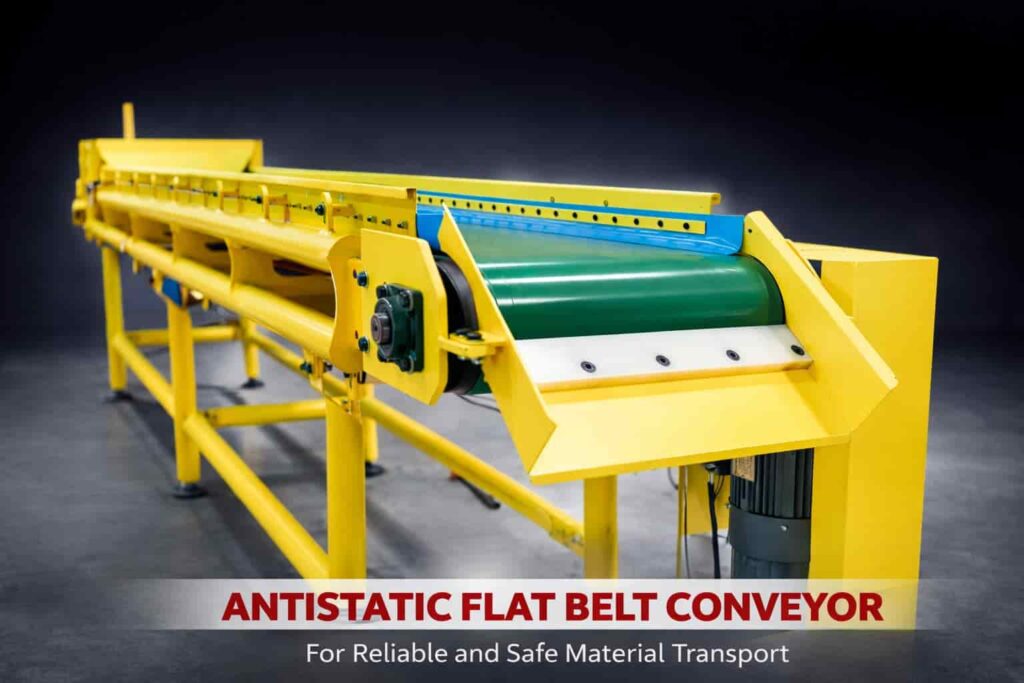
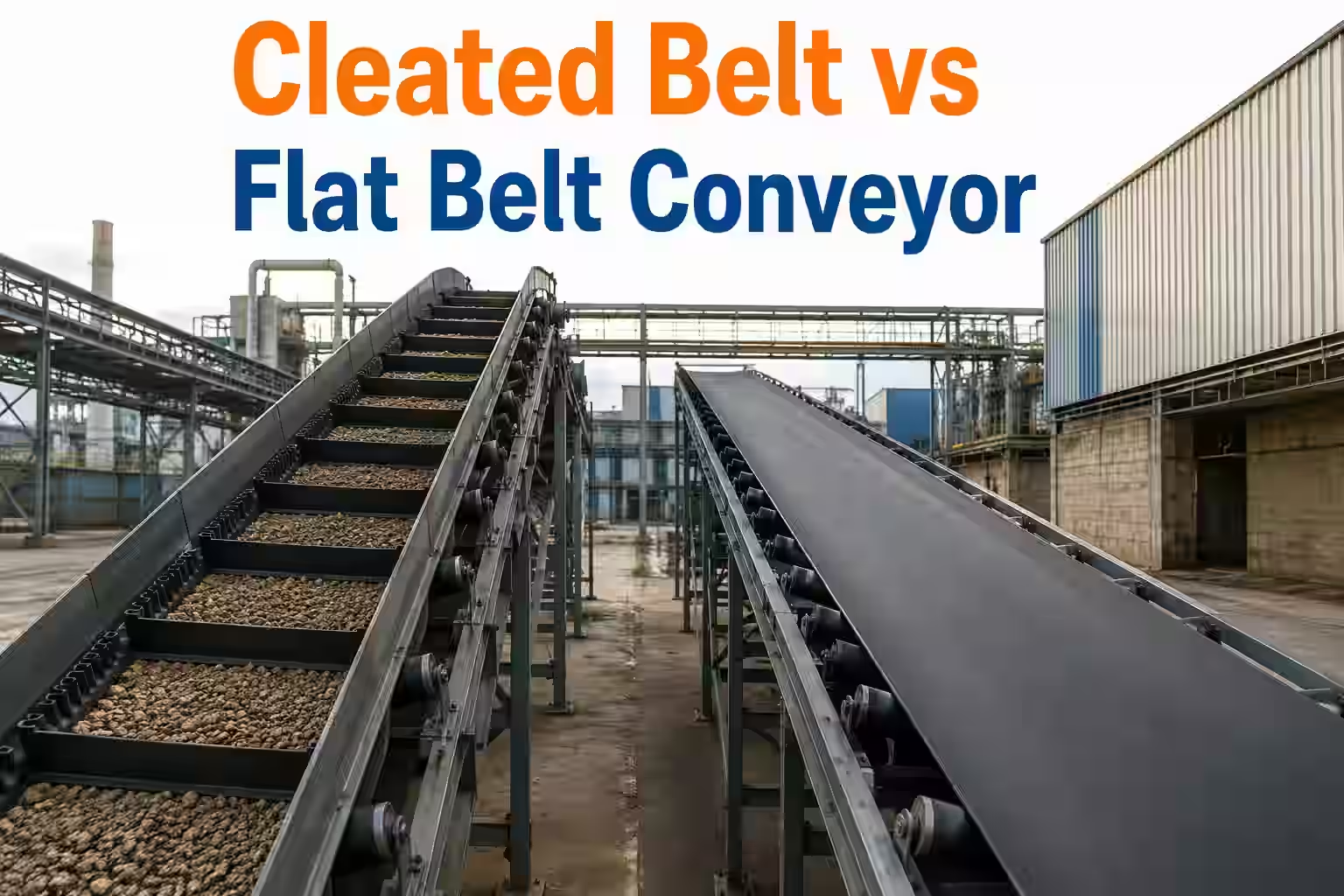
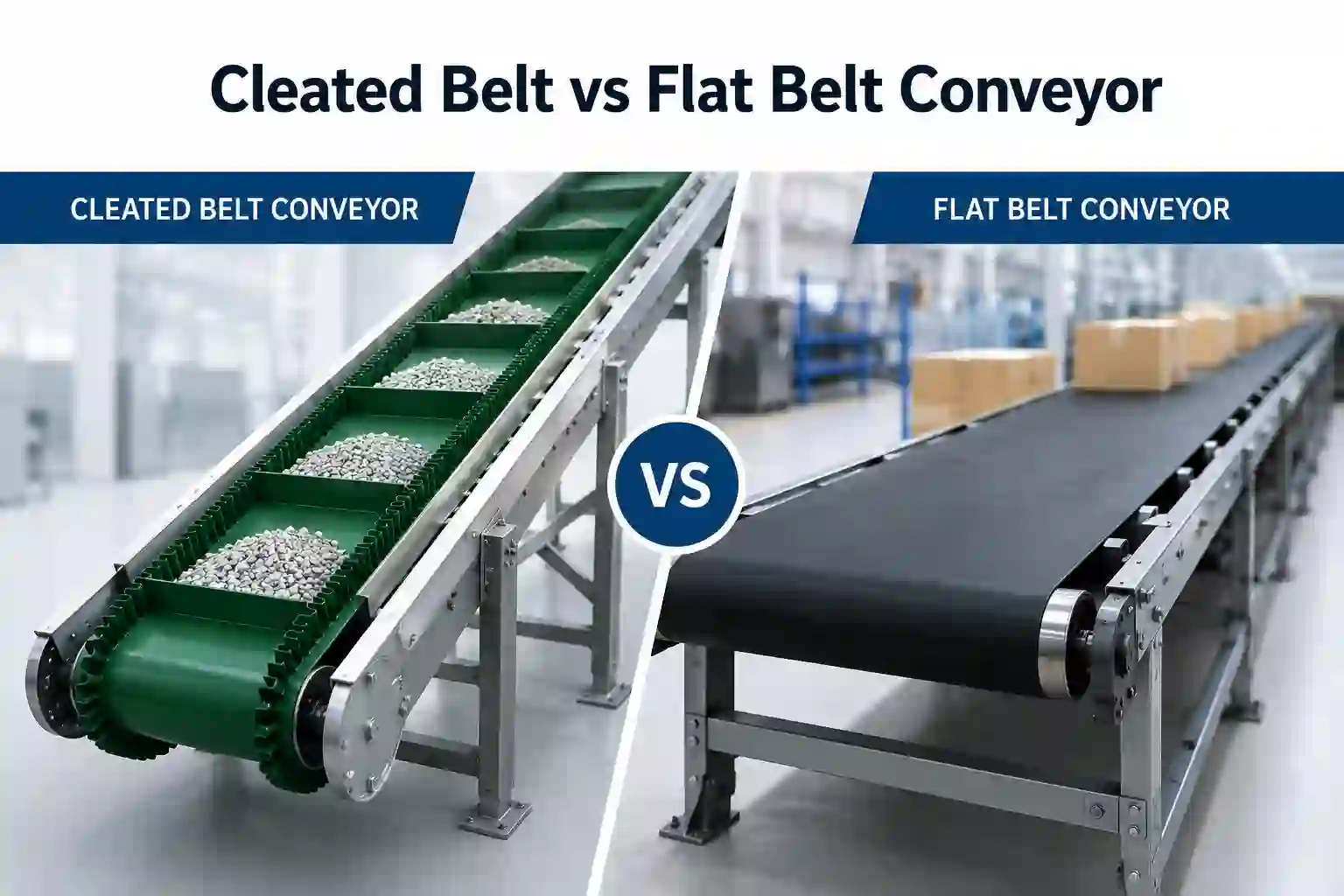
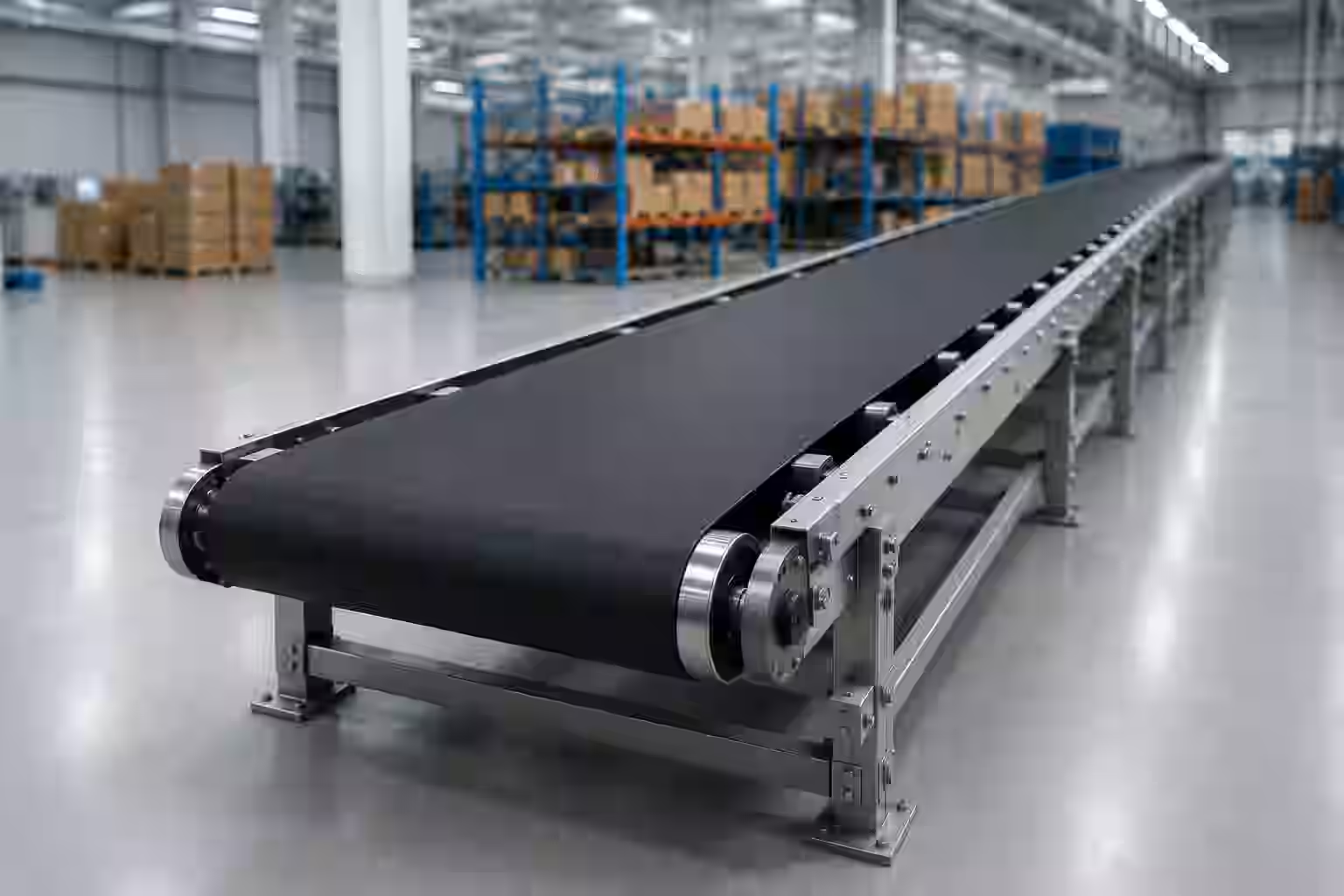
A Flat Belt Conveyor uses a smooth continuous belt surface to transport products horizontally or with slight inclination. These conveyors are ideal for moving lightweight or medium-weight products over short to medium distances.
Flat belt systems are widely used in packaging units, assembly lines, food industries, and warehousing operations where smooth product transfer is required.
Useful Industry Resources
Advantages of Flat Belt Conveyors
- Simple and cost-effective design
- Low maintenance requirements
- Smooth product transportation
- Suitable for horizontal conveying
- Ideal for lightweight materials
What is a Cleated Belt Conveyor?
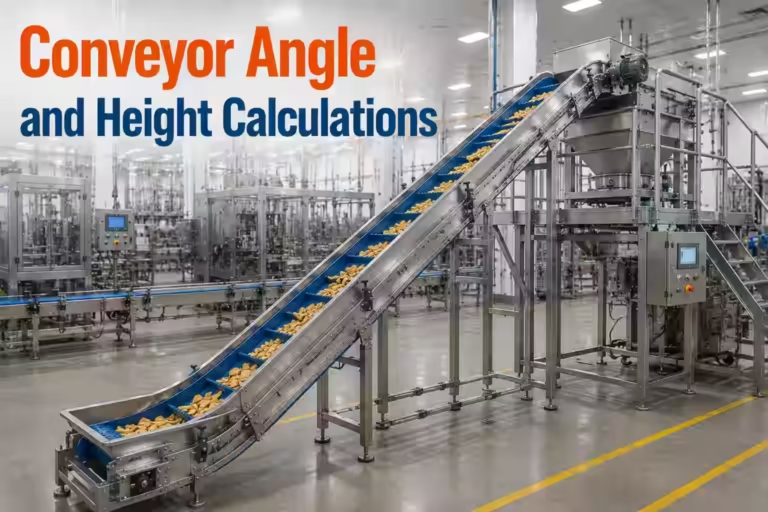
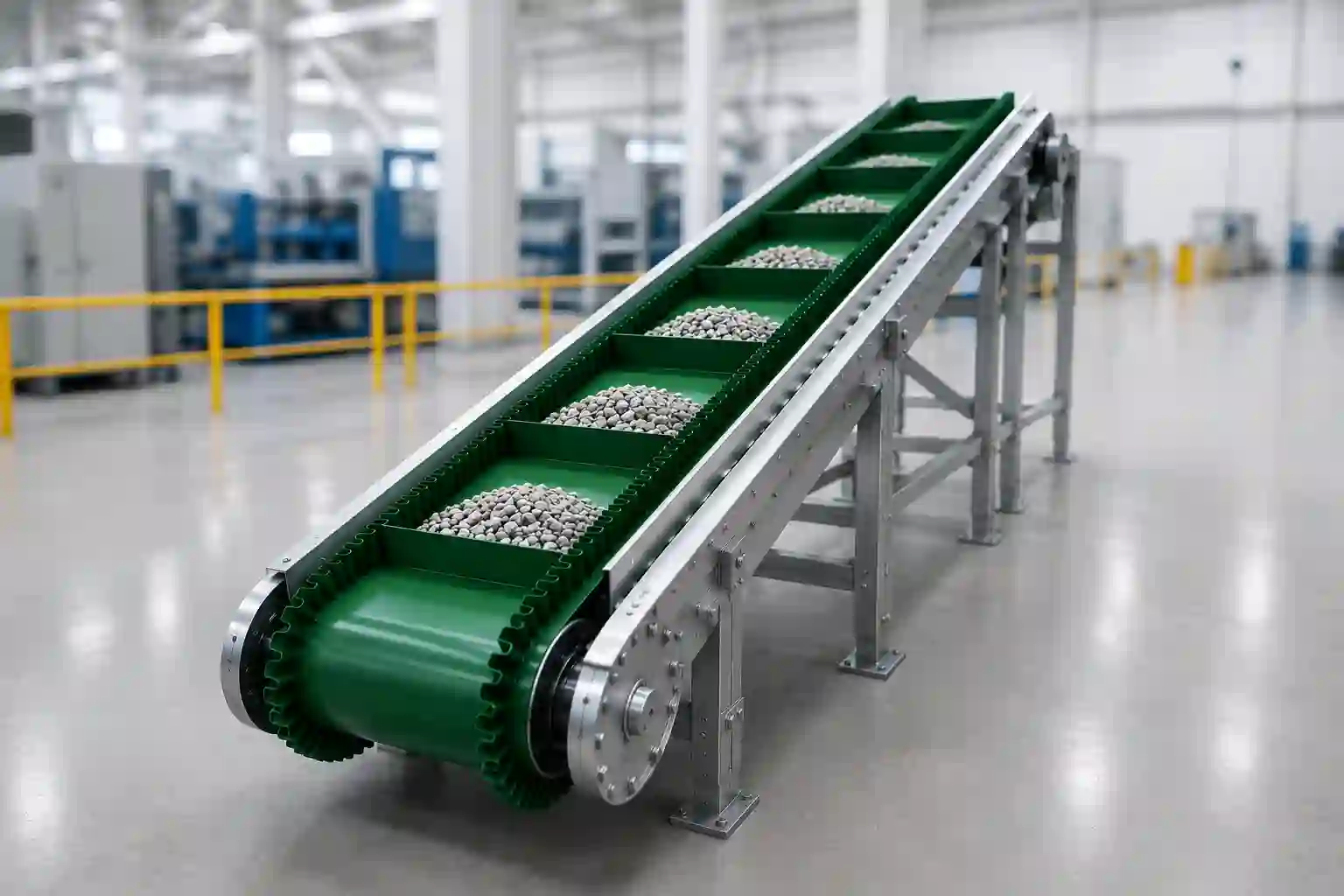
A Cleated Belt Conveyor contains raised partitions called cleats fixed on the belt surface. These cleats prevent material rollback during inclined conveying applications.
Cleated conveyors are widely used in snack processing plants, potato chips industries, agriculture, packaging lines, and bulk material handling systems where materials need to move upward safely.
Advantages of Cleated Belt Conveyors
- Excellent for inclined conveying
- Prevents product rollback
- Suitable for loose materials
- Improves material handling efficiency
- Supports high-capacity production lines
Major Differences Between Cleated Belt and Flat Belt Conveyor
| Feature | Cleated Belt Conveyor | Flat Belt Conveyor |
|---|---|---|
| Inclined Conveying | Excellent | Limited |
| Material Rollback | Prevented by cleats | Possible |
| Best Use | Bulk & loose material | Packaged products |
| Application | Inclined conveyor systems | Horizontal transport |
| Handling Efficiency | High | Moderate |
| Product Stability | Better on slopes | Suitable for flat transfer |
Benefits of Industrial Inclined Conveyor Systems
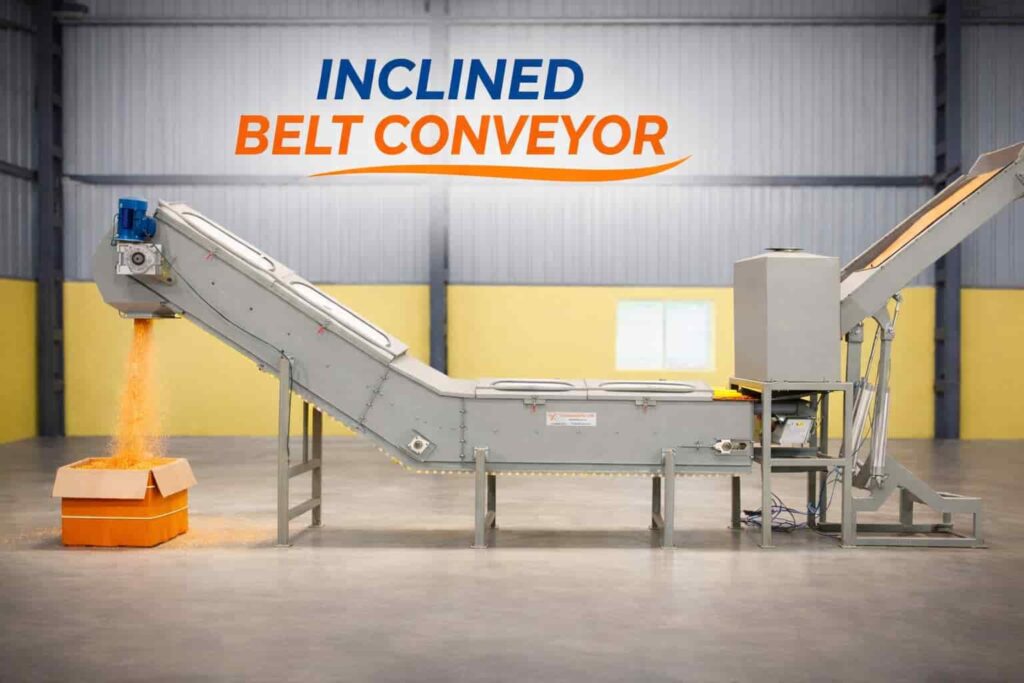
An Industrial Inclined Conveyor improves plant efficiency by transporting materials between different elevations while maintaining continuous product flow.
- Optimizes factory floor space
- Supports automated processing lines
- Improves workflow efficiency
- Reduces manual handling
- Maintains product hygiene
- Increases production capacity
Applications in Various Industries
Selecting between a Cleated Belt vs Flat Belt Conveyor depends on the industry, product characteristics, and the required material handling process. Both conveyor types play an important role in modern manufacturing facilities.
- Potato chips manufacturing
- Namkeen processing plants
- Frozen food industries
- Agricultural material handling
- Snack food packaging lines
- Warehouse distribution systems
- FMCG manufacturing
- Food-grade processing plants
Technical Specifications
| Feature | Specification |
|---|---|
| Belt Material | PVC / PU / Rubber |
| Frame Material | SS304 / SS316 / Mild Steel |
| Conveyor Type | Flat Belt / Cleated Belt |
| Drive System | Geared Motor with VFD |
| Capacity | 100 kg/hr to 5000 kg/hr |
| Application | Food & Industrial Material Handling |
Buying Guide for Conveyor Selection
- Analyze material type and weight
- Check inclination requirements
- Select food-grade belts for hygiene industries
- Choose proper conveyor width and length
- Verify automation compatibility
- Select trusted conveyor manufacturers
- Consider maintenance and spare support
Common Mistakes to Avoid
- Using flat belts for steep inclines
- Ignoring production capacity needs
- Choosing low-quality belt materials
- Ignoring future expansion requirements
- Selecting suppliers only based on low price
Related Conveyor Solutions
Inclined Conveyor System Distribution Conveyor System U Trough Belt Conveyor Horizontal Flat Belt Conveyor Screw Conveyor Vacuum Conveyor Conveying SystemsWhy Choose Yuga-We100?
Yuga-We100 is a trusted Inclined Belt Conveyor Manufacturer providing advanced conveyor solutions for food processing and industrial automation industries.
- Customized conveyor system design
- Food-grade conveyor solutions
- Heavy-duty industrial construction
- Advanced automation integration
- Competitive pricing
- Reliable after-sales support
- Experienced engineering team
Looking for the Best Industrial Inclined Conveyor?
Get customized Cleated Belt Conveyor and Inclined Conveyor System solutions from Yuga-We100 for efficient industrial material handling and food processing automation.
Contact Yuga-We100Frequently Asked Questions
1. What is a Cleated Belt Conveyor?
A conveyor system with raised cleats used for inclined material transportation.
2. Where are Cleated Belt Conveyors used?
They are widely used in food processing, agriculture, packaging, and bulk material handling industries.
3. What is the difference between Flat Belt and Cleated Belt Conveyor?
Flat belts are suitable for horizontal transfer, while cleated belts are designed for inclined conveying.
4. Which conveyor is better for potato chips plants?
Cleated Belt Conveyors are better for inclined movement in potato chips processing plants.
5. Are these conveyors food-grade?
Yes, Yuga-We100 provides food-grade conveyor systems using SS304 and PU belts.
6. Can conveyors be customized?
Yes, conveyor length, width, angle, and belt type can be customized.
7. What industries use inclined conveyors?
Food processing, FMCG, warehousing, agriculture, and manufacturing industries widely use them.