Table of Contents
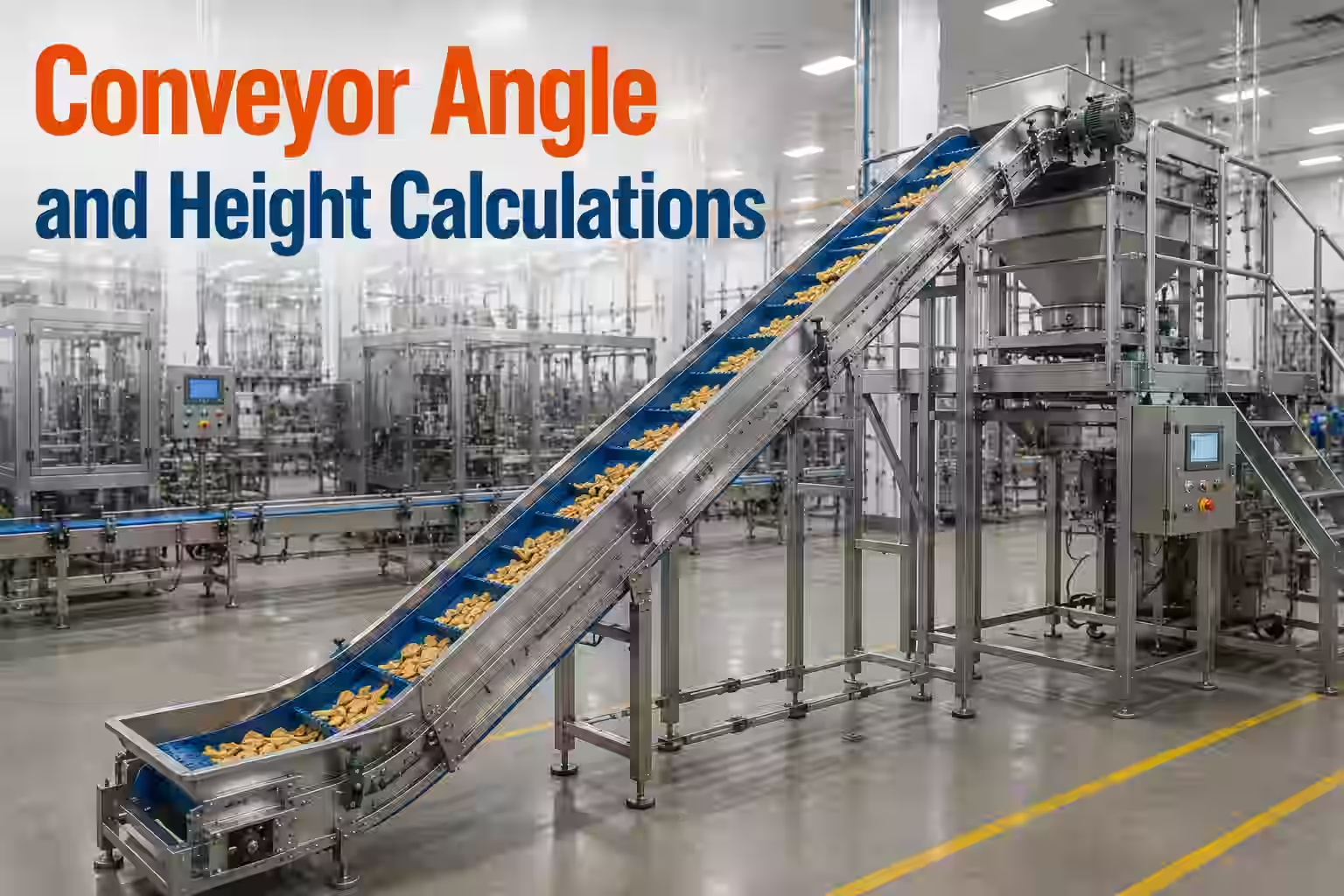
When designing an Inclined Conveyor System, one of the most important engineering considerations is determining the correct conveyor angle and vertical lifting height. Accurate calculations directly affect productivity, energy consumption, material flow, product safety, and equipment lifespan.
What are Conveyor Angle & Height Calculations?
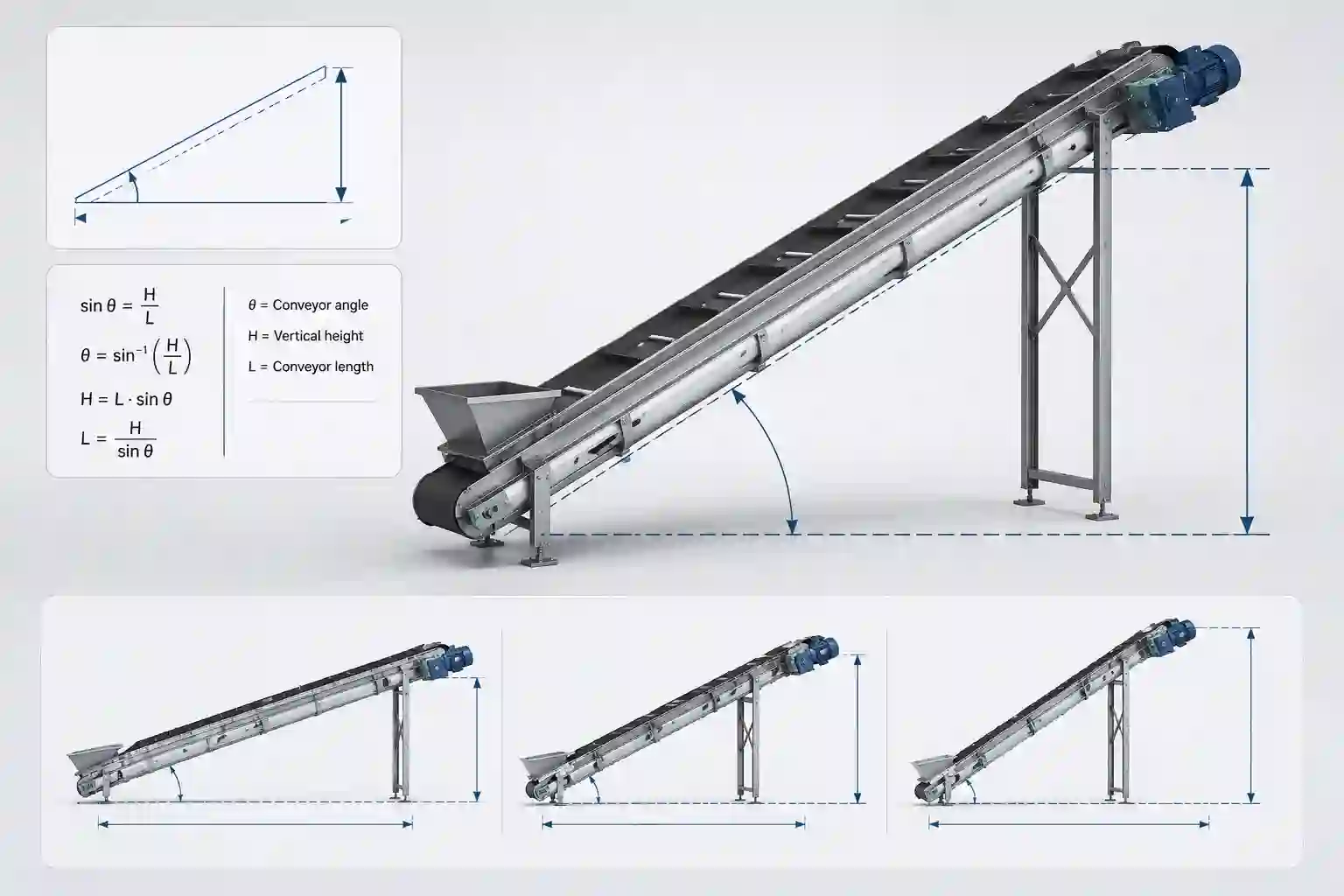
Conveyor angle calculation determines the inclination degree required to move material from one elevation to another. Height calculation determines the total vertical lift needed between the loading point and discharge point.
For every Industrial Inclined Conveyor, both values are essential for selecting the right belt type, motor power, conveyor length, and support structure.
Why Accurate Calculations Matter
- Improves conveyor efficiency
- Prevents material rollback
- Reduces motor overload
- Improves product handling
- Increases conveyor life
- Optimizes power consumption
- Ensures smooth production flow
Understanding Conveyor Angle
The conveyor angle is measured between the conveyor belt and the horizontal floor surface. Most inclined conveyors operate between 15° and 45° depending on product characteristics.
| Material Type | Recommended Angle |
|---|---|
| Powders | 15° – 20° |
| Granules | 20° – 30° |
| Snacks & Namkeen | 25° – 40° |
| Packaged Products | 30° – 45° |
Height Calculation Basics
Height calculation identifies the vertical distance between the infeed and discharge points. This helps engineers determine conveyor length and motor requirements.
The greater the height, the more critical proper belt selection and drive sizing become.
Conveyor Equipment Manufacturers Association (CEMA)Material Handling Industry (MHI)Processing MagazineFactors Affecting Conveyor Design
- Product weight
- Bulk density
- Required capacity
- Conveyor angle
- Vertical lift height
- Belt type
- Motor power
- Environmental conditions
Technical Design Parameters
| Parameter | Typical Range |
|---|---|
| Inclination Angle | 15° – 45° |
| Vertical Lift | 1 – 20 Meters |
| Belt Width | 300 – 1200 mm |
| Capacity | 100 – 5000 Kg/Hr |
| Belt Type | PVC, PU, Cleated Belt |
| Drive System | Geared Motor + VFD |
Applications of Inclined Conveyor Systems
- Snacks Processing Plants
- Potato Chips Manufacturing
- Frozen Food Processing
- Packaging Lines
- Food Processing Industry
- Agriculture Processing
- Bulk Material Handling
- Warehouse Automation
Common Design Mistakes
Incorrect Angle Selection
Can cause product rollback and reduced productivity.
Undersized Motor
Results in conveyor stalling and higher maintenance costs.
Wrong Belt Type
May lead to material spillage and poor conveying performance.
Ignoring Future Capacity
Creates bottlenecks when production expands.
Buying Guide
- Define required lifting height
- Calculate conveyor angle properly
- Select food-grade materials if needed
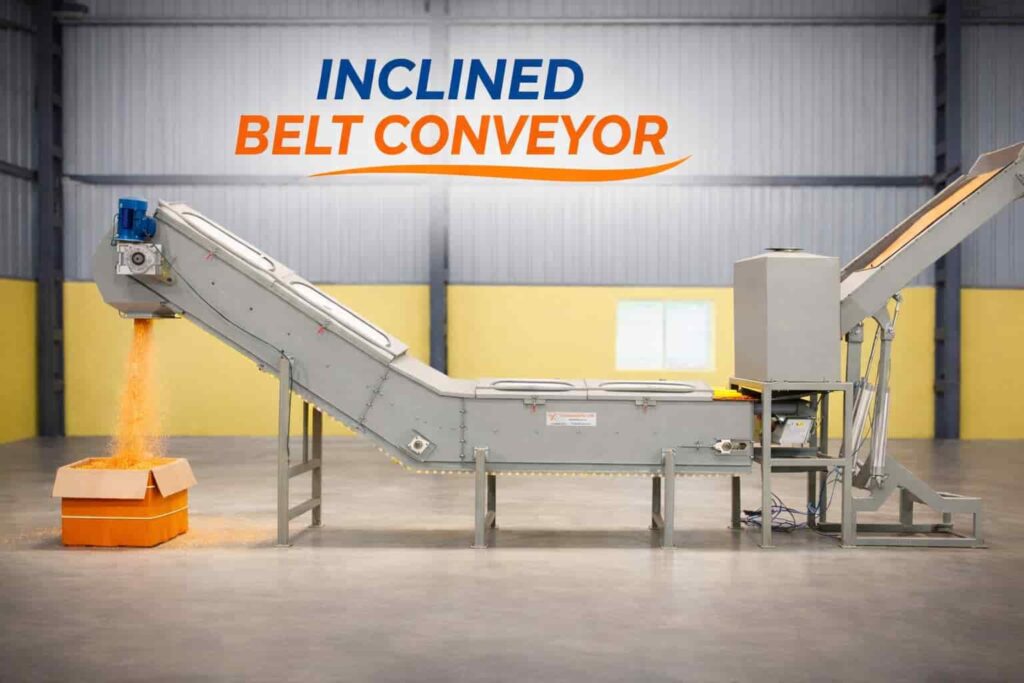
- Choose the correct Cleated Belt Conveyor
- Check automation compatibility
- Work with an experienced Inclined Belt Conveyor Manufacturer
Related Solutions
Inclined Belt ConveyorDistribution ConveyorU Trough ConveyorScrew ConveyorZ Bucket ElevatorPotato Processing LineWhy Choose Yuga-We100?
Yuga-We100 is a leading Inclined Belt Conveyor Manufacturer delivering customized Industrial Inclined Conveyor solutions for food processing, packaging, agriculture, and material handling industries.
- Customized Designs
- Food Grade Manufacturing
- Energy Efficient Systems
- Heavy Duty Construction
- Competitive Pricing
- Reliable Technical Support
Need Expert Conveyor Design Assistance?
Contact Yuga-We100 for customized Inclined Conveyor System solutions designed for your production requirements.
Get Free ConsultationFrequently Asked Questions
1. What is the ideal conveyor angle?
Typically between 15° and 45° depending on the material.
2. Why is height calculation important?
It helps determine conveyor length, motor power, and overall system design.
3. What is a Cleated Belt Conveyor?
A conveyor with cleats that prevent material rollback during inclined conveying.
4. Can inclined conveyors handle food products?
Yes, food-grade conveyors are widely used in food processing industries.
5. How do I choose the correct conveyor?
Consider material type, capacity, angle, height, and production requirements.
6. Does Yuga-We100 provide customized conveyors?
Yes, fully customized conveyor solutions are available.